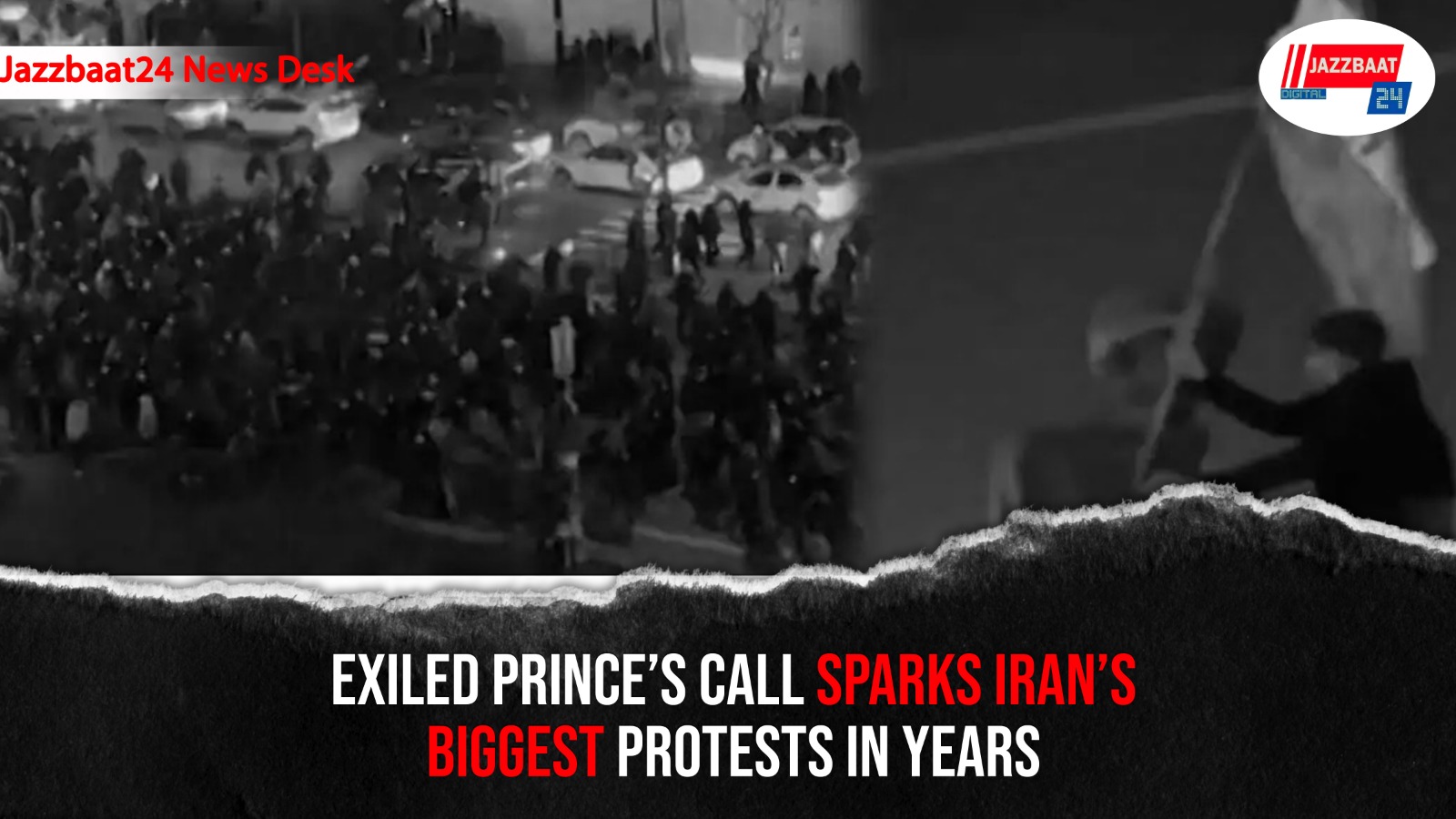
Iran is witnessing one of its most intense waves of unrest in recent years as nationwide protests have erupted following a call by exiled Crown Prince Reza Pahlavi. What began as demonstrations over economic hardship has now transformed into a broader anti-government movement, with crowds taking to the streets across all 31 provinces.
The protests, now stretching into their second week, were reignited after Reza Pahlavi urged Iranians to come out at 8 pm on Thursday and Friday to demand freedom. Thousands responded, marching through major cities including Tehran, despite heavy security presence and government efforts to suppress communication. Authorities reportedly shut down the internet, cut international phone lines, and attempted to restrict satellite signals.
According to human rights groups, at least 34 protesters have been killed so far, while more than 2,200 people have been detained. Iranian state television has acknowledged unrest but blamed the violence on what it described as “US-Israel terrorist agents,” accusing them of setting fire to public property and vehicles.
The immediate trigger for the protests was Iran’s worsening economic crisis, marked by the collapse of the national currency, the rial, rising inflation, and unemployment. The shutdown of Tehran’s historic bazaar on December 28 became a symbolic starting point for the agitation, which quickly spread from economic grievances to open calls for political change and the end of the Islamic Republic.
International reactions have been swift. Turkish Airlines cancelled all Istanbul–Tehran flights citing security concerns. US President Donald Trump commented that Iran’s Supreme Leader Ayatollah Ali Khamenei might be “looking to go somewhere” as the situation deteriorates, though he ruled out meeting Reza Pahlavi for now, saying it would be inappropriate.
As protests continue to grow in scale and intensity, Iran faces a volatile moment. With public anger deepening and global attention fixed on Tehran, the coming days may prove decisive for both the protesters and the regime.