
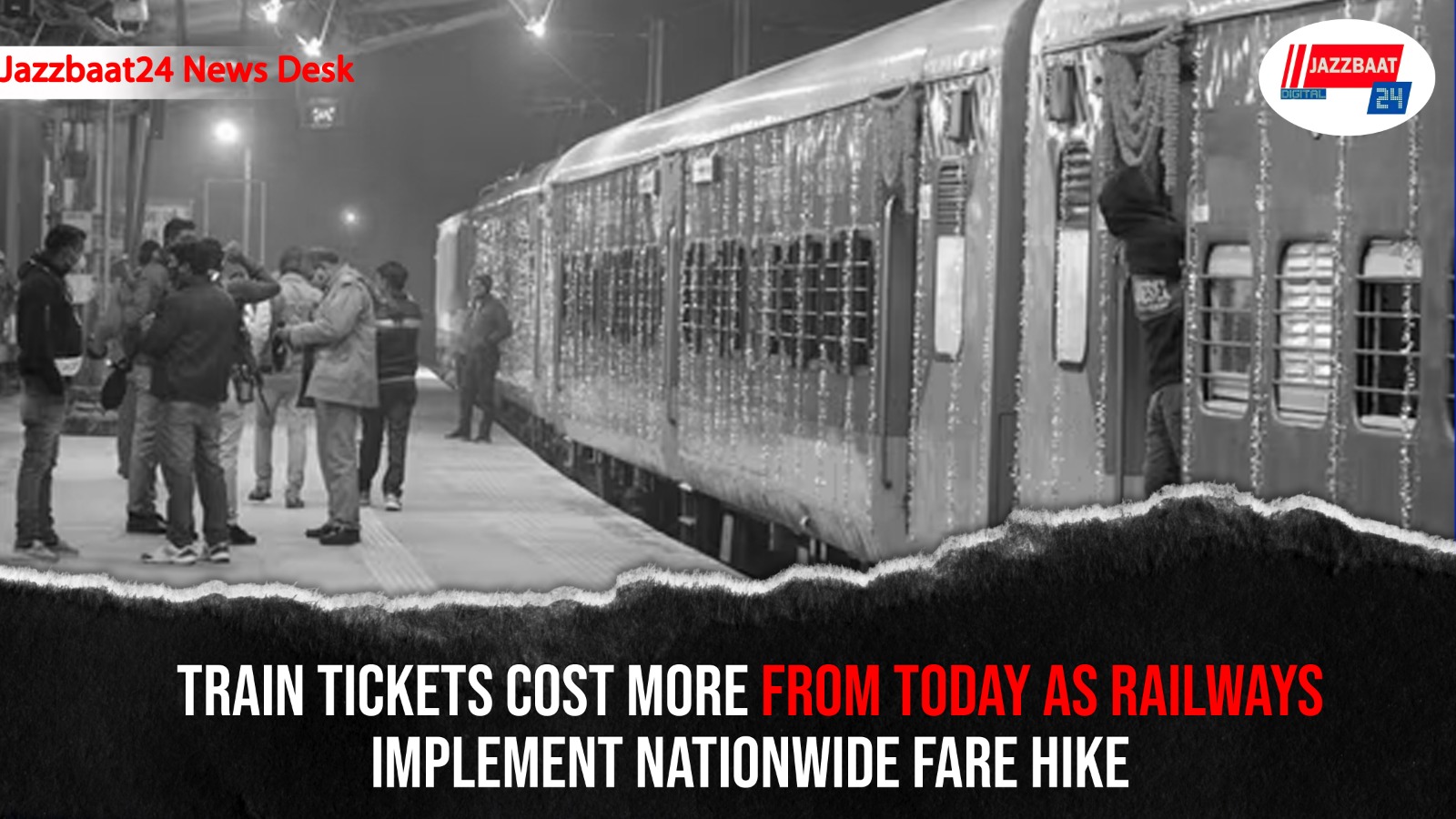
Train travel across India hast become slightly more expensive from today as Indian Railways implemented a nationwide fare hike, the second such increase in less than six months. According to railway officials, the revised fares are expected to generate an additional ₹600 crore in revenue for the national transporter by March 31, 2026.
The last fare revision was carried out in July this year, which reportedly helped Indian Railways earn around ₹700 crore. Officials said the latest hike is part of a fare rationalisation exercise aimed at meeting rising operational costs.
Under the new structure, passengers travelling in Ordinary class for distances beyond 215 kilometres will pay 1 paise more per kilometre. For Mail and Express trains in non-AC classes, fares have been increased by 2 paise per kilometre. AC class passengers will also see an increase of 2 paise per kilometre. For instance, a traveller covering a distance of 500 kilometres in a non-AC coach will now pay approximately ₹10 extra.
However, the Railways has clarified that several fares will remain unchanged. There will be no increase in the prices of monthly season tickets for suburban train services. Similarly, fares for Ordinary class travel up to 215 kilometres in other trains have not been revised.
Explaining the reason behind the hike, the Railways said its network and operations have expanded significantly over the past decade, leading to a sharp rise in expenditure. Manpower costs have increased to ₹1.15 lakh crore, while pension expenses now stand at ₹60,000 crore. The total operational cost for 2024–25 has reached ₹2.63 lakh crore.
Officials added that the additional revenue would help sustain improved safety measures and operational efficiency. They also highlighted that India has emerged as the world’s second-largest cargo-carrying railway, attributing the growth to continuous investment and reforms.
Passengers are advised to check updated fares on IRCTC and official railway platforms before planning their journeys.