
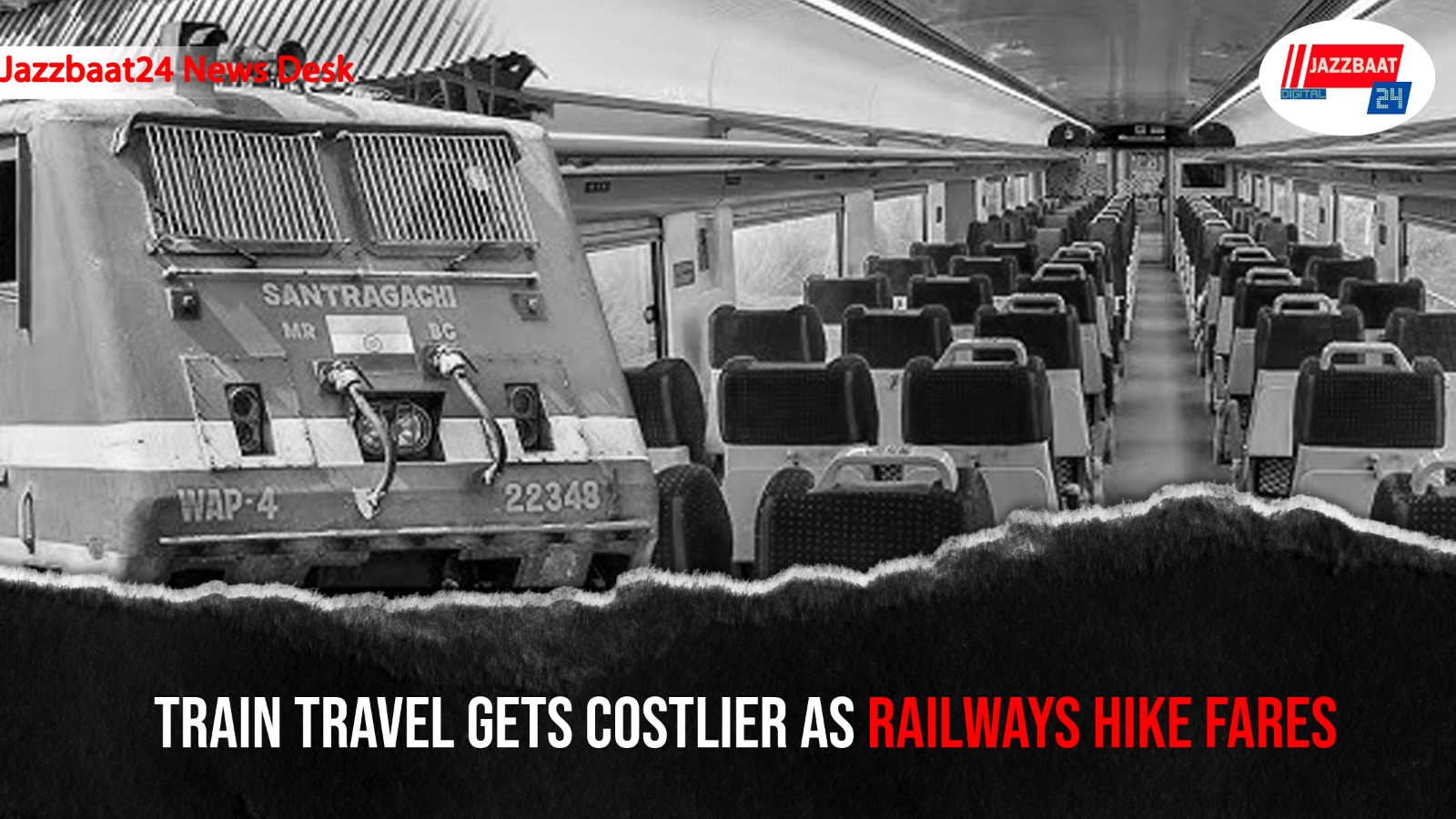
Train journeys across India became slightly more expensive from December 26, after the Ministry of Railways announced a revision in passenger fares, marking the second fare hike in the past six months. The government said the move aims to strike a balance between keeping travel affordable for passengers and ensuring the long-term sustainability of railway operations.
According to the Railways, the revised fares apply only to tickets booked on or after December 26. Passengers who booked their tickets before this date will not have to pay any additional amount, even if their journey takes place later. Importantly, there is no change in fares for suburban services or season tickets, whether suburban or non-suburban.
For Second Class Ordinary travel, there is no fare increase for journeys up to 215 kilometres. However, passengers travelling longer distances will pay more. Fares have gone up by ₹5 for journeys between 216 and 750 km, ₹10 for 751 to 1,250 km, ₹15 for 1,251 to 1,750 km, and ₹20 for distances between 1,751 and 2,250 km.
In Sleeper Class Ordinary and First Class Ordinary, fares have been increased by 1 paisa per kilometre. Mail and Express trains will see a slightly higher hike, with fares rising by 2 paise per kilometre across both non-AC and AC classes. This includes Sleeper, First Class, AC Chair Car, AC 3-Tier, AC 2-Tier and AC First Class. For example, a 500 km journey in a non-AC Mail or Express train will now cost about ₹10 more.
The revised fares also apply to premium and semi-premium services such as Rajdhani, Shatabdi, Vande Bharat, Duronto, Tejas, Garib Rath, Jan Shatabdi, Amrit Bharat and Namo Bharat Rapid Rail.
The Railways clarified that reservation charges, superfast surcharges and other ancillary fees remain unchanged. GST rules also continue as before. Officials said the fare revision reflects a “balanced approach” to maintain passenger convenience while supporting operational needs.