

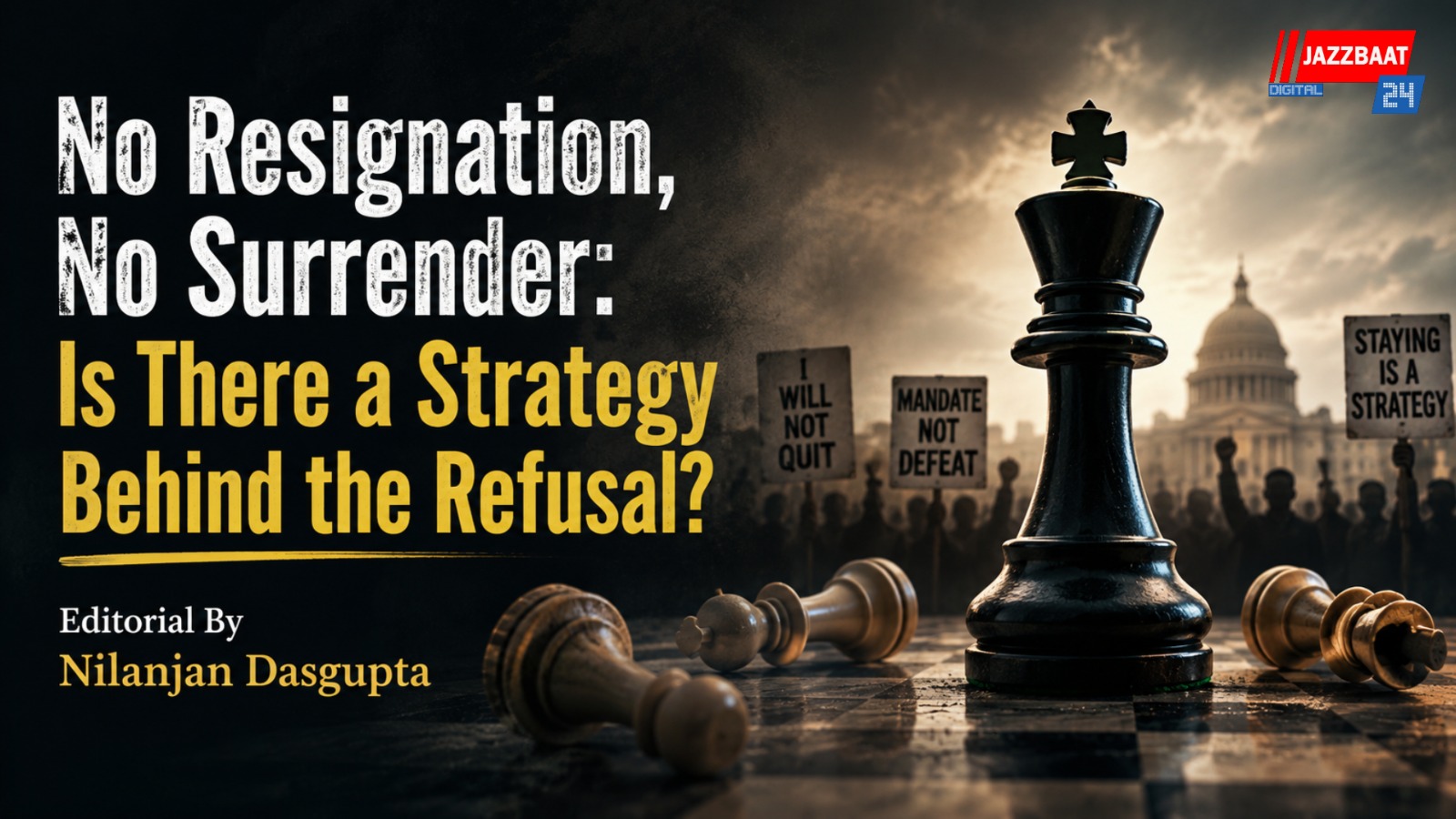
In politics, refusal can sometimes speak louder than compliance. When a leader chooses not to resign despite mounting pressure, it often triggers a deeper question: is it stubbornness, or a calculated strategy?
Across political systems, resignation is typically seen as an acceptance of responsibility or failure. Yet history shows that many leaders who refused to step down under pressure later re-emerged stronger, either politically rehabilitated or reinforced in their support base. This makes the current debate around “no resignation, no surrender” more than just a matter of ethics it becomes a question of political survival strategy.
At the heart of such refusals is control over narrative. Stepping down can often be interpreted as an admission of guilt or weakness, especially in highly polarised environments. By staying in office, a leader retains the ability to shape public perception, defend actions, and maintain institutional authority. In many cases, resignation shifts the narrative entirely to opponents; refusal prevents that immediate transfer of momentum.
Another key factor is internal party dynamics. Leaders often resist resignation not only because of external pressure but also due to internal calculations. A resignation can open space for rival factions within the party to gain influence. Staying put may be a way to preserve unity, prevent fragmentation, or avoid triggering a leadership crisis.
However, refusal to resign also carries risks. Public perception can harden, especially if controversies intensify or governance issues remain unresolved. What may begin as a strategic stand can quickly be framed as arrogance or detachment from accountability. In democratic systems, sustained resistance to resignation demands can erode institutional trust if not accompanied by transparent justification.
There is also the electoral dimension. In many cases, leaders believe that stepping down prematurely could weaken their party’s performance in upcoming elections. By remaining in position, they signal continuity and confidence to their voter base, hoping to convert controversy into political resilience.
Yet the question remains: does this strategy work in the long term? Political history offers mixed outcomes. Some leaders who refused to resign eventually regained public support and strengthened their standing. Others faced prolonged isolation and electoral setbacks.
What complicates the matter further is the role of media and public discourse. In the age of rapid information flow, every decision is amplified, scrutinised, and debated in real time. A refusal to resign is no longer just a political act it becomes a narrative battlefield where perception often matters as much as fact.
Ultimately, whether “no resignation, no surrender” is a strategy or a standoff depends on context. It can be a calculated move to preserve authority, or a risky gamble that tests public patience. What remains constant is the tension between accountability and authority a defining feature of modern political life.