
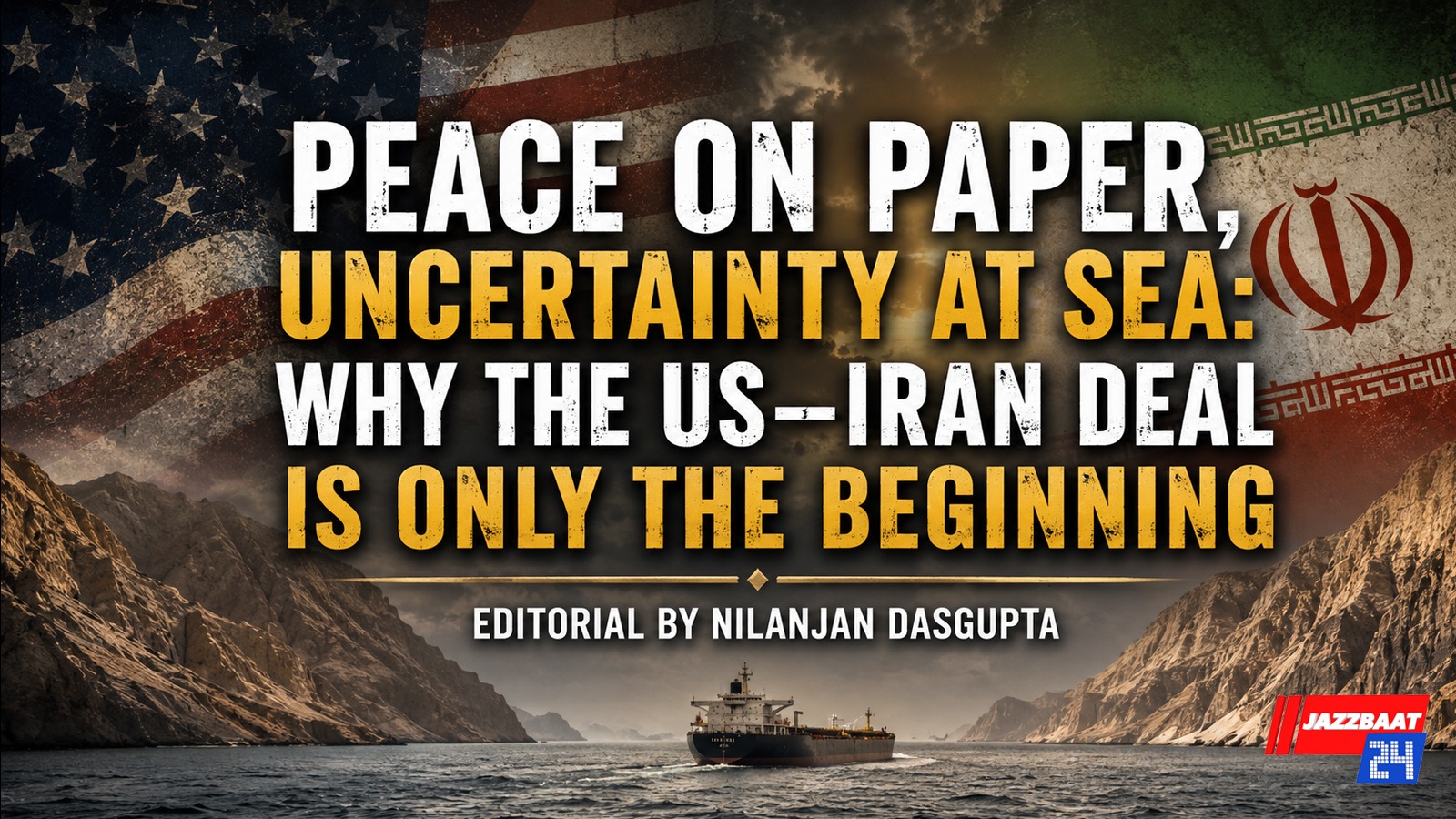
The announcement of an interim agreement between the United States and Iran has offered the world a rare moment of relief after months of conflict, disruption, and rising fears of a wider regional war. The framework agreement, set to be formally signed in Geneva on Friday, promises two outcomes that global markets desperately wanted to hear: an extension of the ceasefire and the reopening of the Strait of Hormuz, one of the most critical energy corridors on the planet. Yet beneath the optimism lies a difficult reality this is not peace, at least not yet.
The deal comes after a conflict that shook the Middle East and sent shockwaves through global energy markets. The closure of the Strait of Hormuz disrupted a route that normally carries roughly one-fifth of the world’s oil and liquefied natural gas exports. Oil prices surged, shipping costs soared, and fears of a prolonged economic crisis mounted. Markets reacted positively to news of the agreement, with oil prices falling and investors welcoming the prospect of stability.
However, markets often celebrate headlines faster than realities. Shipping companies have already warned that confidence will not return overnight. Major tanker operators say it could take weeks before commercial traffic resumes on anything close to normal levels. Insurers, ship owners, and port authorities still face unanswered questions about security, navigation routes, and the risks posed by mines and military activity that remain in and around the waterway. A signed document does not instantly erase months of fear.
The most significant concern is that the agreement leaves several of the conflict’s toughest issues unresolved. While negotiators have agreed to reopen Hormuz and continue a 60-day ceasefire, discussions on Iran’s nuclear programme have merely been postponed to a future round of talks. Issues such as ballistic missile development, regional proxy groups, and broader security arrangements across the Middle East have also been left outside the framework for now. In diplomatic terms, the agreement buys time. Whether that time leads to a durable settlement remains uncertain.
Israel’s position further complicates matters. Israeli leaders have signaled dissatisfaction with the limited scope of the deal and remain wary of any arrangement that does not directly address Iran’s military capabilities and regional influence. Continued tensions involving Hezbollah and Lebanon could easily become a flashpoint capable of undermining the fragile ceasefire. Any major military incident in the coming weeks could quickly derail the diplomatic momentum achieved in Geneva.
There are political risks on both sides as well. For Washington, critics may argue that the agreement offers concessions before obtaining firm commitments on nuclear restrictions. For Tehran, hardliners could view the deal as a compromise forced by economic and military pressure. Both governments will have to convince domestic audiences that diplomacy serves national interests better than confrontation. That challenge may prove as difficult as the negotiations themselves.
Still, dismissing the agreement would be a mistake. The reopening of diplomatic channels is significant. The prospect of sanctions relief, reconstruction assistance, and renewed negotiations creates incentives for both sides to keep talking rather than fighting. The fact that the two adversaries have managed to reach even a temporary understanding after months of warfare should not be underestimated.
The true test of this agreement will not be Friday’s ceremony in Geneva. It will be measured in the weeks that follow when tankers attempt to return to Hormuz, when negotiators confront the nuclear question, and when regional actors decide whether to support or sabotage the peace process. For now, the deal offers hope. But hope, like peace, remains fragile in the Middle East.