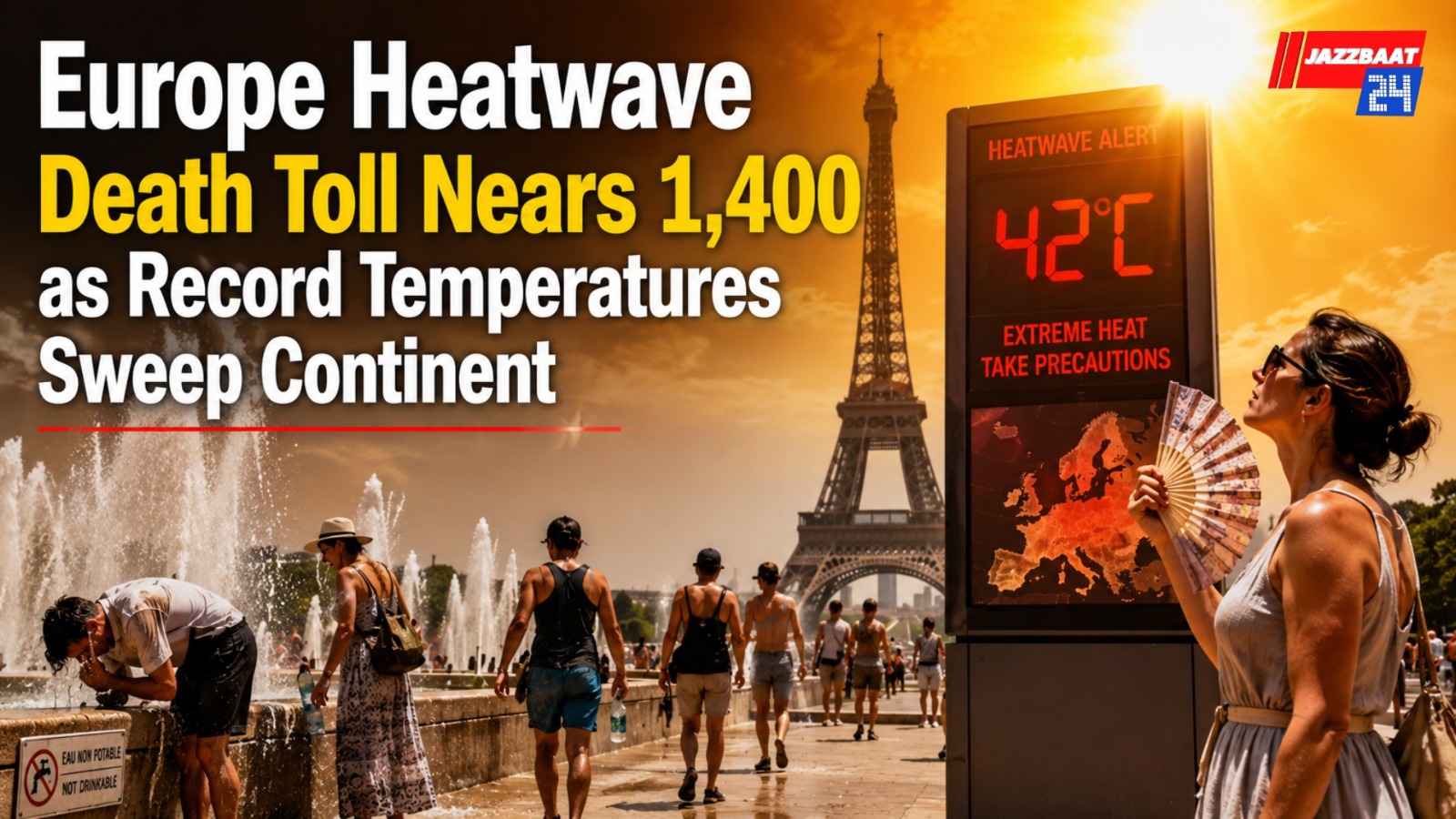
Europe is grappling with one of its most severe and widespread heatwaves in recent history, with the World Health Organization (WHO) warning that the extreme weather may have claimed around 1,400 lives across the continent. The scorching temperatures, which began in late June, have broken records in several countries and pushed healthcare systems and public services to their limits.
France has been among the worst-hit nations, reporting around 1,000 excess deaths linked to the heatwave alone. Authorities say most of the victims were elderly people and those with pre-existing health conditions. Spain has also recorded hundreds of suspected heat-related deaths, while Germany, Poland, the Czech Republic and Hungary have all endured some of the hottest temperatures ever measured in their history.
In Germany, temperatures soared above 41 degrees Celsius, shattering national records. The Czech Republic and Poland also witnessed unprecedented heat, with millions of people exposed to temperatures exceeding 35 degrees Celsius. More than 190 million Europeans were reportedly affected by the intense heat over the weekend.
The extreme weather has triggered widespread disruption across Europe. Train services were cancelled or delayed due to overheated tracks, power outages affected thousands of households in France, and several countries faced increased risks of wildfires and drought. In Germany, firefighters battled blazes in areas still contaminated with unexploded World War II ammunition, making rescue operations even more dangerous.
Scientists and climate experts have linked the intensity of the heatwave to human-driven climate change. According to researchers, such extreme events are becoming increasingly frequent and severe as global temperatures continue to rise. The World Meteorological Organization has described Europe as the fastest-warming continent on Earth, with average temperatures rising nearly twice as fast as the global average.
WHO officials have urged governments to strengthen heat-health action plans, establish cooling centres and improve early-warning systems to protect vulnerable populations. Experts also warn that the health impacts of the current heatwave could continue for several days even after temperatures begin to ease.
As the scorching conditions gradually shift eastward towards Central Europe and the Balkans, authorities remain on high alert, fearing that the death toll could rise further in the coming days.