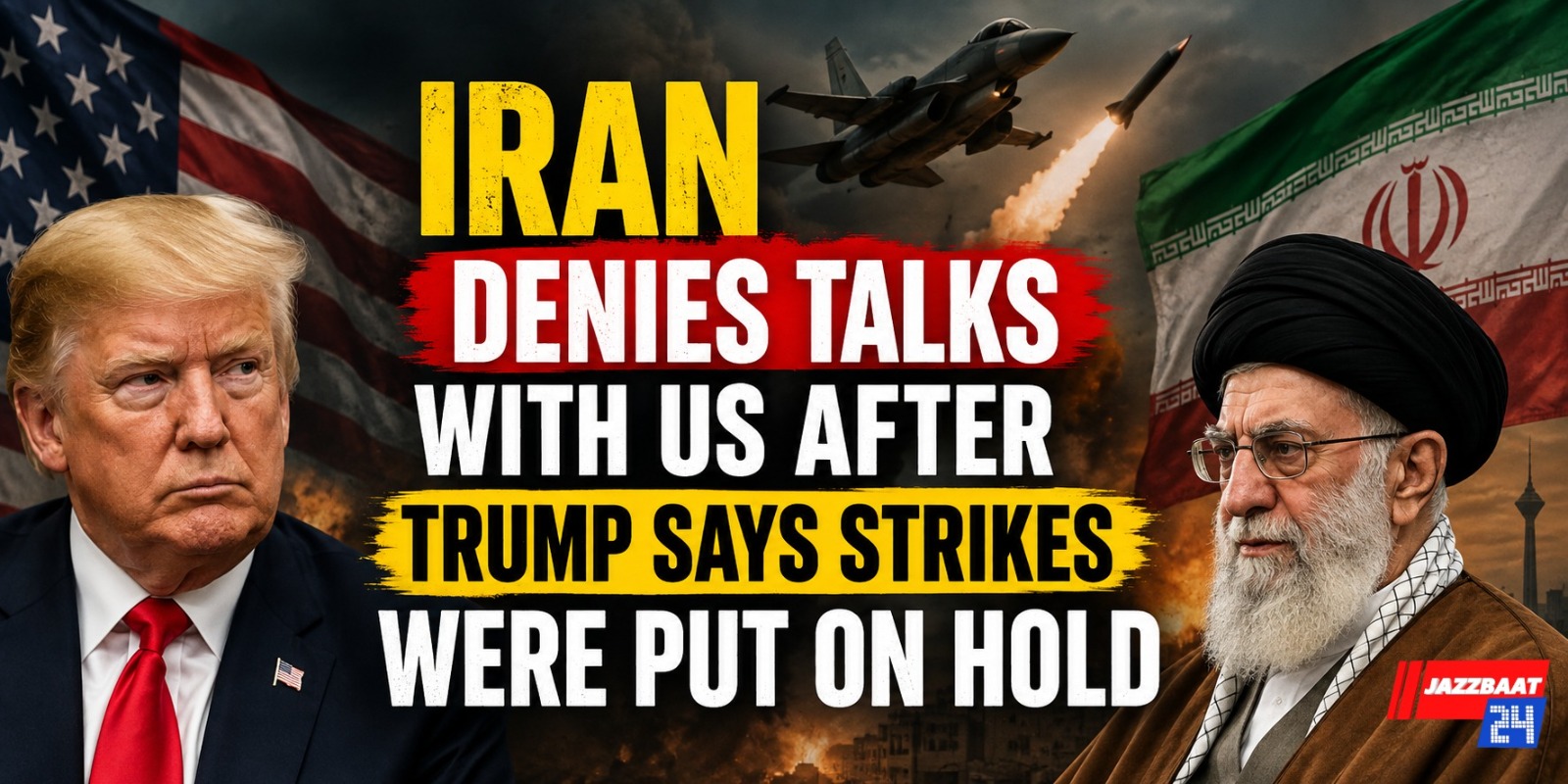
Iran has denied US President Donald Trump’s claim that Washington and Tehran are preparing for new negotiations, saying there are currently no talks or meetings planned between the two countries.
The latest disagreement came after Trump said on Monday that the United States had called off a planned major military strike on Iran to give diplomacy a chance. He described the proposed negotiations as a “last chance” for Tehran to reach an agreement with Washington.
Iranian Foreign Ministry spokesperson Esmaeil Baghaei, however, rejected the claim. He said no negotiations with the United States were taking place and that no meeting between Iranian and American officials had been scheduled. According to Iranian officials, Tehran’s negotiators remain inside the country, while Foreign Minister Abbas Araghchi was outside Iran on a religious visit.
The conflicting accounts have raised fresh questions about whether there is a genuine diplomatic channel between Washington and Tehran or whether the two sides are simply sending different political messages.
Iran has said that its current discussions are with Oman, particularly over the situation in the Strait of Hormuz. Tehran has not confirmed any direct negotiations with Washington. Oman has previously played an important role in facilitating communication between Iran and the United States.
Trump, meanwhile, has maintained that negotiations are moving forward and has warned Iran that it must reach an agreement. His comments came after he said he had decided to stand down from a planned military operation, partly following appeals from regional partners who wanted to prevent further escalation.
The dispute comes as tensions remain extremely high in the Middle East. The Strait of Hormuz, one of the world's most important energy routes, remains at the centre of the confrontation. On Tuesday, a cargo vessel reported being struck by an unidentified projectile near the Strait, adding to concerns about the safety of international shipping and global energy supplies.
Iranian President Masoud Pezeshkian said Tehran does not want to escalate tensions but would defend the country’s security, interests and territorial integrity. His comments came as Trump continued to pressure Iran to reach a deal.
The contradictory statements have also affected financial markets. Oil prices fell as investors reacted to hopes that diplomacy could reduce the risk of a wider conflict, while US stocks moved higher. However, the absence of confirmed talks means the prospect of a lasting diplomatic breakthrough remains uncertain.
For now, Tehran’s position is clear: it says there are no planned US-Iran meetings. Washington, meanwhile, insists that diplomatic efforts are underway. With tensions around the Strait of Hormuz continuing to grow, the gap between the two versions of events could prove crucial in determining whether the conflict moves towards negotiations or another round of military escalation.