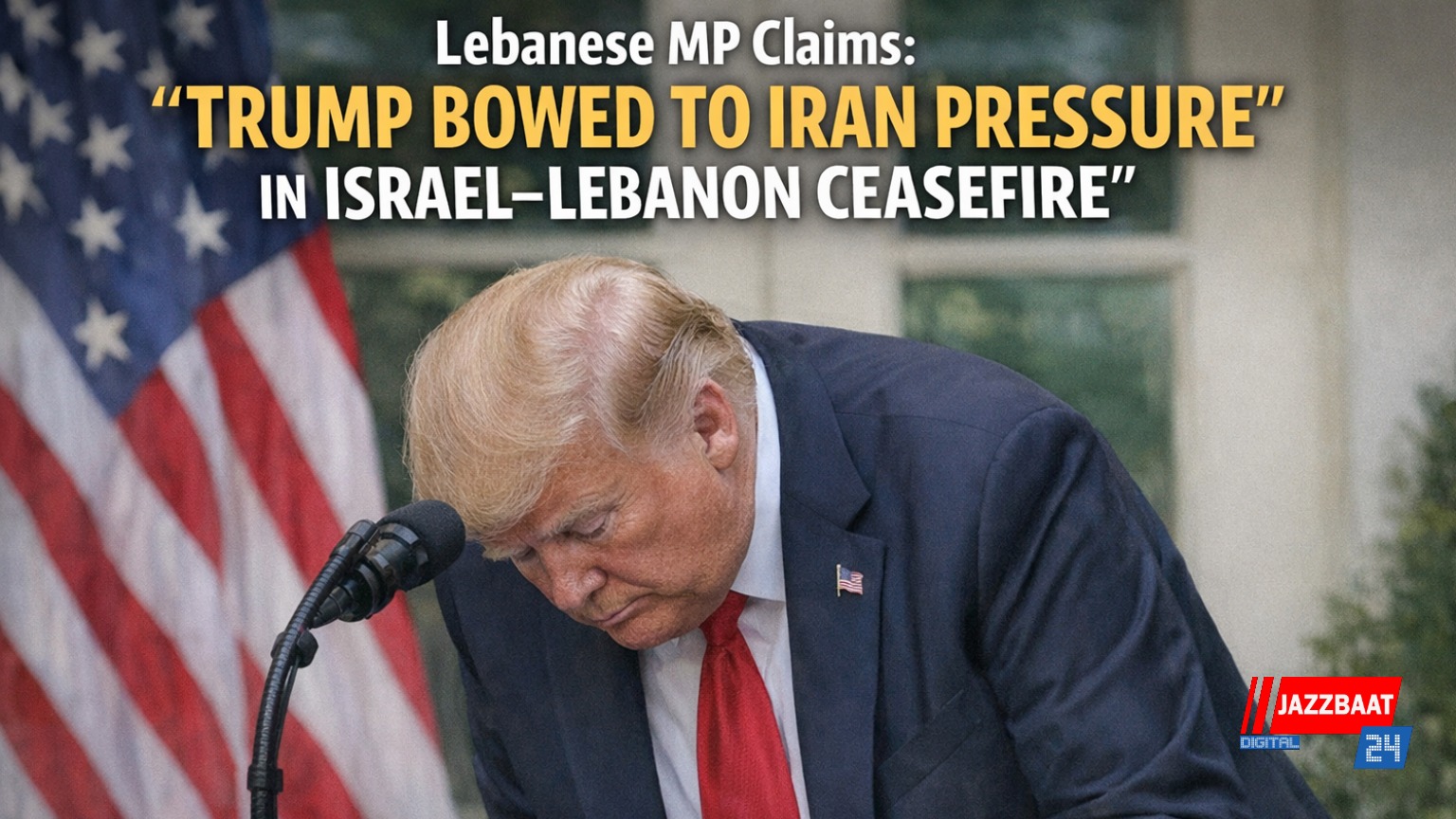
A fresh political controversy has emerged over the recently announced Israel–Lebanon ceasefire, after a Lebanese lawmaker alleged that former U.S. President Donald Trump succumbed to Iranian pressure and compelled Israeli Prime Minister Benjamin Netanyahu to accept the truce.
Hussein Haj Hassan, a member of Lebanon’s parliament affiliated with the Hezbollah-backed bloc, claimed that the ceasefire was not purely a diplomatic breakthrough but the result of “clear pressure” from Iran on the United States. According to his statement, Trump “gave in” to Tehran’s influence and forced Israel to agree to the deal, which came into effect as a temporary 10-day truce.
The ceasefire, announced on April 16, 2026, was brokered by the United States after weeks of intense cross-border conflict between Israeli forces and Hezbollah fighters in Lebanon. The agreement aims to halt hostilities and create space for broader negotiations in the region.
Despite the diplomatic push, the situation on the ground remains fragile. Israeli forces have maintained a military presence in parts of southern Lebanon, while Hezbollah has expressed conditional acceptance, insisting that any lasting ceasefire must include a full Israeli withdrawal and an end to all attacks.
The conflict escalated sharply in recent months, with heavy Israeli airstrikes and retaliatory rocket fire from Lebanon causing significant casualties and displacement. Reports indicate that thousands have been killed or forced to flee their homes, raising international concern and urgency for de-escalation.
Hassan’s remarks reflect a broader narrative within pro-Hezbollah circles that Iran played a decisive role in shaping the ceasefire. Tehran, a key backer of Hezbollah, had reportedly pushed for a halt in Israeli military operations as part of wider regional negotiations involving the United States.
However, U.S. officials and allies present a different picture. Trump described the ceasefire as a result of “productive conversations” with both Israeli and Lebanese leadership, framing it as a step toward a larger peace initiative that could potentially include Iran in future talks.
Netanyahu, while agreeing to the truce, has emphasised that Israel retains the right to act in self-defence and continues to view Hezbollah as a major security threat. Israeli leadership has also indicated that the ceasefire could open the door to a broader, long-term peace arrangement, though skepticism remains high.
As competing narratives emerge, the ceasefire has become not just a military pause but also a geopolitical flashpoint highlighting the complex interplay between the U.S., Iran, Israel, and Lebanon in an already volatile Middle East.