

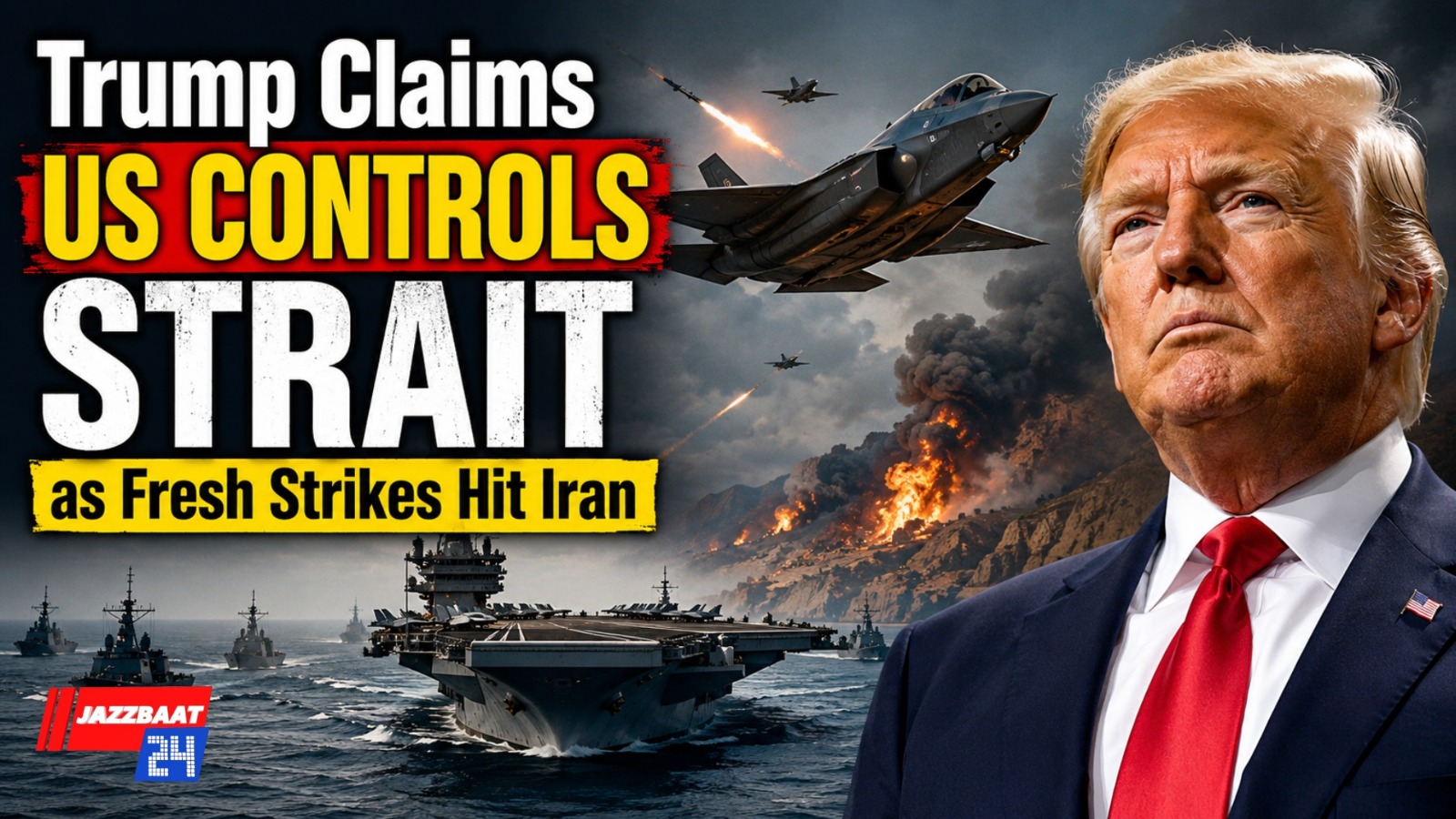
US President Donald Trump has declared that the United States "controls the Strait" amid a fresh wave of American military strikes targeting Iranian positions, signalling that Washington intends to maintain pressure on Tehran despite growing international concerns over the escalating conflict.
Speaking as tensions in the Gulf continued to rise, Trump said the US remained firmly in control of the strategically important Strait of Hormuz, one of the world's busiest oil shipping routes. The President reiterated that Iran faced two choices return to negotiations over its nuclear programme or confront further military action. His remarks came as the Pentagon confirmed additional strikes against Iranian military infrastructure, describing the operations as part of an ongoing campaign to weaken Tehran's military capabilities.
The latest attacks follow weeks of hostilities between the United States and Iran, with repeated exchanges of missile and drone strikes raising fears of a wider regional conflict. According to US officials, the fresh strikes targeted facilities believed to support Iran's missile programme and military logistics. Iranian authorities have condemned the attacks, accusing Washington of violating international law while vowing that Tehran would continue to defend its sovereignty.
The Strait of Hormuz has remained a key flashpoint throughout the crisis. Nearly one-fifth of the world's oil shipments pass through the narrow waterway, making any disruption a major concern for global energy markets. US Defence Secretary Pete Hegseth has also maintained that American forces retain operational control over maritime access in the region despite continued Iranian threats and attacks on commercial shipping.
The prolonged conflict has drawn increasing scrutiny in Washington, with lawmakers questioning the administration's long-term strategy and the mounting financial cost of military operations. Pentagon officials have acknowledged that the campaign has already cost tens of billions of dollars, while concerns continue to grow over the impact on global oil prices and regional stability.
Despite international calls for restraint and renewed diplomatic efforts, there has been little indication of an immediate breakthrough. Iran has continued to reject US demands regarding its nuclear programme, while Washington insists that military pressure will continue until Tehran changes course. With ceasefire negotiations stalled and tensions showing no signs of easing, the Gulf region remains on high alert as both sides prepare for the possibility of further escalation.