

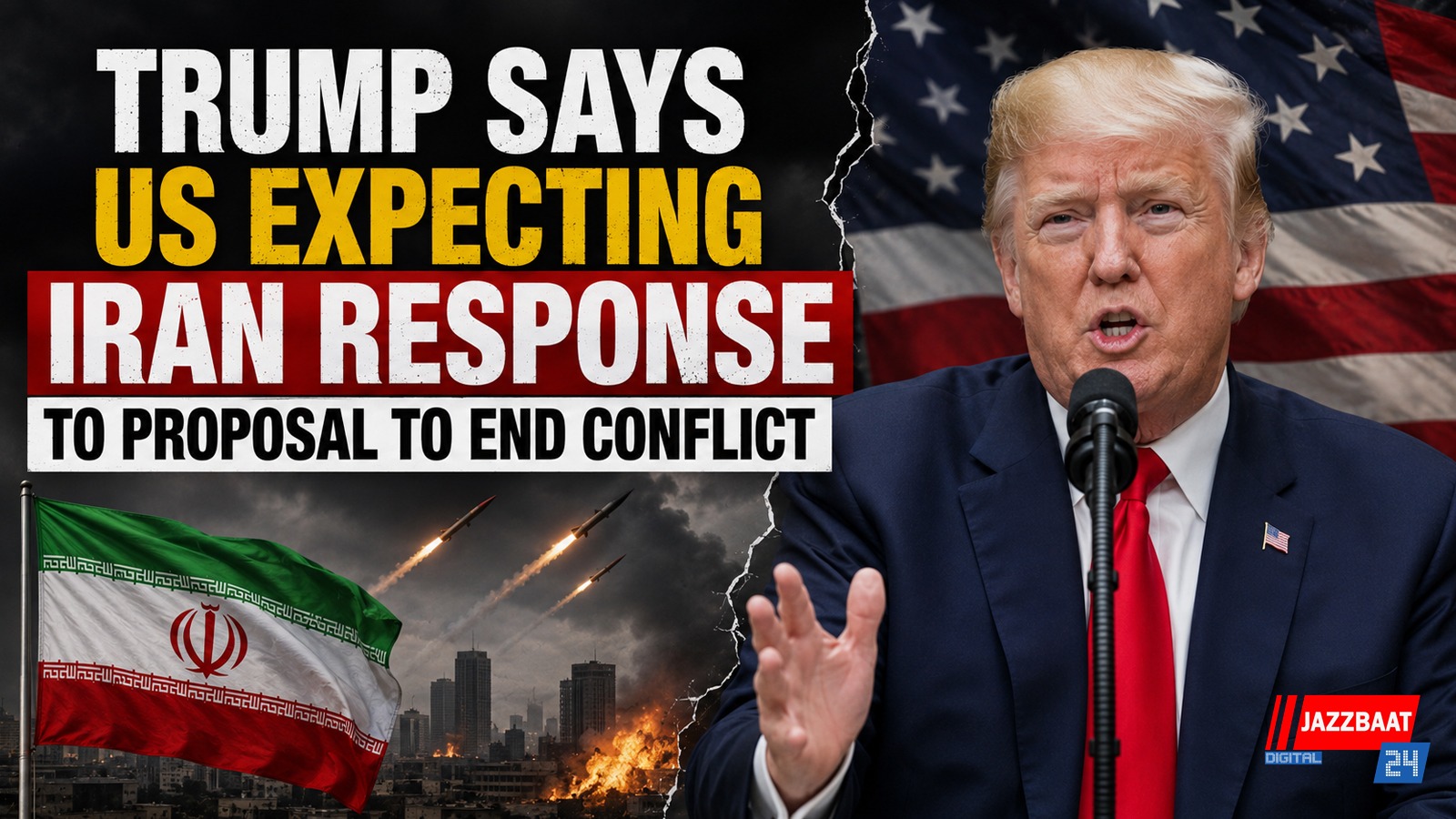
Washington: U.S. President Donald Trump has said that the United States is expecting a response from Iran on a proposed deal aimed at ending the ongoing conflict in the Middle East, signalling a potentially crucial moment in efforts to de-escalate tensions.
Speaking to reporters, Trump indicated that Washington could receive communication from Tehran “supposedly tonight,” suggesting that a reply may be imminent on the latest U.S.-backed proposal to bring the fighting to a halt.
The development comes amid ongoing diplomatic efforts led by the U.S. and its allies to secure a ceasefire after weeks of military confrontation. According to officials, the proposal includes a temporary truce and the start of broader negotiations over key issues such as Iran’s missile programme and regional security concerns.
U.S. leaders have expressed cautious optimism but also warned that the situation remains fragile. Secretary of State Marco Rubio said Washington hopes for a “serious reply” from Iran that could pave the way for meaningful negotiations, even as clashes and tensions continue in strategic areas like the Strait of Hormuz.
Despite the diplomatic push, hostilities have not fully subsided. Recent days have seen military exchanges, including U.S. action against Iranian-linked vessels and retaliatory threats from Tehran. Both sides have accused each other of undermining ceasefire conditions, highlighting the complexity of reaching a lasting agreement.
Trump has maintained that a deal is still achievable but has also reiterated that the U.S. is prepared to take further action if talks fail. He has previously warned of expanding military operations in the region if Iran does not agree to terms, underlining a dual approach of pressure and negotiation.
The conflict, which escalated earlier this year, has had significant global implications, particularly for energy markets and maritime security. The Strait of Hormuz, a critical oil shipping route, remains a focal point of tensions, with disruptions affecting international trade flows and raising concerns among global powers.
As the world watches for Iran’s response, the coming hours could prove decisive in determining whether the situation moves toward de-escalation or further confrontation.