

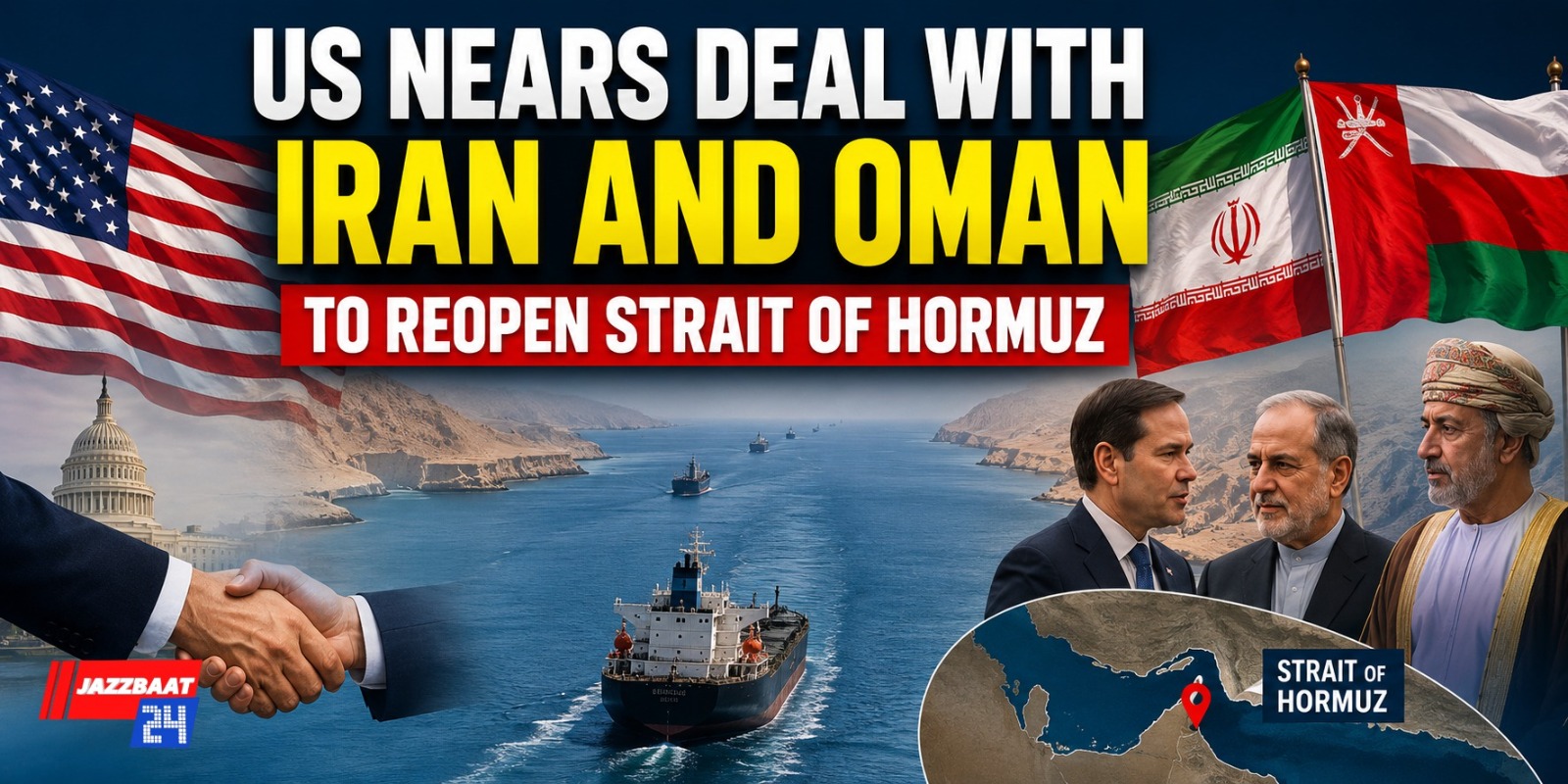
The United States is reportedly close to reaching an interim agreement with Iran and Oman aimed at reopening the strategically vital Strait of Hormuz, with an announcement potentially coming on Wednesday, according to Axios.
The proposed arrangement is expected to provide a temporary framework for restoring commercial shipping through the waterway, which has faced severe disruption amid the ongoing US-Iran conflict. The Strait of Hormuz is one of the world's most important energy corridors, making its reopening crucial for global oil and gas supplies.
According to Axios, the agreement under discussion could last for around 60 days and would create space for Washington and Tehran to resume broader diplomatic negotiations, including discussions over Iran's nuclear programme. Oman has been playing a central mediating role between the two sides, while Qatar, Pakistan and Saudi Arabia have also been involved in regional diplomatic efforts.
Under the reported proposal, commercial vessels would be able to enter the Persian Gulf through an Iranian-controlled route and leave through an Omani-controlled route, with the two countries coordinating the movement of ships. A key issue in the negotiations has been whether vessels would have to pay transit or security fees. Reports indicate that the proposed interim arrangement would prohibit such charges during the temporary period.
US President Donald Trump said on Tuesday that an agreement to reopen the waterway could be reached as early as Wednesday or Thursday. However, American officials have stressed that negotiations are still continuing and that a final agreement has not yet been concluded.
The talks come after an earlier US-Iran understanding collapsed last month, followed by renewed attacks and a sharp escalation in tensions around the waterway. Since then, the disruption to shipping has raised concerns over energy supplies and pushed global oil markets higher.
The Strait of Hormuz connects the Persian Gulf with the Gulf of Oman and is a critical route for international energy shipments. Any prolonged disruption has consequences far beyond the Middle East, affecting oil prices, shipping costs and inflation across major economies.
Iran and Oman are continuing discussions on the details of the proposed arrangement, while Washington is pushing for the rapid restoration of safe maritime traffic. The US has also linked the wider diplomatic process to negotiations over Iran's nuclear programme.
If an agreement is announced as expected, reopening the Strait could mark an important step towards reducing tensions between Washington and Tehran. However, significant disagreements remain, and the success of any temporary deal will depend on whether both sides can maintain the ceasefire and return to sustained negotiations.