
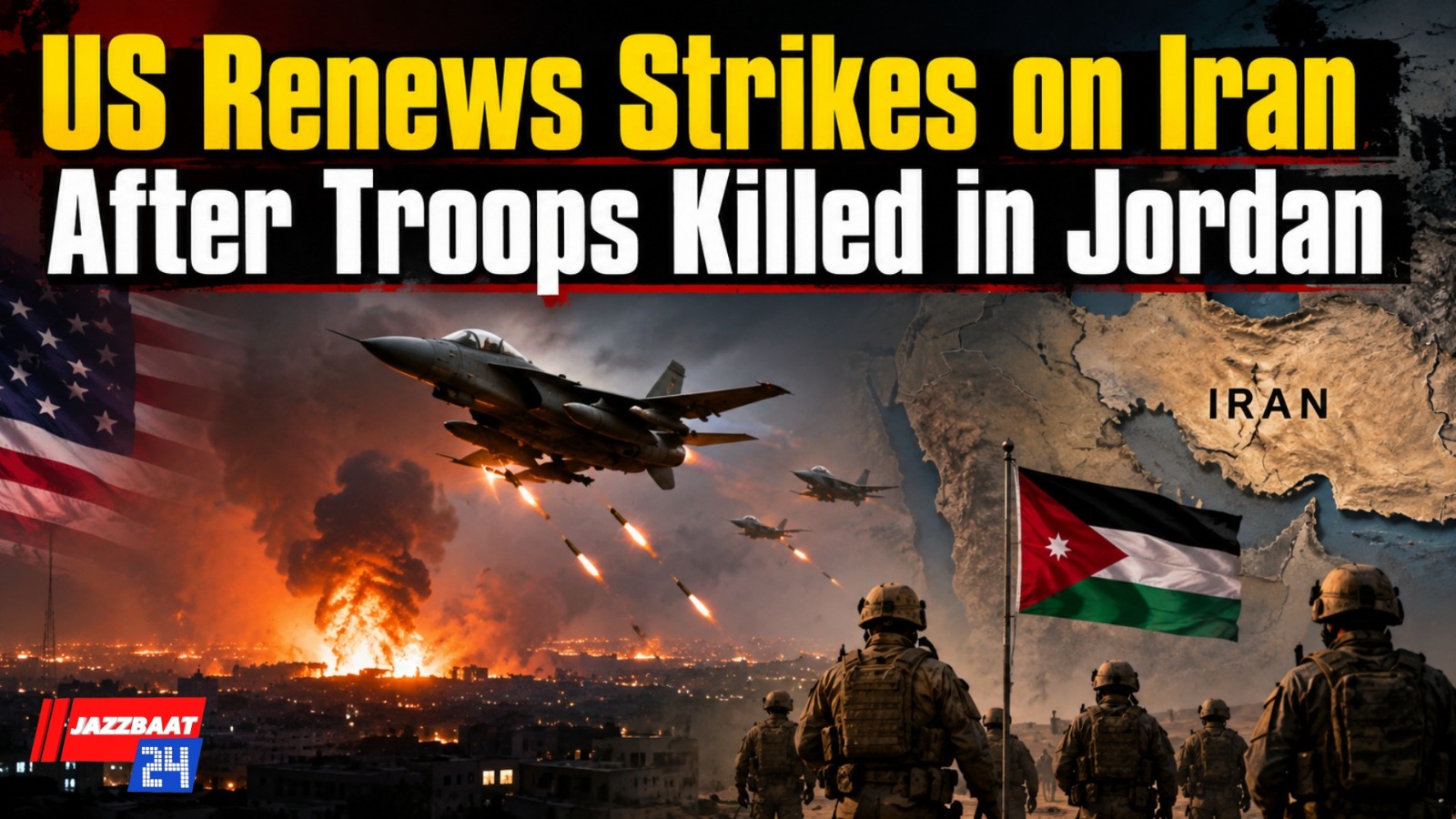
The United States has launched another wave of military strikes against Iran after confirming that at least two American service members were killed in an Iranian attack on a military facility in Jordan. The renewed operations came as several US allies in the region reported fresh Iranian missile and drone attacks, raising fears of a wider conflict across West Asia.
The two US personnel were killed when Iranian projectiles struck the Muwaffaq Salti Air Base in Jordan. Another service member was reported missing, while several others were injured. The deaths marked a significant escalation following the breakdown of an interim ceasefire between Washington and Tehran.
In response, US forces carried out strikes on Iranian air-defence systems, missile storage facilities, coastal surveillance sites and infrastructure linked to drone operations. US Central Command said the attacks were intended to reduce Iran’s ability to target American troops, allied countries and commercial shipping in the Gulf.
President Donald Trump said the military action was carried out in honour of the fallen personnel and warned that Iran would face further consequences if attacks on US forces continued. Washington has maintained that its objective is to prevent Tehran from threatening regional security and developing a nuclear weapon.
Iran, however, continued its retaliatory campaign. Bahrain and Kuwait reported Iranian missile and drone attacks, while their air-defence systems were activated to intercept incoming projectiles. Qatar and Jordan also reported threats or interceptions, as authorities across the Gulf placed security forces on heightened alert.
Another American service member was reportedly killed in northern Iraq while handling unexploded ordnance from a downed Iranian drone, further increasing the US military death toll from the conflict. The continuing exchange of attacks has disrupted air travel, affected financial markets and intensified concerns over the safety of global energy routes.
The Strait of Hormuz remains a major focus of the confrontation. A large share of the world’s oil and gas shipments passes through the narrow waterway, and Iranian threats to disrupt traffic have pushed crude oil prices higher. Tehran has warned that energy supplies could be blocked if American military operations continue.
Despite the renewed strikes, US officials have said diplomacy remains possible if Iran agrees to meaningful negotiations. However, with both sides continuing military operations and regional allies increasingly drawn into the confrontation, there is little indication of an immediate ceasefire.
International leaders have urged restraint, warning that further escalation could trigger a prolonged regional war with serious humanitarian and economic consequences.