

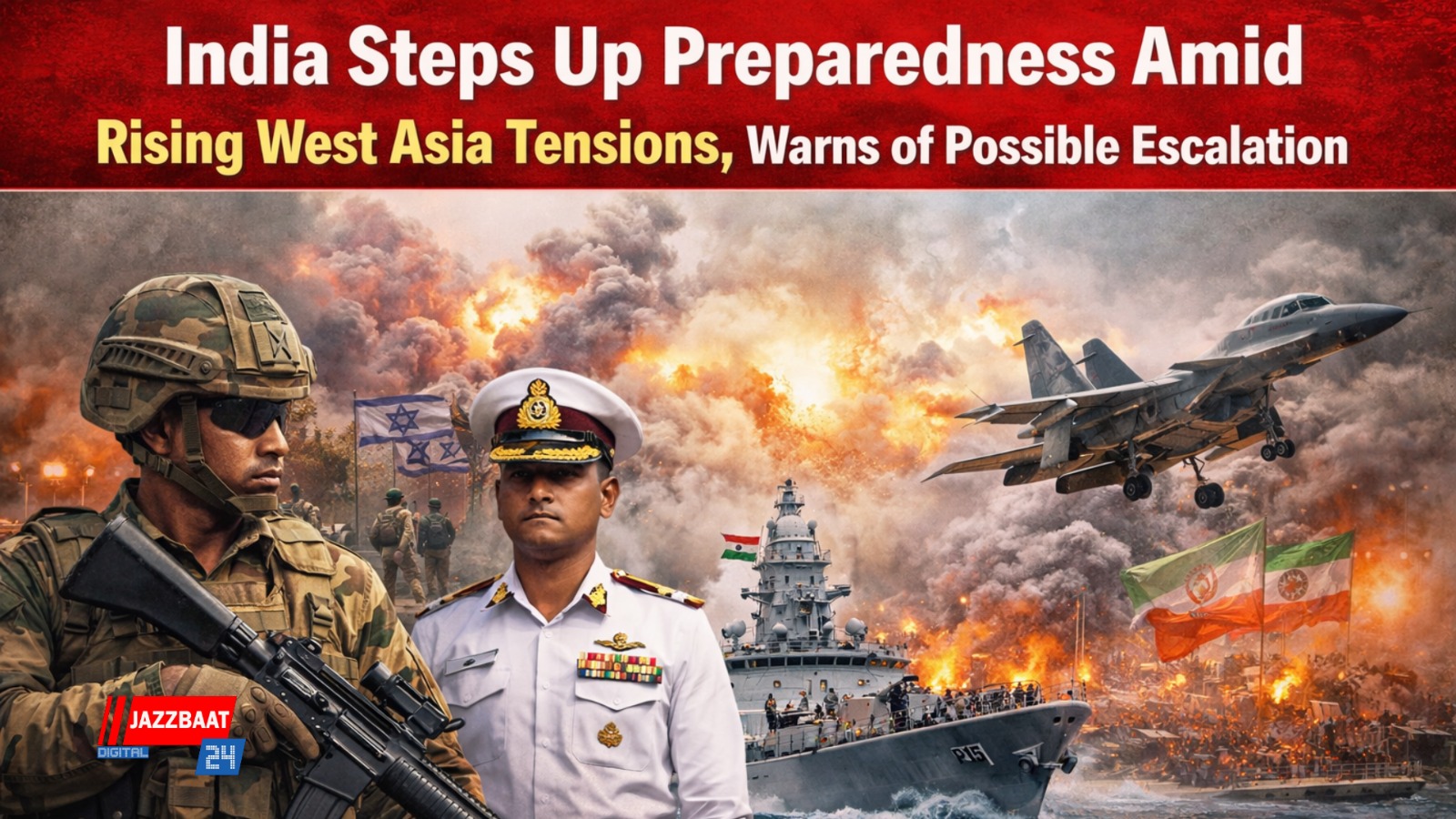
India has intensified its strategic and diplomatic preparedness in response to the ongoing volatile situation in West Asia, with government sources indicating close monitoring of developments amid fears of further escalation in the region.
According to official inputs, the government is keeping a “high level of alertness” as tensions continue to rise across multiple flashpoints in West Asia, where geopolitical instability has already disrupted regional security, trade routes, and energy supply chains. While India has not taken any alarmist position, authorities have acknowledged that the situation remains “fluid and uncertain.”
The Ministry of External Affairs (MEA) is said to be in continuous coordination with Indian embassies in affected regions to ensure the safety and security of Indian nationals. Diplomatic channels are also being used to maintain communication with key partner countries in the region, with emphasis on de-escalation and restraint.
Government officials have indicated that contingency planning has been strengthened across relevant departments, particularly in areas related to evacuation readiness, energy security, and trade logistics. India, which imports a significant portion of its crude oil and natural gas from West Asia, is especially sensitive to any disruption in supply routes or shipping corridors.
Sources suggest that security agencies are also closely tracking developments that could have indirect implications for domestic stability, including cyber threats, financial market volatility, and possible disruptions in overseas employment zones where large Indian diaspora communities reside.
At the same time, India has reiterated its consistent diplomatic stance calling for dialogue and peaceful resolution of conflicts in the region. Officials have stressed that escalation serves no strategic interest and could have widespread humanitarian and economic consequences.
The government’s preparedness measures are largely precautionary at this stage, with no immediate threat flagged to Indian territory. However, authorities have emphasized that the evolving nature of the conflict requires constant reassessment and rapid response capability.
Analysts note that the situation in West Asia has global implications, influencing energy prices, shipping routes through key maritime chokepoints, and overall geopolitical stability. India’s proactive monitoring reflects its broader foreign policy approach of balancing strategic autonomy with global engagement.
As developments continue to unfold, the government is expected to maintain its high-level surveillance and diplomatic outreach, while urging restraint among all parties involved in the conflict.