
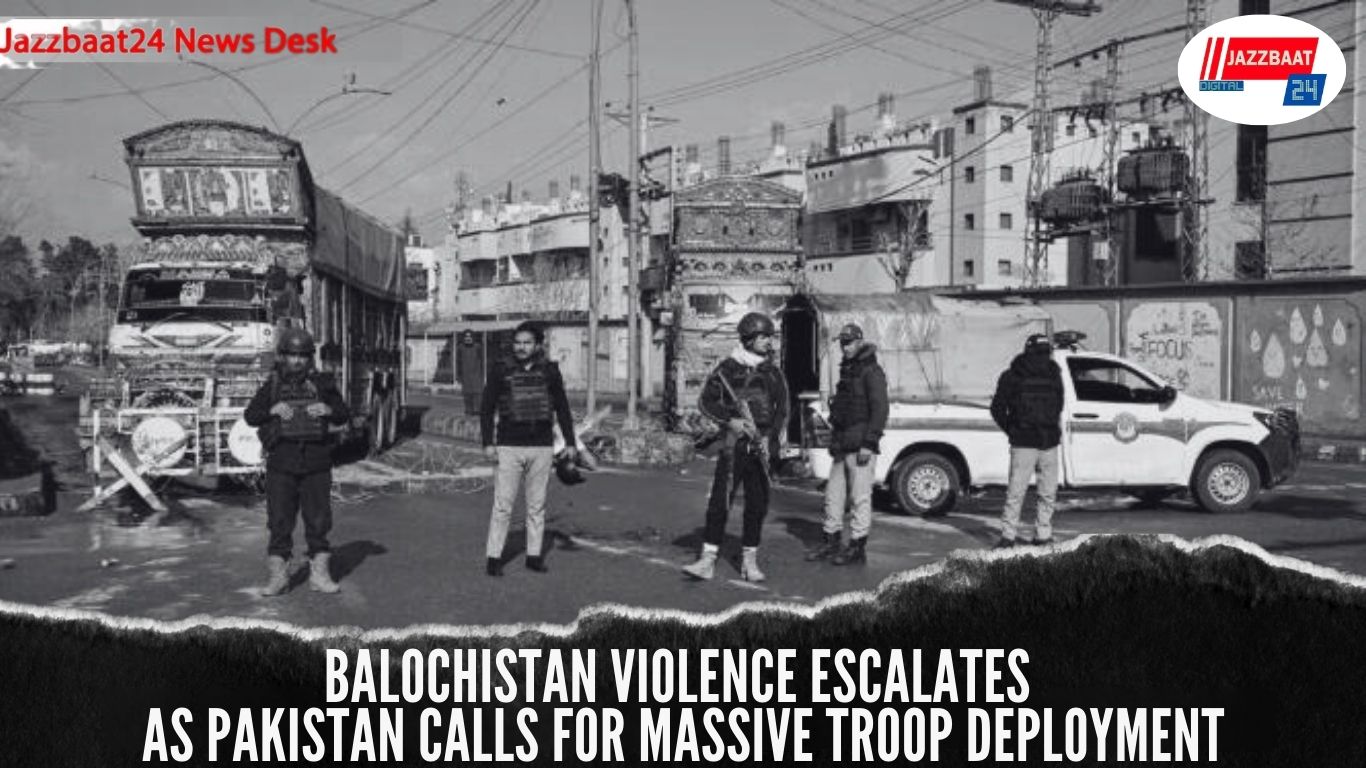
Deadly violence in Pakistan’s restive Balochistan province has intensified, with the government saying that the region’s vast and rugged terrain requires the deployment of a large number of security forces. Officials said at least 177 people have been killed over the past two days in what they described as coordinated attacks and subsequent counter-terror operations across multiple locations in the province.
According to authorities, security forces killed 22 alleged militants in fresh operations, launched after ethnic Baloch armed groups carried out a series of attacks on Saturday. Balochistan, which borders Iran and Afghanistan, has witnessed a long-running insurgency fuelled by grievances over political autonomy, resource control and development. The province is also home to key projects under the China–Pakistan Economic Corridor (CPEC), which have previously been targeted by insurgent groups.
Addressing Pakistan’s National Assembly, Defence Minister Khawaja Asif said the sheer size of Balochistan covering over 40% of the country’s geographical area makes counter-insurgency operations especially challenging. He argued that troops are “physically handicapped” by the need to guard and patrol such a vast, sparsely populated and mountainous region, calling for massive force deployment to contain the violence.
Asif also alleged links between criminal gangs and banned militant outfits, claiming that smugglers operate under the cover of separatist groups. He rejected attempts to frame the violence as a “freedom movement,” saying it was being used to legitimise criminal activities, including large-scale smuggling.
Replaying Pakistan’s long-standing claims, the defence minister accused India and elements operating from Afghan soil of supporting militant proxies in Balochistan allegations New Delhi has firmly denied. India’s external affairs ministry said such are baseless and aimed at deflecting attention from Pakistan’s internal challenges, urging Islamabad to address the long-standing demands and grievances of the people of Balochistan instead.
The latest spike in violence has once again put the spotlight on the fragile security situation in the strategically vital province.