

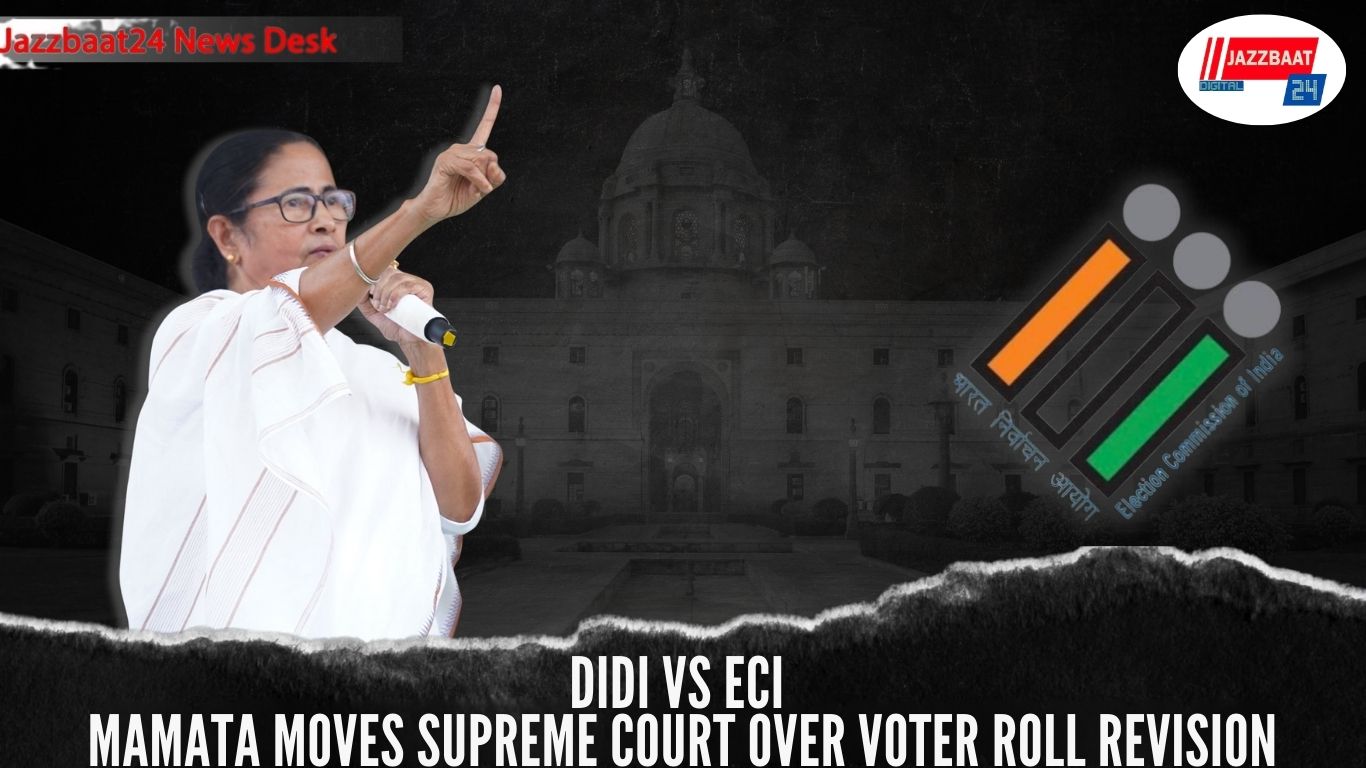
West Bengal chief minister Mamata Banerjee is set to escalate her confrontation with the Election Commission of India (ECI) by challenging the Special Intensive Revision (SIR) of electoral rolls in the Supreme Court. If permitted by the court, Banerjee may become the first sitting chief minister to personally argue her own case, adding political weight to an already high-stakes legal battle ahead of the 2026 assembly elections.
In her petition, Banerjee has sought the quashing of all SIR-related orders issued by the ECI in June and October 2025. She has urged the court to direct that the upcoming West Bengal assembly polls be conducted strictly on the basis of the existing 2025 voter list, arguing that the revision exercise risks large-scale disenfranchisement of genuine voters under the guise of verification.
The chief minister has raised objections to the SIR’s reliance on a 2002 baseline and what she terms an “onerous” verification framework. Particular concern has been flagged over cases marked for “logical discrepancies”, including minor spelling variations, age gaps with parents or grandparents, and mismatches in names or gender. Banerjee has argued that such technicalities could lead to wrongful deletions of eligible voters. She has sought directions to bar hearings in these cases and instead allow election authorities to make suo motu corrections using available official records.
Among the reliefs sought are the acceptance of Aadhaar as valid proof of identity without insistence on additional documents, withdrawal of prior hearing notices, and safeguards against bulk deletions of names. She has also called for greater transparency, including the online publication of cases flagged under the SIR.
The petition comes shortly after the Supreme Court intervened to ease what it described as the “strain and stress” faced by ordinary voters during the SIR process in West Bengal. The court had directed the ECI to ensure transparency, proper intimation, accessible hearing venues and meaningful assistance to voters.
Banerjee’s personal intervention, coupled with similar challenges by Trinamool Congress leaders, signals a crucial legal and political showdown over the integrity of the voter roll ahead of the 2026 West Bengal polls.