

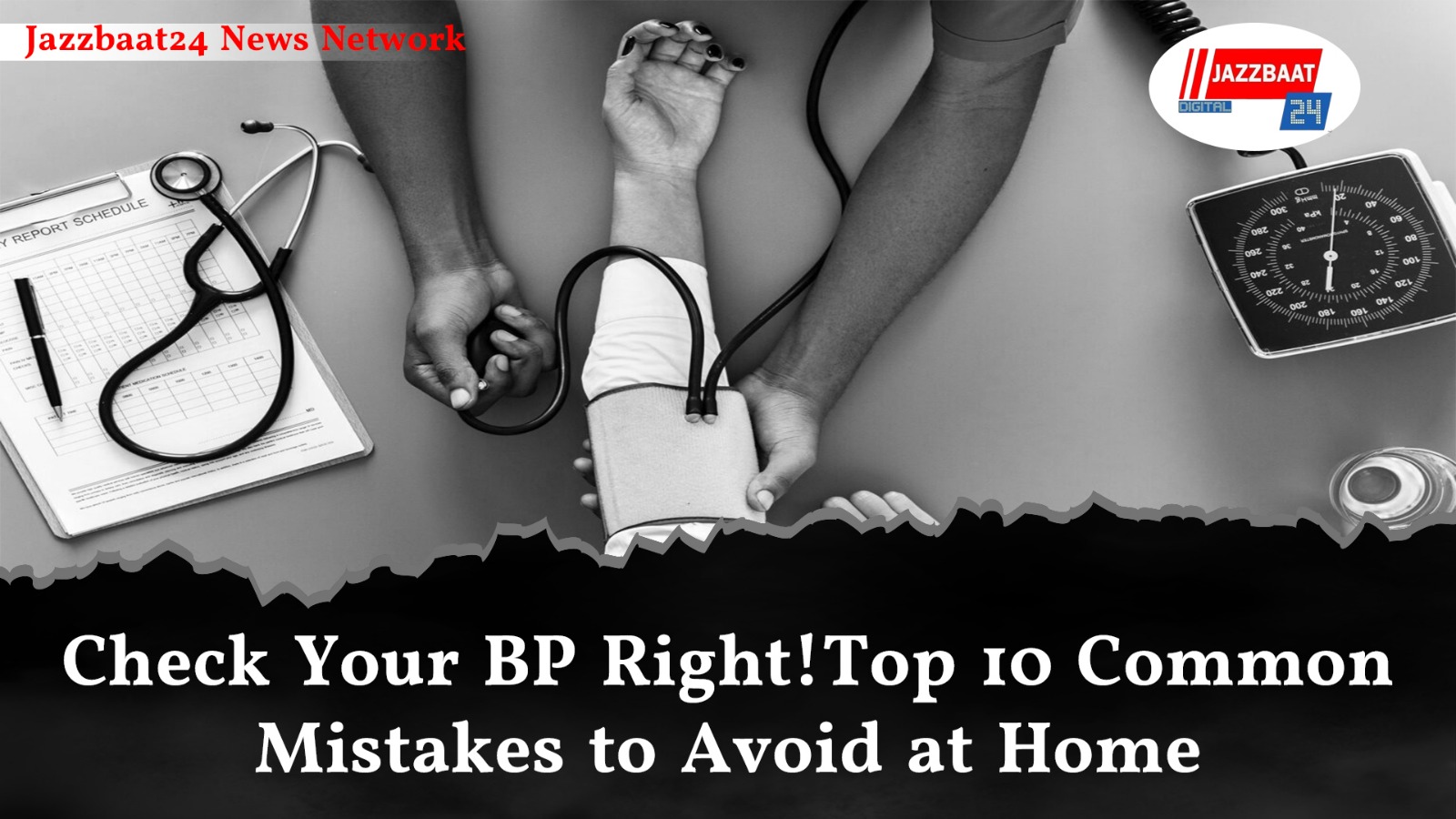
Monitoring blood pressure at home is common, but even small mistakes can distort readings, warns diabetologist Dr Pramod Tripathi. The two key numbers systolic (when the heart pumps) and diastolic (when the heart rests) are vital indicators of cardiovascular health.
Dr Tripathi highlights errors often made: keeping feet dangling or crossed, checking BP with a full bladder, sitting rigidly, leaving clothing between arm and cuff, misplacing the cuff tube, improper arm positioning, talking while measuring, drinking tea or coffee shortly before, checking under stress or post-exercise, and taking a single reading instead of averaging two readings five minutes apart.
He explained that rising systolic numbers may indicate stiffening arteries, while elevated diastolic readings can signal constricted smaller arteries due to stress, salt, or insulin effects.
The Cleveland Clinic notes normal BP is below 120/80 mm Hg, with hypertension or hypotension posing serious health risks. High BP can lead to heart disease, while very low BP can cause dizziness, fainting, or shock.
Dr Tripathi stresses proper technique to ensure accurate readings, emphasizing relaxation, correct posture, and timing to safeguard heart health.
Tip: Always consult your doctor for personalized guidance home checks are helpful but cannot replace professional medical advice.