

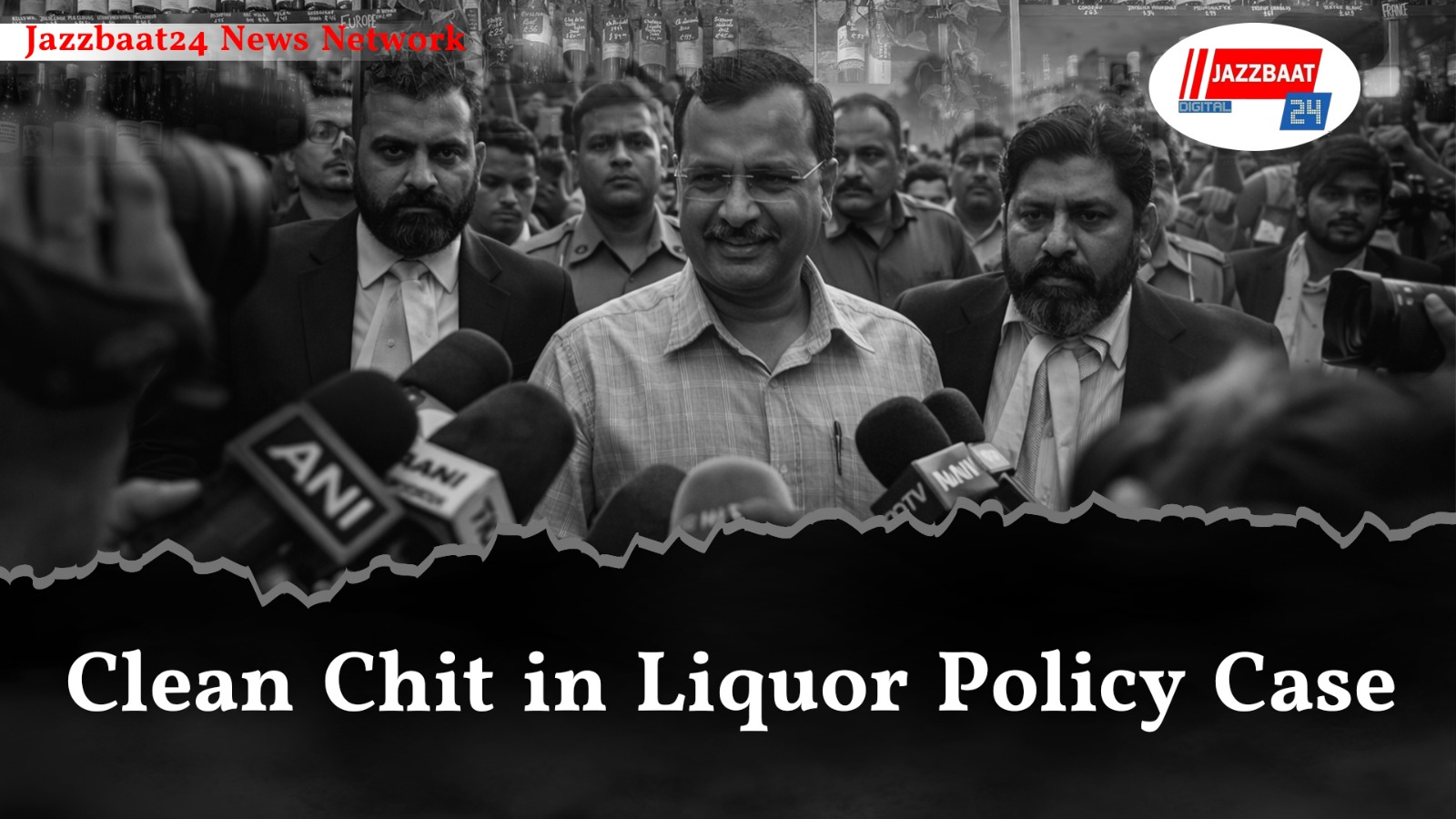
In a significant development in the high-profile Delhi excise policy case, a special court has granted relief to Arvind Kejriwal and several other accused, observing that the case filed by the Central Bureau of Investigation lacked sufficient evidence to proceed.
The court, while pronouncing its order, noted that the prosecution failed to establish a prima facie case linking Kejriwal directly to alleged irregularities in the now-scrapped Delhi liquor policy. The judge reportedly termed the allegations “baseless” in the absence of concrete material proof, bringing temporary relief to the Aam Aadmi Party leadership.
The case revolves around the controversial 2021–22 excise policy introduced by the Delhi government, which was later withdrawn amid accusations of financial misconduct and favouritism towards certain private players. The CBI had alleged that policy decisions were manipulated to benefit select liquor businesses, causing losses to the public exchequer. However, the defence consistently maintained that the charges were politically motivated and unsupported by credible evidence.
Legal representatives for Kejriwal argued that there was no direct documentation or financial trail connecting him to any wrongdoing. They further stated that the investigative agency relied heavily on statements without corroborative records. The court’s decision, they said, reinforces their claim that the case was built on weak grounds.
Political reactions followed swiftly. Leaders of the Aam Aadmi Party welcomed the verdict, calling it a victory of truth and constitutional institutions. They accused the central government of misusing investigative agencies to target opposition leaders. Meanwhile, representatives of the Bharatiya Janata Party maintained that legal processes should continue and that the broader investigation into the excise policy remains active.
The Delhi liquor policy controversy has been one of the most politically charged issues in recent years, triggering multiple probes by both the CBI and the Enforcement Directorate. While this ruling offers immediate respite to Kejriwal and others named in this specific case, related proceedings in connected matters may continue.
Legal experts say the order underscores the importance of evidence-based prosecution in high-profile corruption cases. For now, the court’s remarks mark a turning point in the narrative surrounding the excise policy row, even as political tensions over the issue show no signs of fading.