

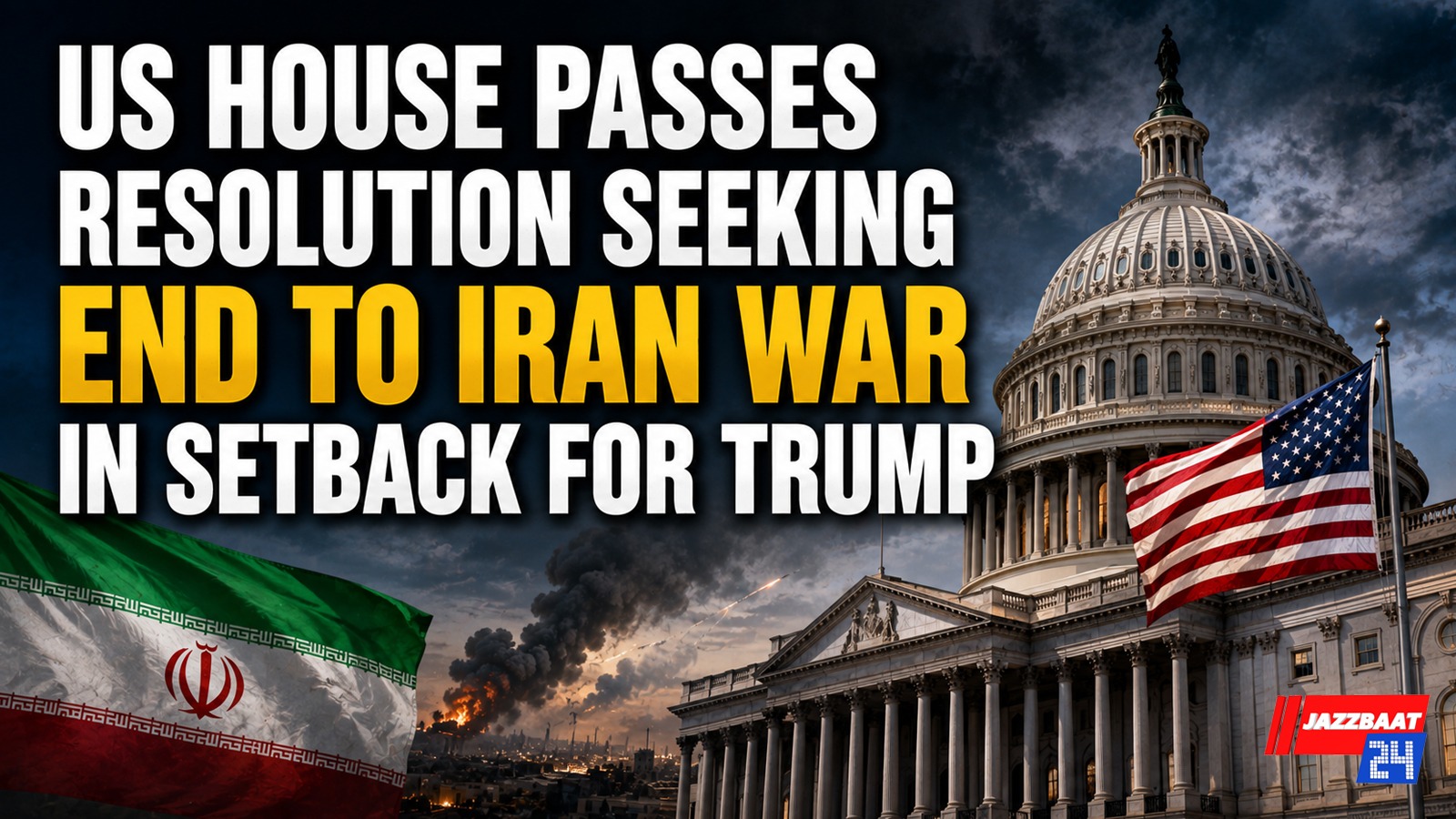
In a significant political setback for U.S. President Donald Trump, the House of Representatives has passed a war powers resolution aimed at ending U.S. military involvement in the ongoing conflict with Iran unless Congress explicitly authorizes further action. The measure passed by a narrow vote of 215-208, with four Republicans joining Democrats in support, highlighting growing bipartisan concern over the war and its consequences.
The resolution seeks to limit the president's authority to continue military operations against Iran without congressional approval. Lawmakers backing the measure argue that the U.S. Constitution grants Congress the power to declare war and that the administration has exceeded its authority by continuing military actions without formal authorization.
The vote marks the first successful House effort to curb Trump's Iran policy after several previous attempts failed. Opposition to the conflict has increased in recent months as concerns grow over the financial cost of the war, rising energy prices, and the broader risk of instability in the Middle East. Several Republicans broke ranks with the administration, signaling unease within Trump's own party.
Democratic lawmakers described the resolution as a necessary step to restore congressional oversight of military engagements. Supporters contend that prolonged military action without legislative approval undermines constitutional checks and balances. They also argue that the conflict has imposed significant economic and strategic costs on the United States.
The Trump administration has strongly opposed the measure. Secretary of State Marco Rubio warned that restricting presidential military authority could weaken Washington's negotiating position with Tehran and send the wrong signal to Iran. The White House has also questioned the applicability of the War Powers Act in the current situation.
Despite its passage in the House, the resolution faces significant hurdles before it can have any practical effect. The Senate has yet to take final action on a similar measure, and even if Congress ultimately approves it, Trump is expected to veto any legislation that restricts his military authority. As a result, the vote is being viewed largely as a symbolic but politically important rebuke of the administration's handling of the Iran conflict.
The House vote underscores growing debate in Washington over presidential war powers and signals increasing congressional scrutiny of U.S. involvement in the Iran conflict as the war enters its fourth month.