

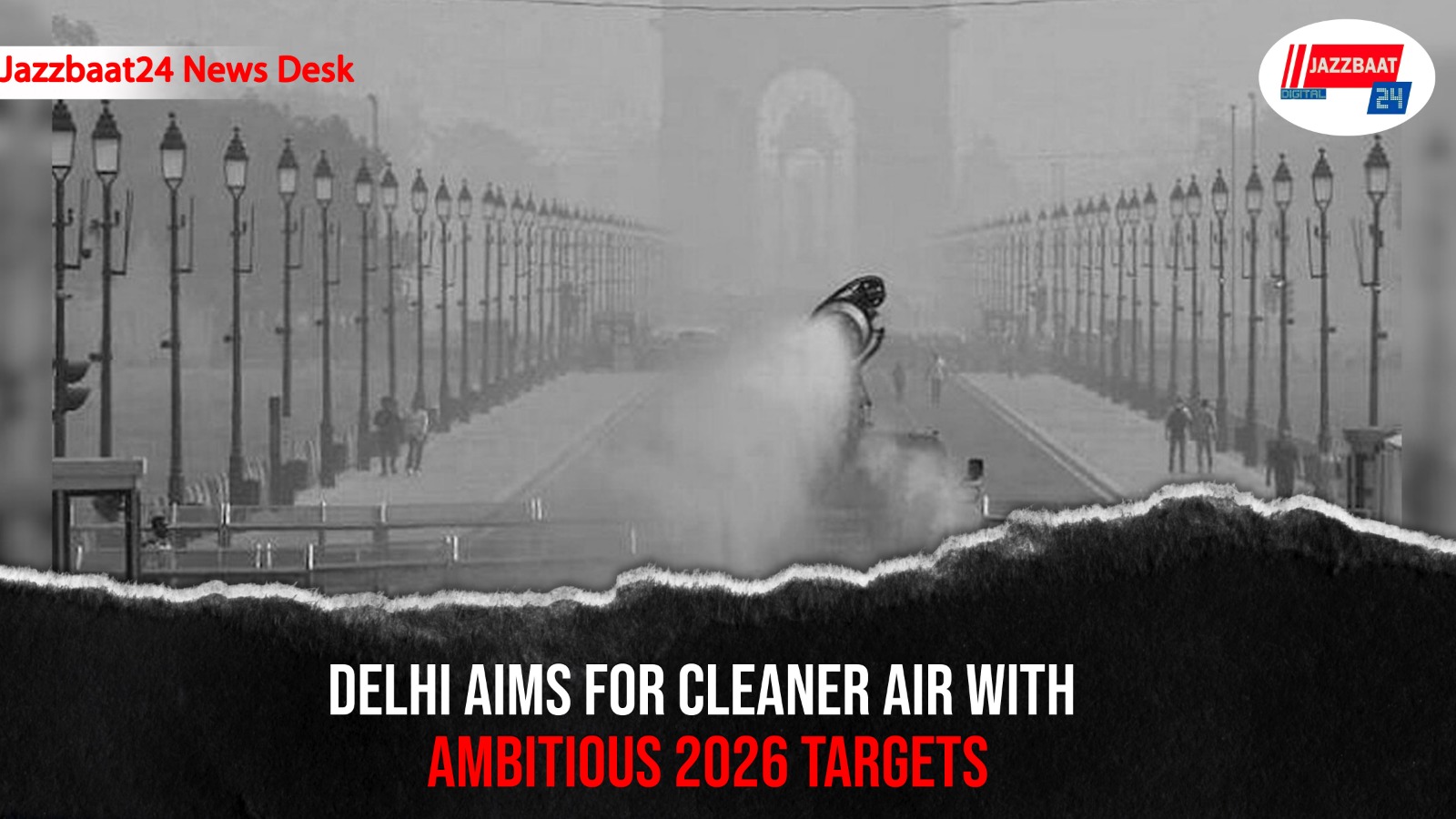
The national capital is intensifying its fight against pollution with the Commission for Air Quality Management (CAQM) announcing its 2026 air-quality targets. The plan sets specific goals to reduce harmful pollutants, improve public health, and strengthen enforcement of environmental standards.
The 2026 targets aim for a 15% reduction in PM2.5 levels, a 20% cut in PM10, and a 15% improvement in Delhi’s annual average Air Quality Index (AQI). This would bring PM2.5 down to 96 µg/m³, PM10 to 177 µg/m³, and AQI to 177. While these figures mark progress, they remain far above global safety standards set by the World Health Organization, which recommends PM2.5 at 5 µg/m³ and PM10 at 15 µg/m³.
The strategy identifies sector-wise responsibilities, addressing pollution from transport, construction, biomass burning, industry, and small-scale manufacturing. A significant aspect of the plan is expanding air-quality monitoring infrastructure. The city intends to increase Continuous Ambient Air Quality Monitoring Stations, reduce data gaps, and ensure accountability among agencies controlling emissions.
Delhi’s air quality has shown gradual improvement in recent years. PM2.5 levels fell to 94 µg/m³ in 2020 during the COVID-19 lockdowns, but resumed activity led to pollution spikes in subsequent years. By 2025, PM2.5 dropped to 99 µg/m³, and AQI improved to 191, signaling that pollution-control measures may be taking effect.
Budgetary allocations for CAQM reflect the government’s growing commitment, rising from Rs 20 crore in FY22 to Rs 35 crore in the FY27 estimate. Funds will support monitoring, enforcement, and long-term pollution-reduction projects.
Despite these efforts, Delhi’s projected air quality for 2026 will still be classified as “Unhealthy” under the US EPA system and remain several times above European and WHO limits. While improvements are visible, the journey toward truly clean and breathable air continues to be a long-term challenge for the city.