
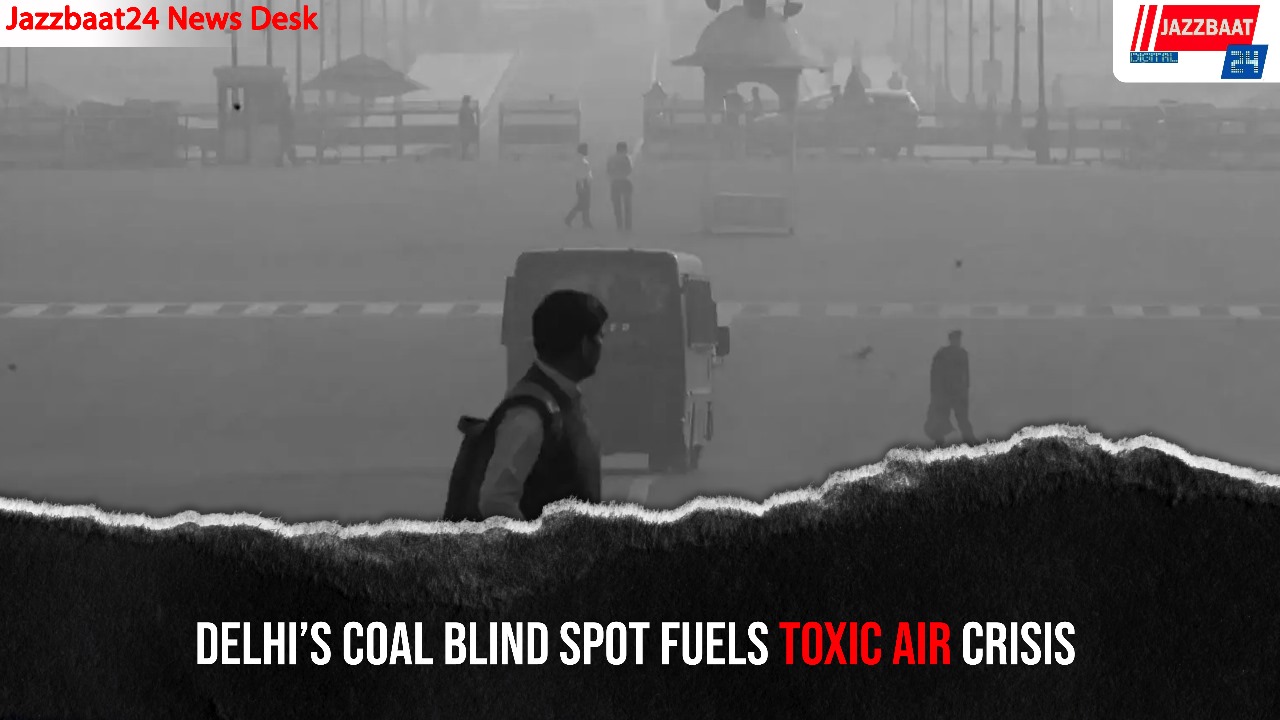
As Delhi reels under a thick blanket of toxic smog, with air quality slipping into the ‘severe’ category, a startling revelation has exposed a major regulatory failure behind the capital’s pollution nightmare. An RTI response has confirmed that for over a decade, there has been no comprehensive monitoring of emissions from 11 coal-fired thermal power plants located within 300 kilometres of Delhi.
The disclosure by the Central Pollution Control Board (CPCB) comes at a time when emergency measures under GRAP-3 have been reimposed across the NCR. Yet, environmental experts say such short-term steps are ineffective when major industrial polluters continue to operate unchecked.
According to the RTI, none of the coal-based plants in this radius — spread across Haryana, Punjab and Uttar Pradesh — have undergone regular stack-emission monitoring since stringent emission standards were notified in December 2015. These plants collectively run 35 units and emit large quantities of sulphur dioxide (SO₂), nitrogen oxides, particulate matter and heavy metals, all of which significantly worsen Delhi’s air quality.
Studies suggest that SO₂ emissions from these thermal power plants are nearly 16 times higher than those caused by seasonal stubble burning. Once released, SO₂ reacts in the atmosphere to form fine PM2.5 particles, which penetrate deep into the lungs and bloodstream, increasing the risk of asthma, heart disease and premature death.
While the government had mandated the installation of Flue Gas Desulphurisation (FGD) systems to curb emissions, enforcement has remained weak. Even among plants categorised as the most critical, action has been minimal and penalties non-existent.
Environmental activist Amit Gupta, who filed the RTI, called the findings “shocking”, stating that pollution cannot be controlled without proper measurement. Experts warn that unless consistent monitoring and strict enforcement begin immediately, Delhi’s air crisis will continue to worsen, posing a grave public health threat to millions.