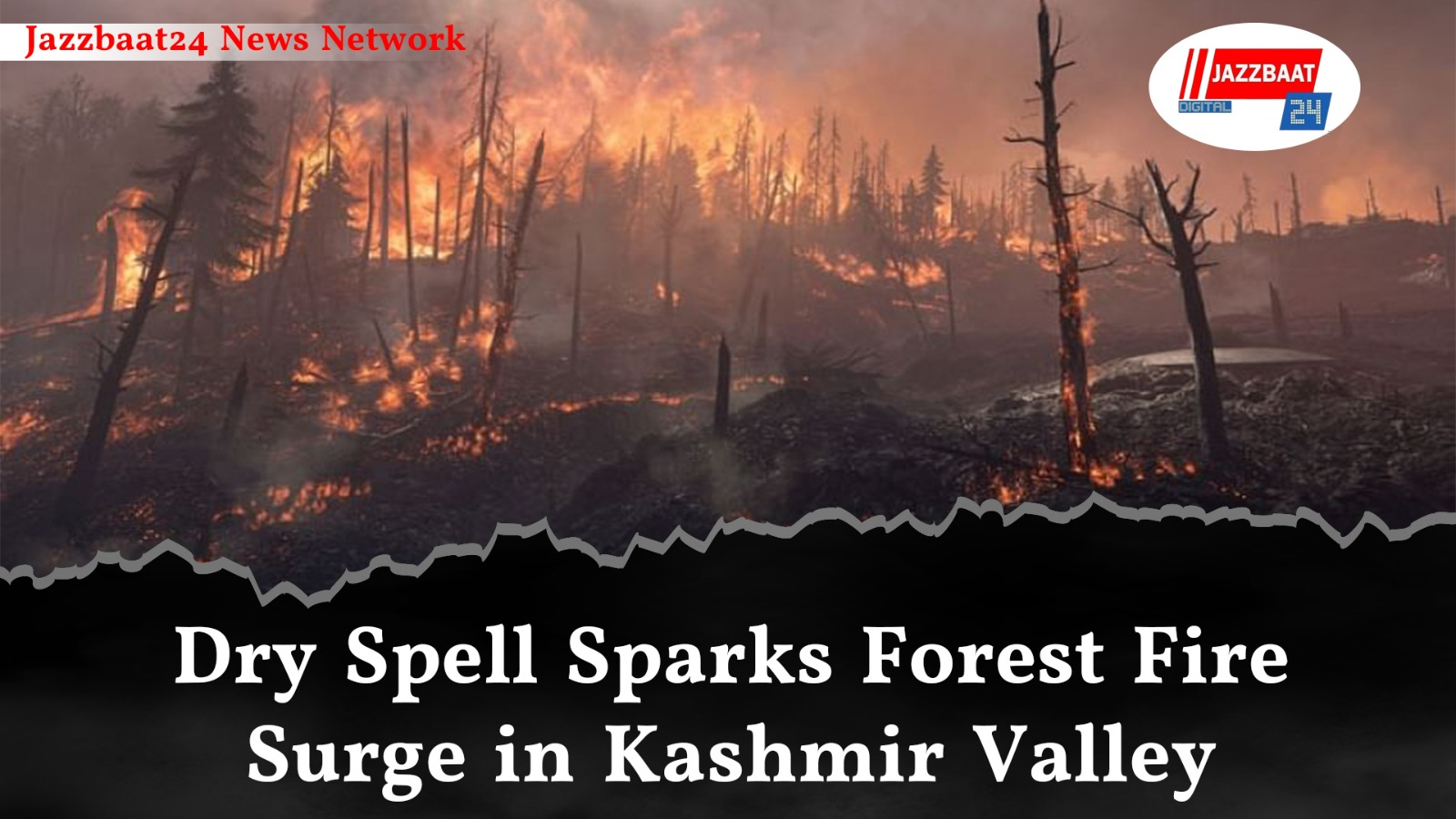
A prolonged dry spell and unusually low snowfall have triggered a wave of forest fires across the Kashmir Valley, raising fresh concerns about ecological damage and climate vulnerability in the Himalayan region.
In recent weeks, several forest areas across the Valley have reported fire incidents, particularly in the districts of Anantnag, Kulgam and parts of north Kashmir. Blazes were reported in forest belts such as Manzmoh and Verinag in Anantnag, as well as Lammer, Akhal and Pranhal in Kulgam, where dense vegetation and dry forest floors allowed flames to spread rapidly.
Forest officials say the fires have been largely driven by unusually dry weather conditions. A significant deficit in winter rainfall and snowfall has left forest undergrowth extremely dry, making it highly susceptible to ignition. Strong winds have further worsened the situation, helping flames travel across ridges and forest slopes at alarming speed.
According to official data, Kashmir recorded around 310 forest fire incidents in 2025, affecting more than 880 hectares of forest land across various forest divisions. Areas such as Sindh, Kamraj, Anantnag and Bandipora divisions reported multiple incidents, highlighting the vulnerability of the region’s forests to fire outbreaks.
Environmental experts warn that changing climate patterns are increasingly influencing fire activity in the Western Himalayas. Reduced winter snowfall and rising temperatures have led to drier soils and vegetation, creating conditions where even a small spark can trigger a wildfire. Scientists say such dry winters are becoming more frequent due to long-term climatic changes affecting the Himalayan ecosystem.
While most forest fires in the Valley are surface fires that burn dry grass, leaves and shrubs, officials say human negligence can also play a role. Unattended campfires, discarded cigarettes and deliberate burning of vegetation are often cited as possible causes of ignition in forest zones.
The Forest Department has placed vulnerable areas under heightened surveillance and established control rooms in several districts to ensure quick response to fire alerts. Fire watchers and local volunteers have also been deployed to monitor forest compartments and assist in firefighting efforts.
Authorities are urging residents and tourists to remain cautious while visiting forest areas and avoid activities that could ignite fires. Public awareness, officials say, is crucial in preventing further damage to Kashmir’s fragile mountain ecosystem.
With nearly half of Jammu and Kashmir’s land area covered by forests, environmentalists stress that protecting these green landscapes is vital not only for biodiversity but also for the livelihoods and climate stability of the region.