
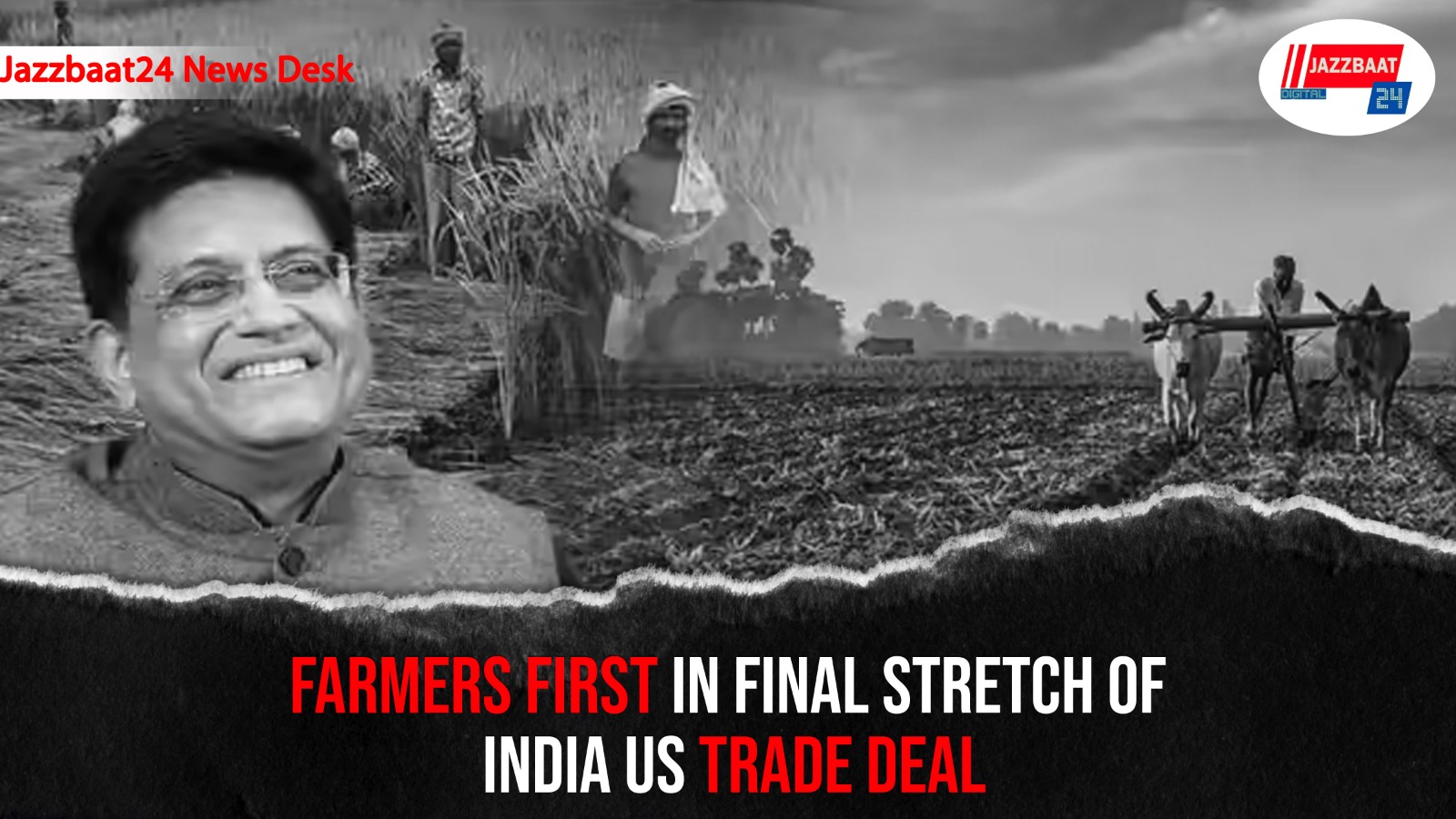
India and the United States are in the final phase of negotiations on a landmark trade agreement, with the Centre assuring that the interests of Indian farmers remain fully protected. Senior government leaders said the deal is designed to deepen economic ties between the two countries without opening India’s agricultural markets to unfair competition.
Union Minister for Agriculture and Farmers’ Welfare Shivraj Singh Chouhan dismissed opposition claims that the proposed agreement could hurt domestic farmers. Speaking in New Delhi, he said there has been no compromise on sensitive sectors such as agriculture and dairy. According to him, staple grains, millets, fruits and dairy products will continue to enjoy existing safeguards, and there is no provision allowing a sudden influx of foreign farm produce into Indian markets.
The government underlined that farmers’ welfare was a non-negotiable priority throughout the negotiations. Chouhan said the talks were guided by Prime Minister Narendra Modi’s direction that national interest and the livelihood of farmers must come first. He also addressed concerns raised by recent comments from a US official, reiterating that India has not agreed to any market access that would undermine domestic producers.
At the same time, officials highlighted the export opportunities expected from the deal. Lower tariffs could boost shipments of Indian rice, spices and textiles to the US and other markets. India already exports rice worth tens of thousands of crores annually, and a rise in textile exports could directly benefit cotton farmers and workers across the value chain.
External Affairs Minister S Jaishankar said the agreement is now in its final detailing stage and described the negotiations as productive. Beyond trade, both sides are expected to expand cooperation in areas such as critical minerals, defence and energy.
With global trade facing uncertainty, the Centre views the proposed pact as a strategic step to strengthen India–US ties. The government has maintained that the final agreement will balance new economic opportunities with strong protection for Indian agriculture, keeping farmers at the heart of India’s trade policy.