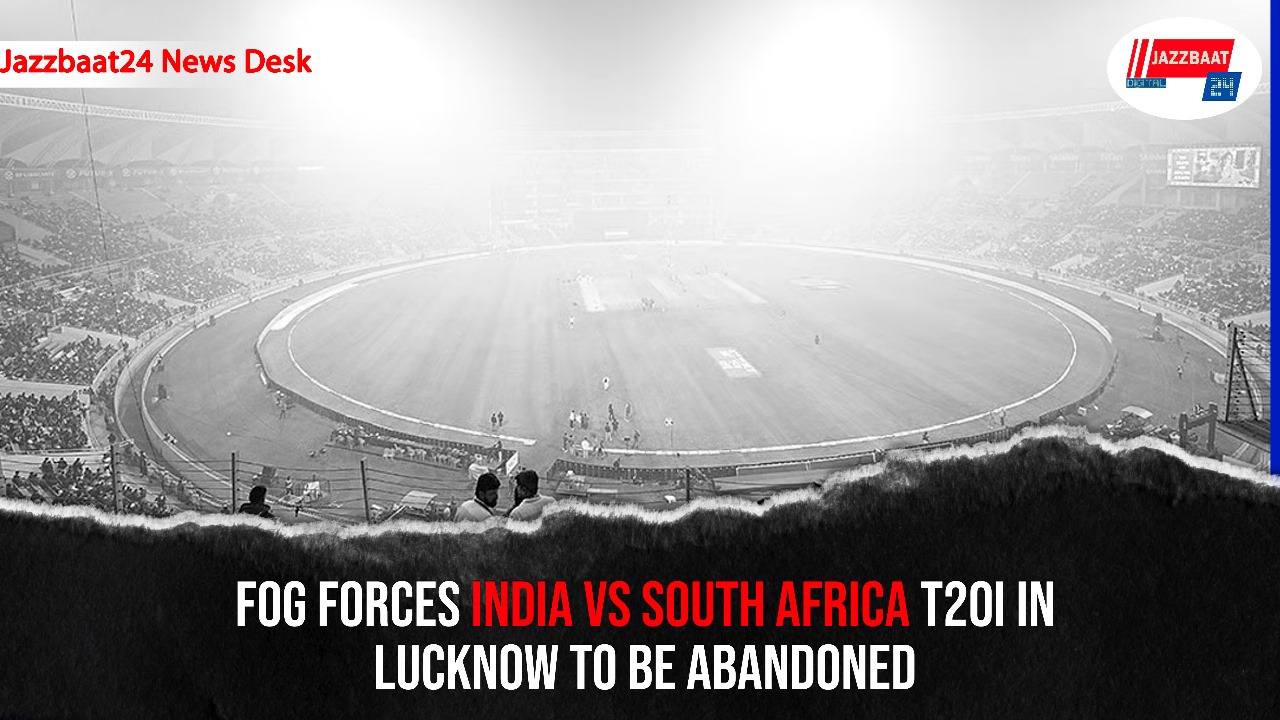
A rare and unusual incident unfolded in Indian cricket on Wednesday as the 4th T20I between India and South Africa in Lucknow was abandoned without a single ball bowled due to dense fog. The Air Quality Index (AQI) in Lucknow remained in the hazardous zone above 400, raising concerns over player safety and the timing of the match.
Poor visibility at Ekana Stadium made play impossible, despite umpires inspecting the ground six times before officially calling off the game. Indian all-rounder Hardik Pandya was seen wearing a surgical mask during the warm-up as players struggled to cope with the severe pollution. The match, originally scheduled for 7 PM, was abandoned by 9:30 PM, with spectators gradually leaving as conditions worsened.
The incident sparked criticism of the Board of Control for Cricket in India (BCCI) for scheduling matches in northern cities during peak winter pollution months. The series venues included Lucknow, New Chandigarh, Dharamsala, Ranchi, and Raipur, all of which historically experience poor air quality in November and December.
BCCI vice-president Rajeev Shukla inspected the stadium during the day but offered no immediate solution. With no reserve day, both teams are set to travel to Ahmedabad for the final T20I on Friday, with India leading the series 2-1.
Experts suggest that the BCCI could have considered alternative venues or afternoon match timings to avoid winter pollution disruptions. The 3rd T20I in Dharamsala was also challenging, played in sub-10-degree temperatures with the AQI in the ‘poor’ range.
This unprecedented abandonment highlights the growing challenges of organizing cricket in northern India during winter months, raising questions about the board’s planning and concern for player and spectator safety.