

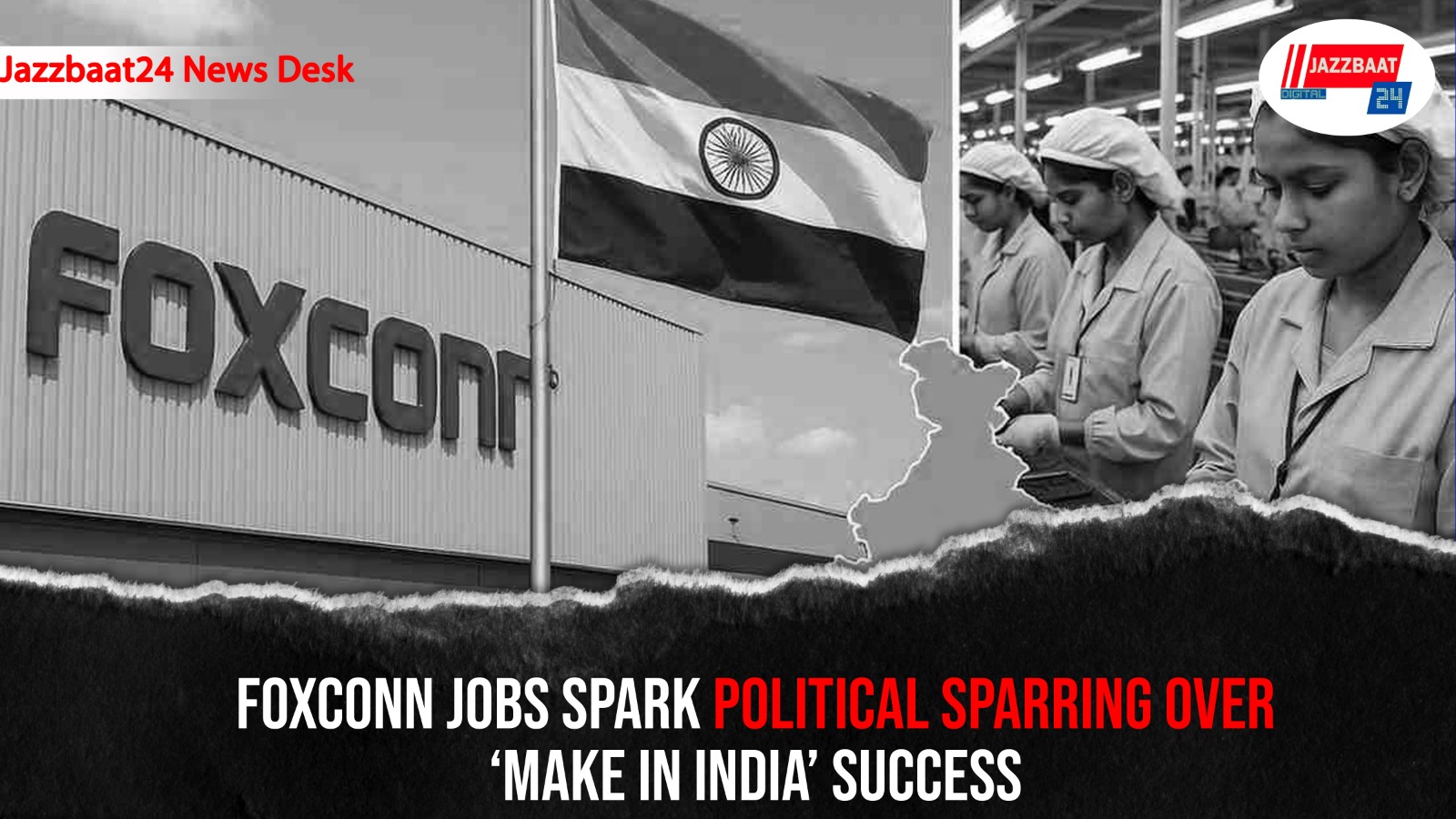
A fresh political exchange has unfolded between Congress MP Rahul Gandhi and Union Electronics and IT Minister Ashwini Vaishnaw over the rapid expansion of iPhone manufacturer Foxconn’s operations in India, highlighting both job creation and credit claims around the Centre’s ‘Make in India’ programme.
Earlier this week, Rahul Gandhi praised the Karnataka government for enabling what he described as the “fastest factory ramp-up seen in India so far”. Referring to Foxconn’s Bengaluru facility, Gandhi noted that nearly 30,000 workers were hired within just eight to nine months. Significantly, around 80 per cent of these employees are women, most between the ages of 19 and 24, many of whom are entering the workforce for the first time.
Calling the development “transformative job creation”, Gandhi said it reflected the kind of manufacturing-led growth India needs. “This is the India we must build: jobs with dignity and opportunities for all,” he wrote in a social media post, crediting Karnataka for creating an ecosystem where large-scale manufacturing can grow quickly.
The remarks, however, drew a pointed response from Union Minister Ashwini Vaishnaw. In a post on X, Vaishnaw thanked Gandhi for “acknowledging the success” of Prime Minister Narendra Modi’s ‘Make in India’ initiative. Sharing Gandhi’s post and the related news report, the minister said the Foxconn expansion demonstrated India’s shift towards becoming a “producer economy” in line with the Prime Minister’s vision.
Foxconn, a Taiwan-based contract manufacturer for Apple, plays a central role in Apple’s strategy to diversify production away from China. The company manufactures several Apple devices, including the latest iPhone 17 models, in India. Once fully operational, the Bengaluru facility is expected to produce up to 20 million iPhones annually.
In the past year alone, iPhones worth approximately $22 billion have been assembled in India, accounting for nearly 20 per cent of Apple’s global iPhone production. As manufacturing scales up, Foxconn’s growth has become both an economic milestone and a political talking point ahead of future elections.