

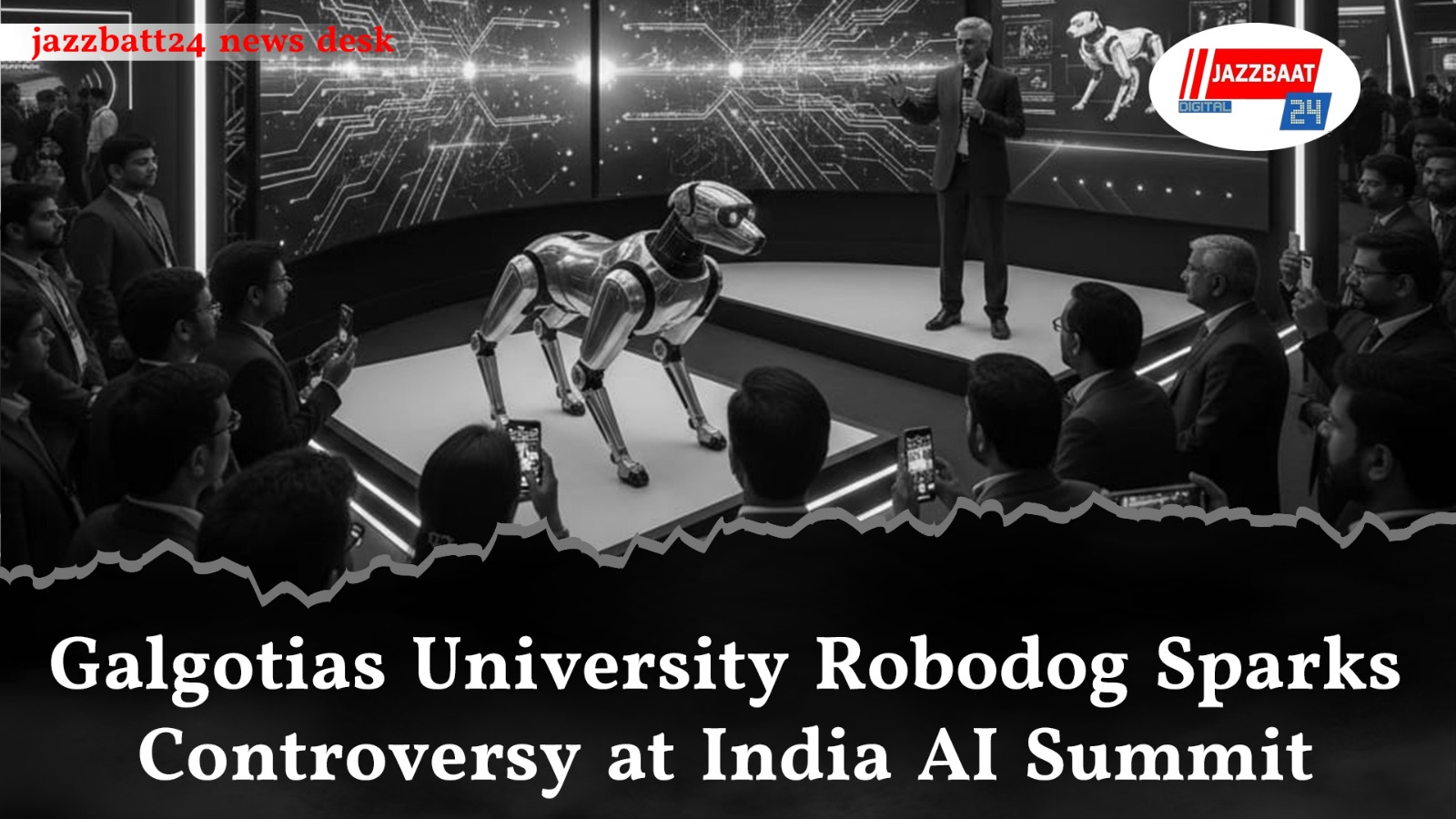
Galgotias University found itself at the center of a controversy during the India AI Impact Summit 2026 in New Delhi after a robotic dog displayed at the event went viral online. The four-legged robot, named “Orion” by university representatives, was presented as a creation of the university’s Centre of Excellence. A clip of Professor Neha Singh introducing Orion, highlighting its surveillance and monitoring capabilities, circulated widely on social media, prompting scrutiny from viewers. Many claimed that the robot was actually a Chinese-made Unitree Go2, rather than an in-house innovation.
In response to the backlash, Galgotias University issued a clarification, stating that it had never claimed to manufacture the robot dog. “Galgotias has not built this robodog, nor have we claimed to do so,” the statement read. The university emphasized that its focus is on cultivating the skills and knowledge of students who will eventually design and engineer advanced technologies in India. Despite the clarification, the incident led summit organizers to ask the university to vacate the expo area.
Unitree Robotics, a Chinese firm, produces these “robodogs,” which are four-legged robots designed to move like animals and perform tasks ranging from industrial inspections to entertainment. Known for their affordability and accessibility compared to competitors like Boston Dynamics, Unitree robots are increasingly popular in tech exhibitions worldwide.
The incident highlights the growing global interest in AI and robotics, as well as the sensitivity around intellectual property and innovation claims in academic settings. While Orion’s presence sparked online debate, the university hopes to use the experience to reinforce its commitment to developing homegrown expertise in AI and robotics. The controversy serves as a reminder of the fine line institutions walk between showcasing technology and accurately representing its origins, especially in an era of viral media scrutiny.