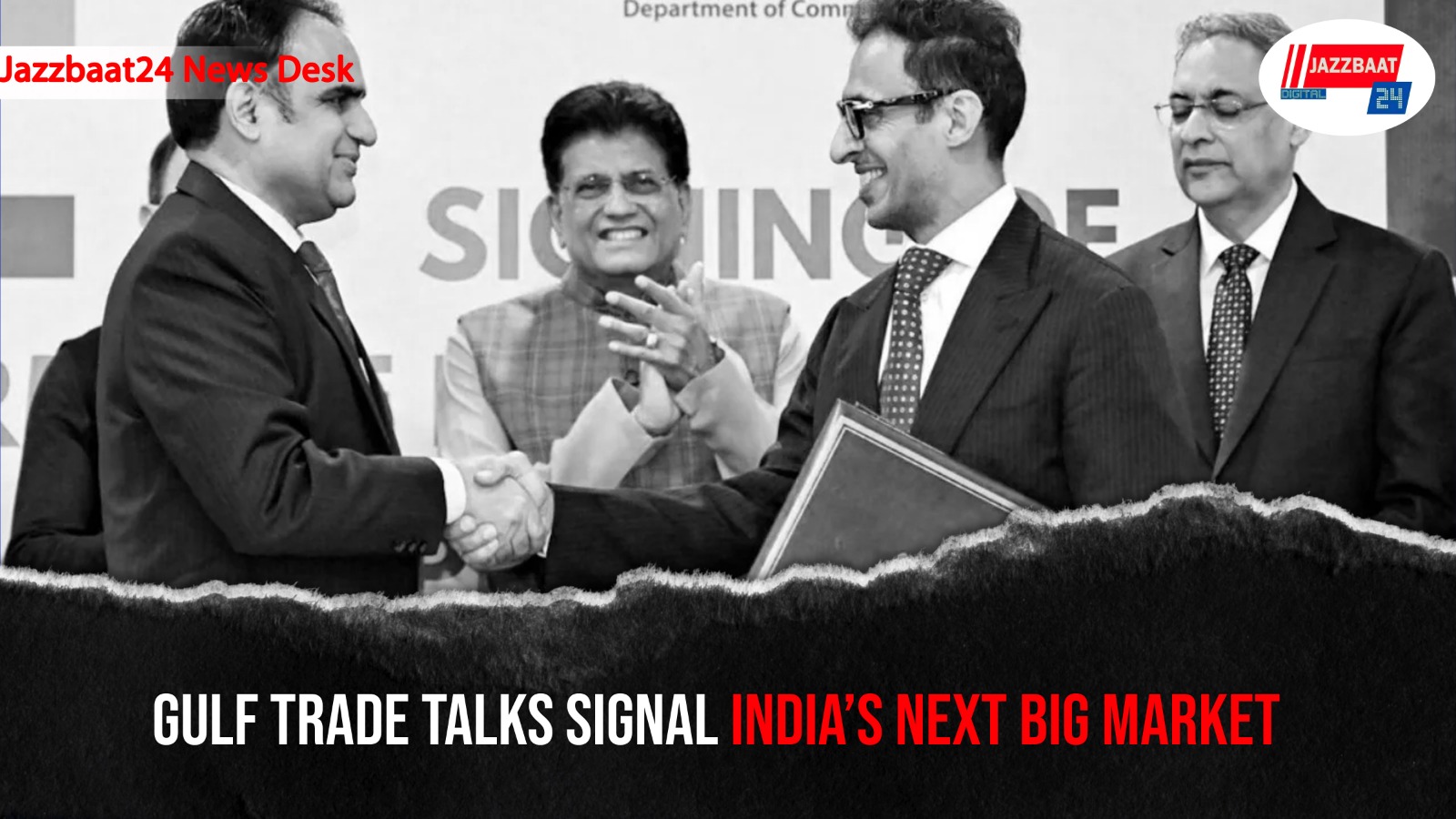
India is moving closer to a sweeping free trade agreement with the six-nation Gulf Cooperation Council, signalling a strategic shift in how New Delhi sees its biggest growth markets. As global trade faces headwinds from tariff barriers and geopolitical tensions, the Gulf has emerged as India’s largest trading bloc, overtaking the European Union and ASEAN.
Bilateral trade between India and the GCC touched about $179 billion in 2024–25, driven by strong exports of gems, metals, electronics and chemicals, alongside massive energy imports. India already has trade pacts with the UAE and Oman, and is now preparing to expand preferential access across Saudi Arabia, Qatar, Kuwait and Bahrain as well. Officials say the proposed FTA could reduce duties, smooth non-tariff barriers and create more predictable rules for businesses on both sides.
Commerce and Industry Minister Piyush Goyal said the agreement would deepen investment flows and strengthen food and energy security. While the Gulf remains a critical supplier of oil and gas to India, the region also offers growing demand for Indian services, petrochemicals and technology. With nearly 10 million Indians living and working in the Gulf, people-to-people ties add another layer to the economic relationship.
Economists see the move as part of a broader rebalancing of India’s trade focus. With uncertainties in Western markets, policymakers are looking closer to home, betting on West Asia, Southeast Asia and Africa as the next engines of growth. The Gulf’s financial muscle and infrastructure push could open fresh opportunities for Indian firms, from construction and IT to healthcare and logistics.
If talks progress as planned, the India–GCC deal could become one of New Delhi’s most consequential trade pacts, reshaping supply chains and giving Indian exporters a stronger foothold in a fast-expanding regional market.