
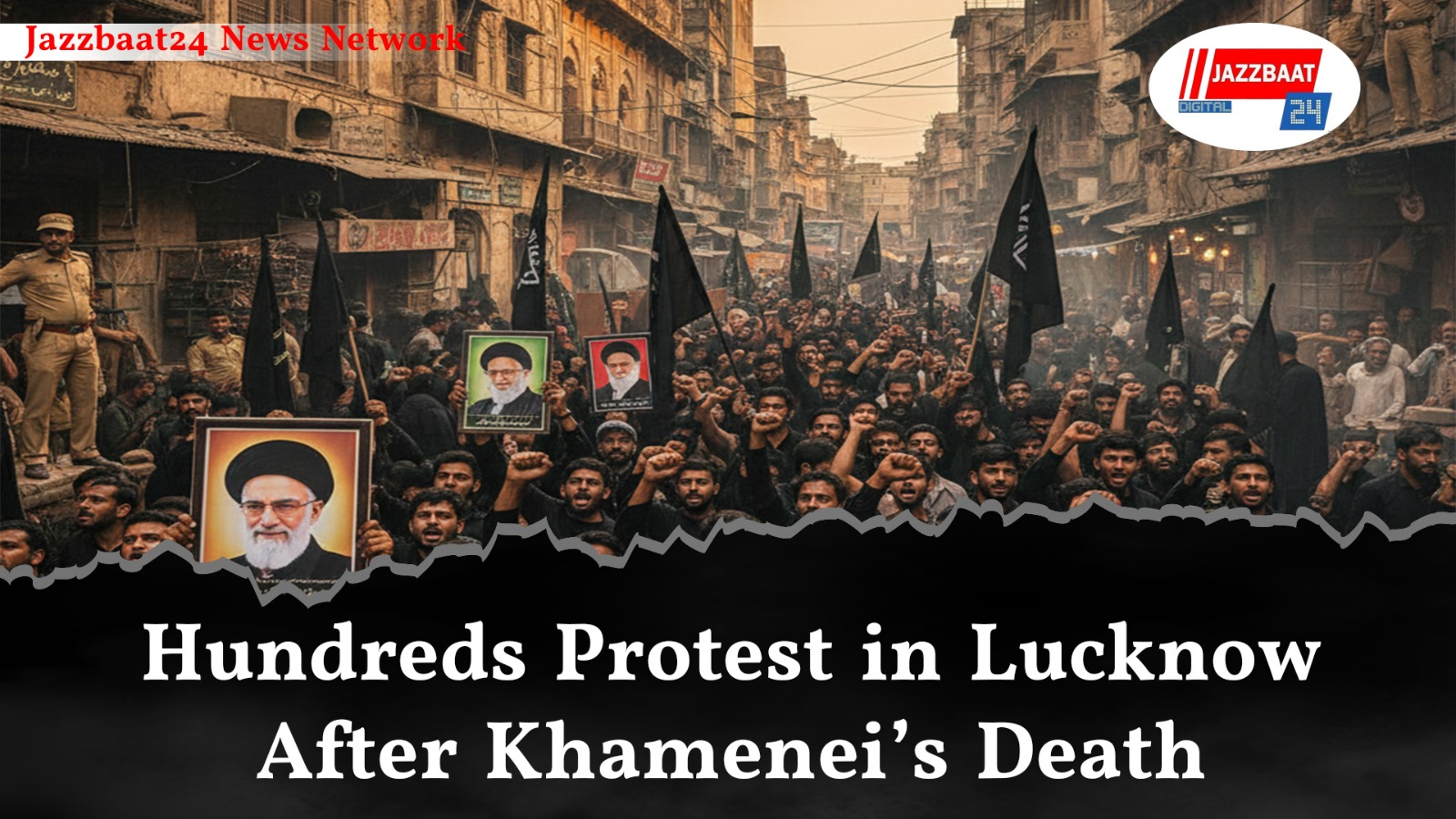
Lucknow, the capital of Uttar Pradesh, saw hundreds of people take to the streets on Sunday after news spread that Iran’s Supreme Leader Ayatollah Ali Khamenei had been killed in strikes by the United States and Israel. The demonstrations were especially visible across Old Lucknow, where members of the Shia Muslim community marched and voiced their anger and grief over the reported death.
Protesters, many dressed in black and carrying photographs of Khamenei and black flags, gathered at key neighbourhoods including Akbari Gate, Nakhas and Hussainabad, chanting slogans against the United States and Israel. Shops in these areas were largely closed and even the busy Sunday market in Nakhas did not open, reflecting the mood of mourning and protest.
Religious leaders associated with the All India Shia Personal Law Board announced a three‑day mourning period and planned additional public gatherings, including a protest march and candlelight vigil in the evening near the historic Chota Imambara. Effigies of the U.S. President and Israeli Prime Minister were also expected to be burned as part of the protest events.
Clerics at the demonstrations condemned the strikes as unjust and dangerous for global peace, arguing that attacks carried out by major powers would not weaken Iran but instead fuel further conflict. Many participants called for solidarity with Iran and global justice for the slain leader.
Local authorities maintained a heavy police presence in protest areas to ensure law and order, with officials urging residents to remain calm and avoid violence amid heightened emotions.
The protests in Lucknow are part of a broader nationwide reaction, with similar demonstrations and mourning gatherings reported in other Indian cities and regions following the highly controversial killing of a figure seen as a major religious and political leader by many.