
Unseasonably warm weather in the Srinagar region with temperatures soaring up to 21 °C in February, nearly 10 °C above the normal range for this time of year has alarmed scientists and environmental experts, who warn it could hasten the decline of Himalayan glaciers that act as critical water reserves for the region.
Normally, the heart of winter from December through February is the period when glaciers accumulate snow that later compresses into ice, replenishing frozen mass lost during warmer months. This natural cycle is essential for maintaining glacier mass balance the difference between snow accumulation and ice melt and helps sustain river flows in spring and summer. But experts say that the early onset of high temperatures is halting this recovery phase.
Director of the Meteorological Centre in Srinagar, Mukhtar Ahmad, said the record warmth has meant “early melting instead of accumulation,” weakening the snowpack before it can convert into stable glacial ice. Repeated events like this could create a negative glacier mass balance, leading to long‑term ice loss rather than replenishment.
Scientists point to three interlinked factors that make warm winters particularly harmful: early snowmelt exposes the darker underlying ice sooner; reduced snowfall fails to provide fresh insulating layers; and exposed ice absorbs more solar radiation, accelerating melt. Such conditions can push glaciers into an unstable retreat, reducing their size and water storage capacity over time.
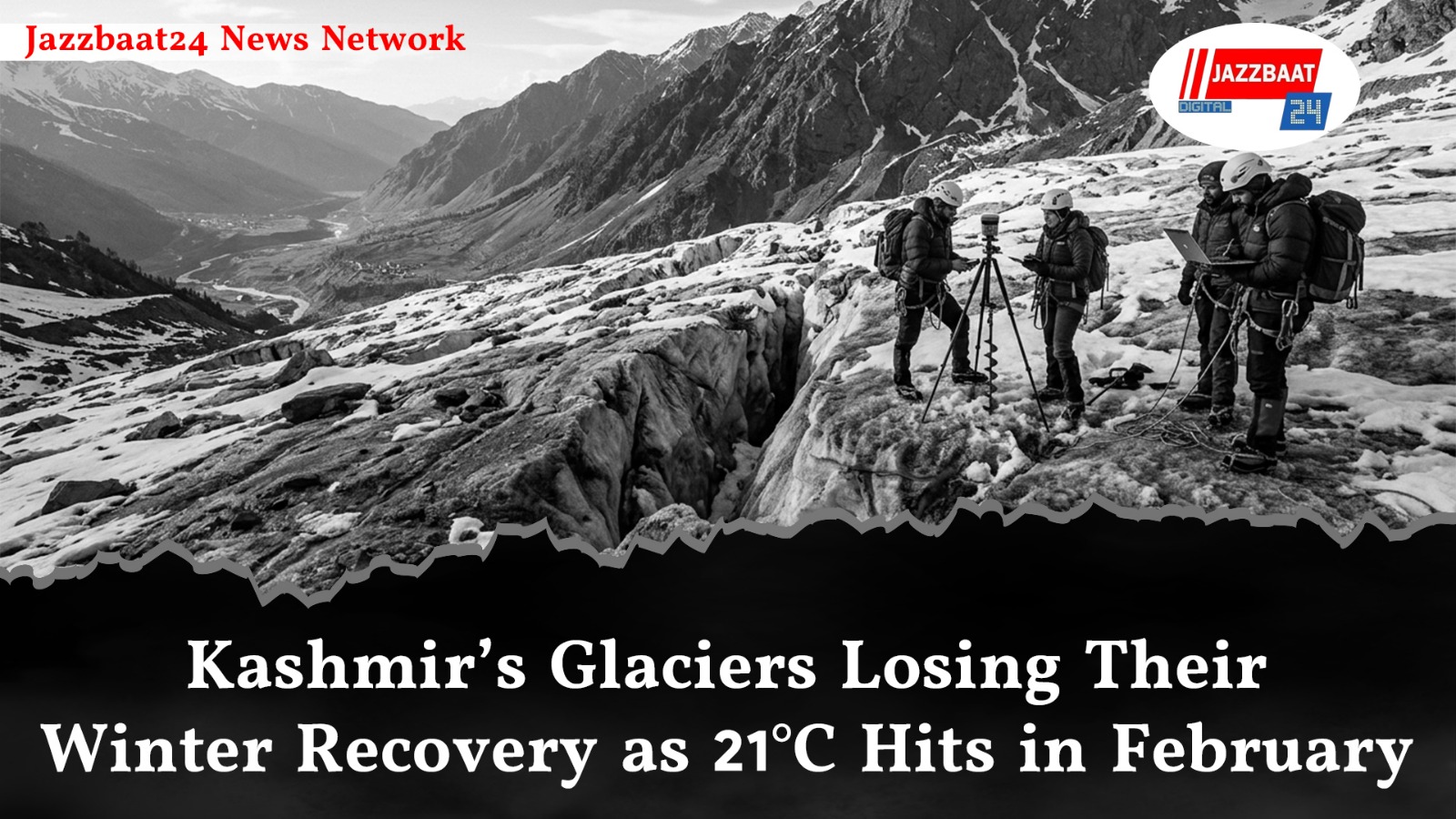
Field and satellite studies already paint a worrying picture. Glaciers across parts of Jammu and Kashmir have thinned significantly, with some shrinking by an average of 30–40 cm per year in water‑equivalent mass. The Kolahoi Glacier, the largest in the Kashmir Valley and a key source of water for the Lidder River, has lost about 20–25 % of its area since the mid‑20th century.
Experts warn that prolonged warm winters can severely disrupt the glacier growth cycle. In regions like Pir Panjal and Sonamarg, many monitored glaciers are retreating by several metres each year, while in higher altitudes of Ladakh, accelerated melting has contributed to the expansion of glacial lakes raising concerns about the risk of Glacial Lake Outburst Floods (GLOFs).
The consequences of shrinking glaciers extend far beyond the mountains. Glaciers serve as natural water reservoirs slowly releasing meltwater that feeds rivers, supports irrigation, hydropower generation and drinking water supplies during dry months. Without sufficient winter accumulation, river flows may peak earlier in spring but diminish sharply later, creating long‑term water stress for communities downstream.
Climate projections suggest that continued warming trends could significantly reduce glacier volumes in the western Himalaya by mid‑century, potentially turning perennial ice bodies into seasonal snowfields. For now, the record February heat is seen by researchers as a stark indication of how rapidly climate change is reshaping the region’s frozen landscapes and threatening water security.