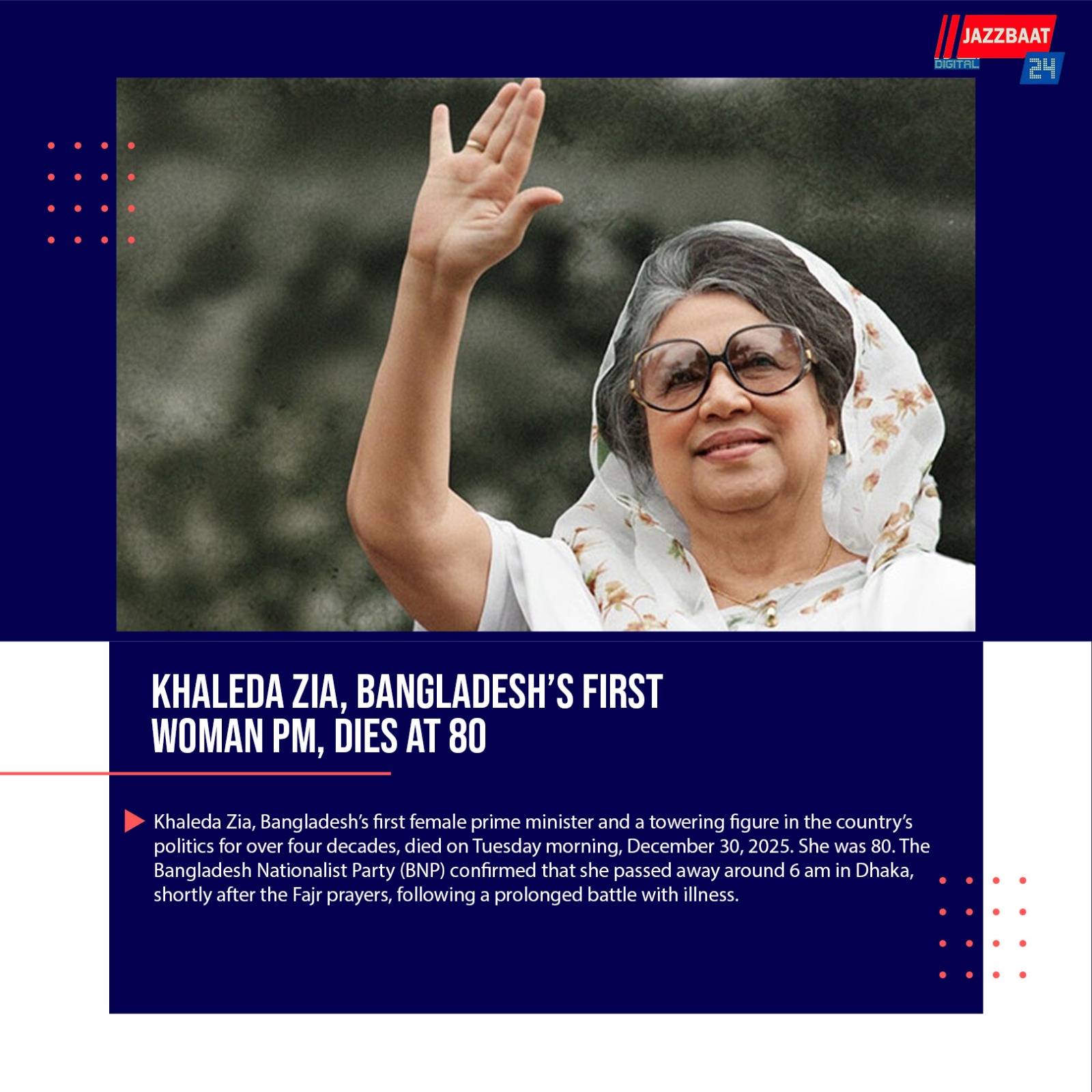
Khaleda Zia, Bangladesh’s first female prime minister and a towering figure in the country’s politics for over four decades, died on Tuesday morning, December 30, 2025. She was 80. The Bangladesh Nationalist Party (BNP) confirmed that she passed away around 6 am in Dhaka, shortly after the Fajr prayers, following a prolonged battle with illness.
Born in Jalpaiguri in undivided British India, Khaleda Zia entered public life after personal tragedy. Her husband, President Ziaur Rahman founder of the BNP and Bangladesh’s military ruler-turned-president was assassinated in a failed military coup in 1981. Thrust into politics thereafter, Khaleda gradually emerged as a key opposition leader during years of military rule.
Her defining moment came in 1991, when she led the BNP to victory following the restoration of parliamentary democracy, becoming Bangladesh’s first woman prime minister. She served a second term from 2001 to 2006. Alongside Awami League chief Sheikh Hasina, Khaleda dominated Bangladesh’s political landscape for decades, their intense rivalry shaping elections, street protests, and governance.
In recent years, Khaleda Zia’s political life was overshadowed by declining health and legal troubles. She suffered from multiple ailments, including advanced liver cirrhosis, heart complications, diabetes, and arthritis. In 2018, she was jailed in a corruption case she consistently described as politically motivated. Her sentence was later suspended on medical grounds, placing her under house arrest.
In January 2025, Bangladesh’s Supreme Court acquitted her in the final corruption case, potentially clearing her path for a political comeback. Many believed she could play a decisive role in the upcoming national elections.
Khaleda Zia is survived by her elder son, BNP acting chairman Tarique Rahman, his wife Zubaida Rahman, and their daughter Zaima. Her death marks the end of an era in Bangladesh’s turbulent political history.