
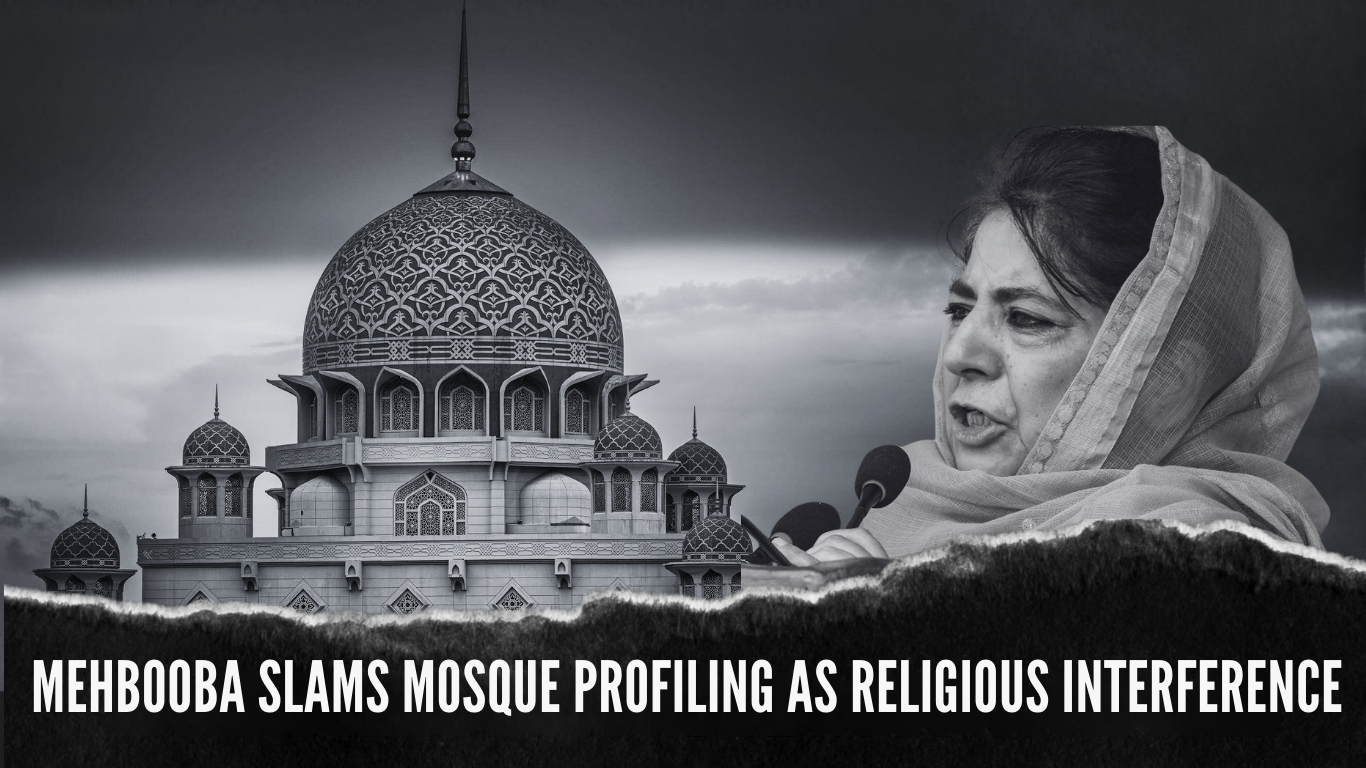
PDP president and former Jammu and Kashmir chief minister Mehbooba Mufti on Wednesday strongly criticised the alleged profiling of mosques and imams in Kashmir, calling it a direct interference in the religious affairs of Muslims.
Addressing reporters in Srinagar, Mehbooba said the move has created fear among imams and mosque management committees. She argued that if religious places need to be profiled, the exercise should not be limited to mosques alone. “If they want to do profiling, let them start with temples, gurudwaras and churches as well. Let them collect details of priests in temples and see where entry is restricted based on caste,” she said.
Mehbooba claimed that the police already possess records about the number of mosques in Jammu and Kashmir and the land they occupy. However, she objected to the fresh demand for detailed personal information of imams and maulvis, including photographs and Aadhaar details. She described the five-page proforma used for the exercise as intimidating. “It looks as if these imams and committee members are being treated like overground workers. Mosques are being dealt with as if they are crime scenes,” she alleged.
The PDP chief further warned that such steps could be extended to mosques across the country. She expressed concern over what she described as a pattern, claiming that after waqf properties, mosques were now being targeted. She also questioned why authorities were seeking details about religious sects, saying mosques are open to all Muslims irrespective of sect.
Commenting on the dismissal of five government employees, Mehbooba said people were being arrested or terminated based on accusations without being given a chance to prove their innocence. She termed it a reflection of growing hostility towards Muslims.
On other political issues, Mehbooba opposed the demand for a separate Jammu state, saying it would harm the region the most. She also criticised the idea of “weaponising water” in reference to the Indus Water Treaty, calling it inhuman and warning against politicising essential resources.