
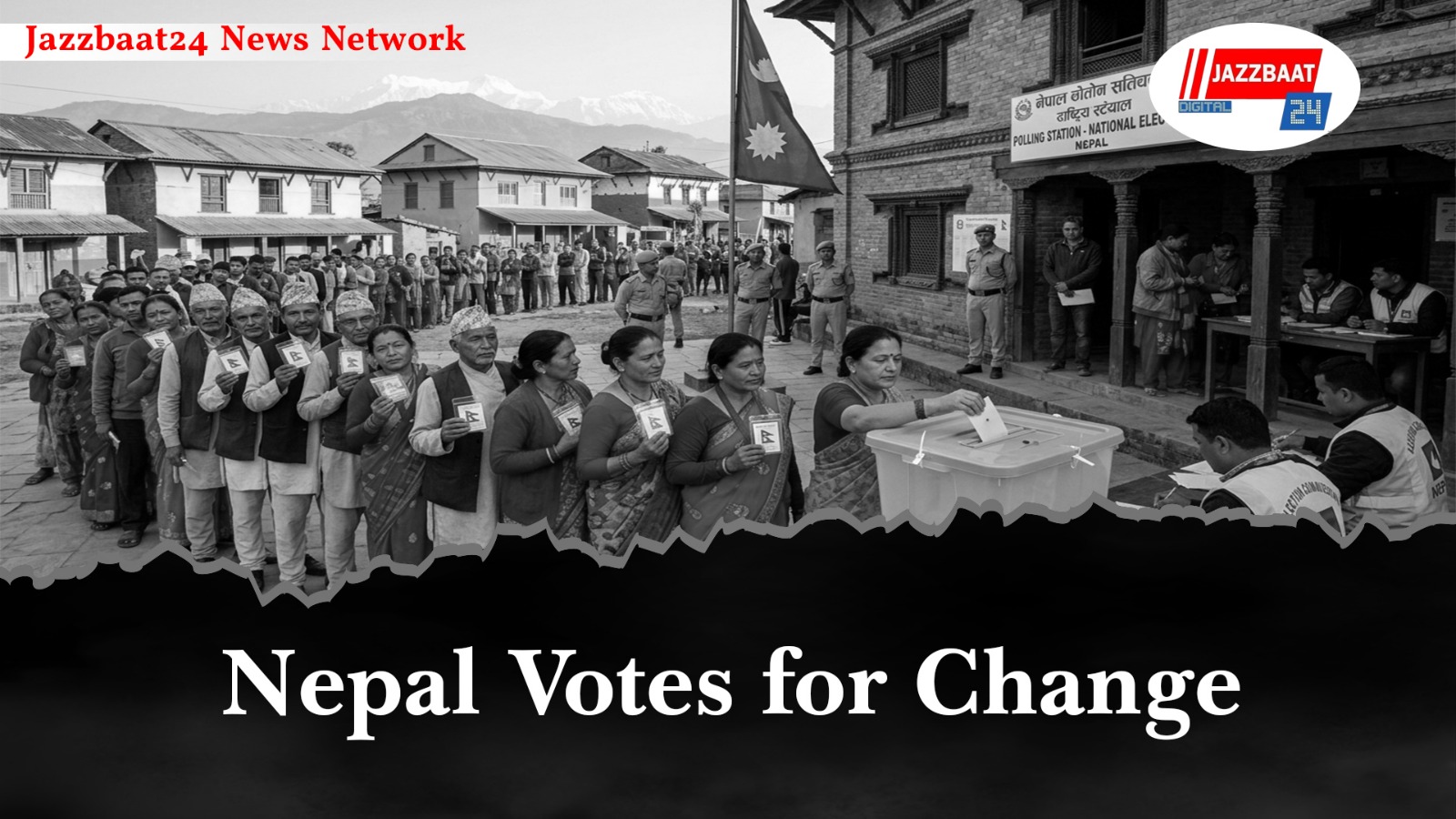
Citizens across Nepal turned out in large numbers on Thursday to cast their ballots in a crucial general election, expressing hope that the next government will focus on stability, development, and tackling corruption in the Himalayan nation.
Voting began at 7:00 a.m. local time across all 77 districts of the country, with polling stations witnessing long queues of voters eager to participate in the democratic process. Authorities said polling would continue until 5:00 p.m., with security personnel deployed nationwide to ensure a peaceful vote.
Nearly 19 million eligible voters are expected to take part in the election, which will determine the composition of Nepal’s 275-member House of Representatives, the lower chamber of the federal parliament. Of these seats, 165 are chosen through direct voting while 110 are allocated through proportional representation.
The election is being closely watched because it comes after months of political turmoil. Last year, widespread youth-led protests against corruption and governance failures forced the resignation of the government led by former Prime Minister KP Sharma Oli and led to the dissolution of parliament. The current vote is therefore seen as a chance for the country to reset its political direction.
At polling centres in Kathmandu and other cities, voters said they wanted the new leadership to prioritise economic development, job creation and political stability. “I hope whoever wins plays a significant role in the development of Nepal,” one voter said after casting a ballot, echoing a sentiment widely shared among citizens waiting in line.
Election officials reported that the polling process started smoothly, with only minor incidents reported in some areas. Early turnout figures suggested steady participation, reflecting strong public interest in the outcome.
Interim Prime Minister Sushila Karki also cast her vote in Kathmandu and said the election would determine the country’s future. Several senior leaders and candidates were seen voting early in the day, encouraging citizens to exercise their democratic rights.
Political observers believe youth participation could play a decisive role in shaping the result. Many young voters, inspired by last year’s protests, have registered for the first time and are expected to influence the direction of Nepal’s next government.
As the voting process continues across the country, millions of Nepalese are hoping that the election will mark the beginning of a more stable and development-focused era for the nation.