
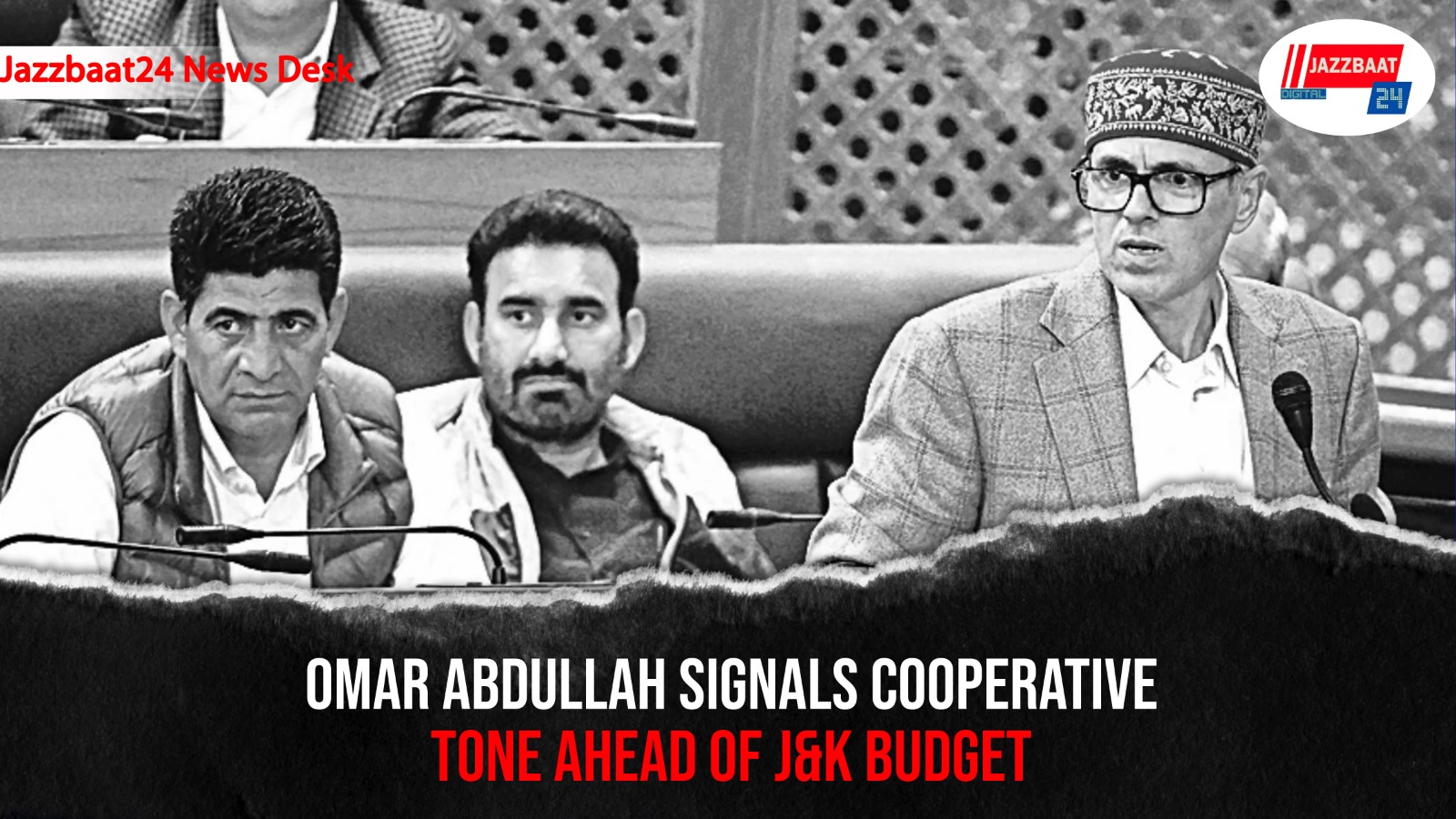
Jammu and Kashmir Chief Minister Omar Abdullah on Thursday struck a notably conciliatory note ahead of presenting his government’s second Budget for 2026–27, saying he would openly acknowledge good work done by the Centre, even if such praise upsets political allies.
Speaking to reporters, Abdullah said he does not believe in withholding credit when it is due. “If the Prime Minister or the Centre does something good for Jammu and Kashmir, I will thank them,” he remarked, adding that this approach sometimes draws criticism from within opposition ranks. The comment underlined a willingness to keep lines of cooperation open with the Union government on issues affecting the Union Territory.
Abdullah, who also holds the finance portfolio, is scheduled to present the Budget in the Assembly on Friday. Officials indicated that the Budget is likely to prioritise long-pending concerns of daily wage workers, alongside measures to boost tourism and industrial activity, two sectors seen as crucial for jobs and economic recovery in the region.
This will be the second Budget of the National Conference-led government since it assumed office in October 2024, marking the end of nearly six years of central rule in Jammu and Kashmir. Abdullah had presented his maiden Budget last year, outlining a roadmap for restoring growth, improving public services and strengthening local governance.
The Budget session of the J&K Assembly is being held in three phases. The first phase began with the Lieutenant Governor’s address earlier this week and will run through early April, with breaks around the holy month of Ramzan and Eid-ul-Fitr. Lawmakers are expected to have limited working days in March and April due to the festive calendar.
Political observers see Abdullah’s remarks as an attempt to balance principled opposition with pragmatic cooperation at a time when Jammu and Kashmir’s development agenda depends heavily on coordination with New Delhi. As the Budget is tabled, attention will be on whether this cooperative tone translates into tangible policy measures and funding support for the Union Territory’s pressing economic and social needs.