

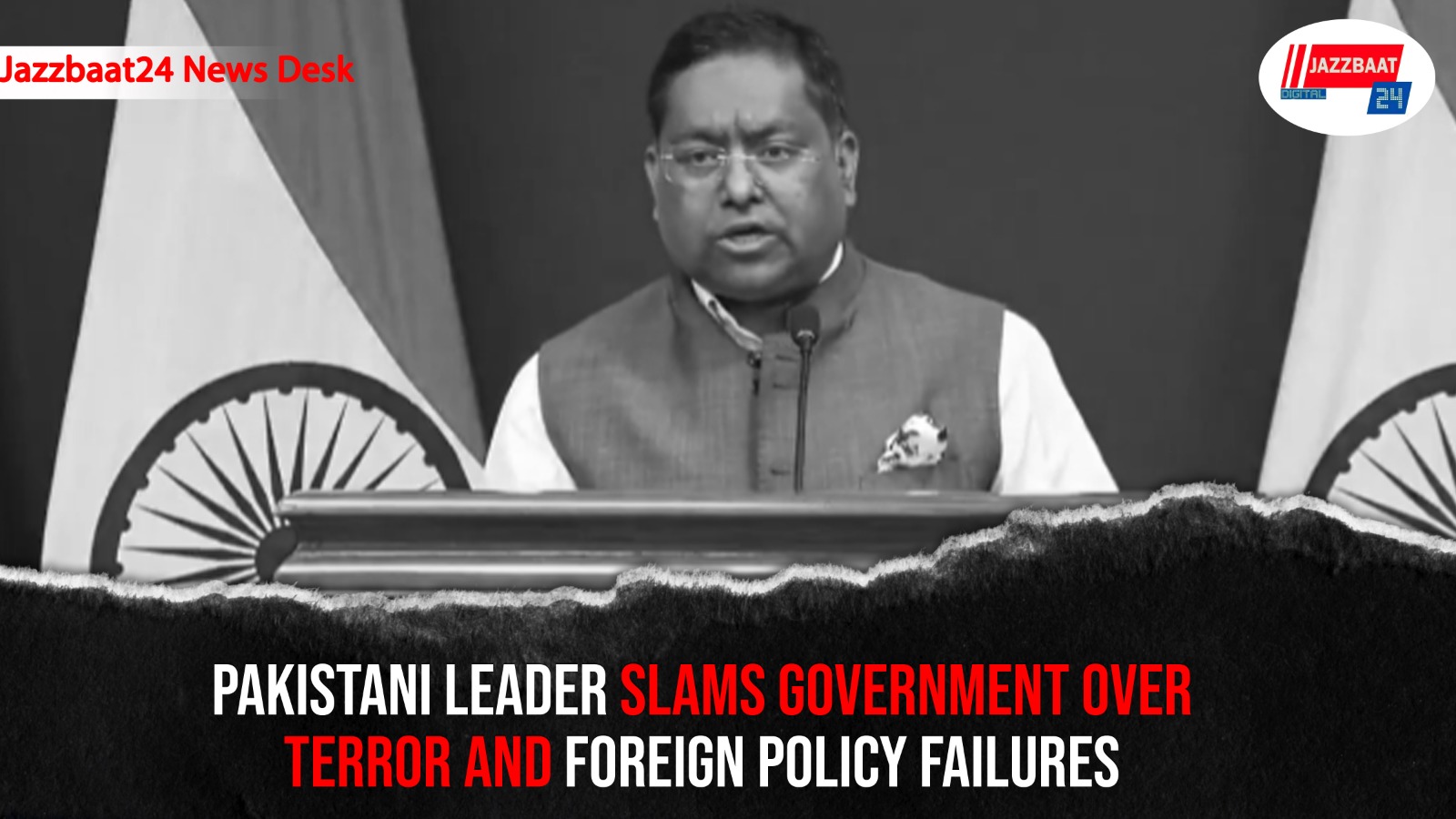
Maulana Fazlur Rehman, chief of Jamiat Ulema-e-Islam (F), launched a fiery attack on Pakistan’s Shehbaz Sharif-led government, accusing it of failing in foreign and security policy, especially regarding Afghanistan and domestic terrorism. Speaking at a public gathering on Sunday, Rehman used a striking analogy, saying, “Not a single pomegranate or melon can enter Pakistan, yet terrorists keep crossing the border.”
Rehman criticised the government’s Afghan policy, highlighting its inability to stop extremist infiltration despite blocking trade. “If terrorists are coming, stop them. If they are coming, eliminate them. The Afghan government has never objected to your actions,” he said, questioning the logic behind Pakistan’s current strategy.
He also described Islamabad’s foreign and economic policies as “complete failures,” arguing that the country’s relations with India, Afghanistan, Iran, and China are deteriorating. “A nation cannot survive when its policies produce only isolation, mistrust, and insecurity,” he warned.
Rehman pointed out the influence of the military on foreign policy, noting that civilian governments have limited control. “One general says we negotiate, another says we wage war,” he remarked, highlighting inconsistencies in strategy.
He also slammed the management of the China-Pakistan Economic Corridor (CPEC), claiming that stalled progress under the current government reflects China’s eroding trust in Pakistan. “Today I ask, has even a single brick moved forward under this government?” he questioned.
The remarks come after the recent Islamabad mosque suicide bombing that killed 69 people and injured over 170. Afghanistan rejected Pakistan’s claims of involvement, calling accusations “irresponsible and baseless” and urging Pakistan to take responsibility for its own security lapses.
Rehman’s statements underline growing domestic frustration with Pakistan’s handling of internal security and foreign relations, signaling mounting pressure on the government to rethink its strategy on terrorism, border control, and international partnerships.