
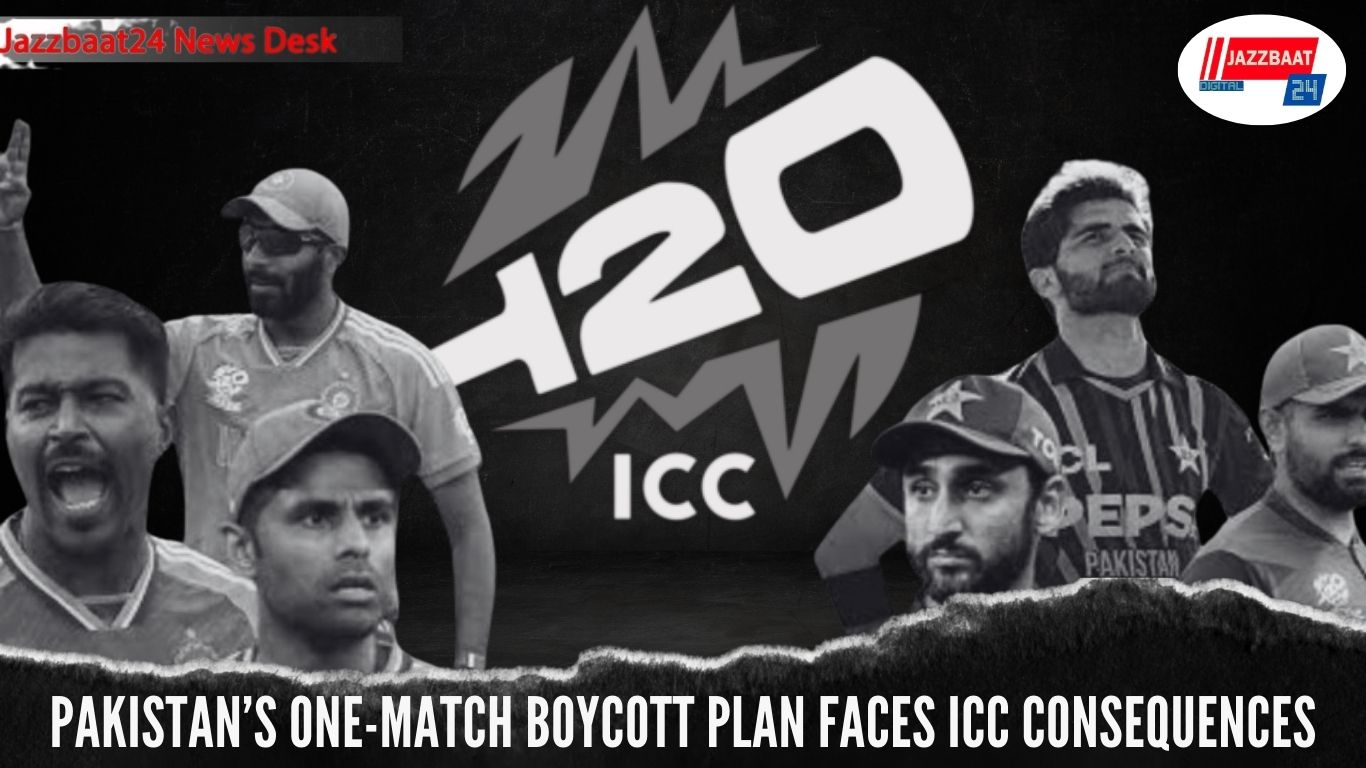
As the ICC Men’s T20 World Cup 2026 gets underway, controversy has erupted over Pakistan’s decision to skip just one high-profile match against India on February 15. The move, reportedly directed by the Pakistan government as a political gesture of “solidarity” with Bangladesh, has triggered debate across the cricketing world about whether such a selective boycott is allowed under ICC rules, and what consequences may follow.
Technically, ICC regulations do not force a team to play every match. If Pakistan refuses to take the field against India, the match will be recorded as a walkover in India’s favour, provided the Indian team reports to the venue and is ready to play. India would receive the full two points for the fixture, while Pakistan would forfeit the game.
However, the sporting impact on Pakistan could be severe. Under ICC playing conditions, a team that forfeits is treated as having completed its full quota of overs while scoring zero runs. This would cause a major hit to Pakistan’s Net Run Rate, a key factor in group-stage qualification. In a tightly contested tournament, such damage could significantly hurt their chances of advancing to the Super 8s.
Beyond the points table, the financial fallout could be substantial. India–Pakistan matches are among the most lucrative fixtures in world cricket, drawing massive global audiences and advertising revenue. A boycott could lead broadcasters and sponsors to seek compensation from the ICC, which in turn may pass financial penalties on to the Pakistan Cricket Board. With broadcast revenue forming a major share of PCB’s annual income, the economic impact could be long-lasting.
There is also the sensitive issue of government interference. The ICC constitution requires member boards to operate autonomously, without political direction. A state-mandated boycott at a neutral venue could be viewed as a breach of this principle, raising the risk of further sanctions. While Pakistan can technically skip one match, the decision carries heavy sporting, financial and regulatory consequences.