
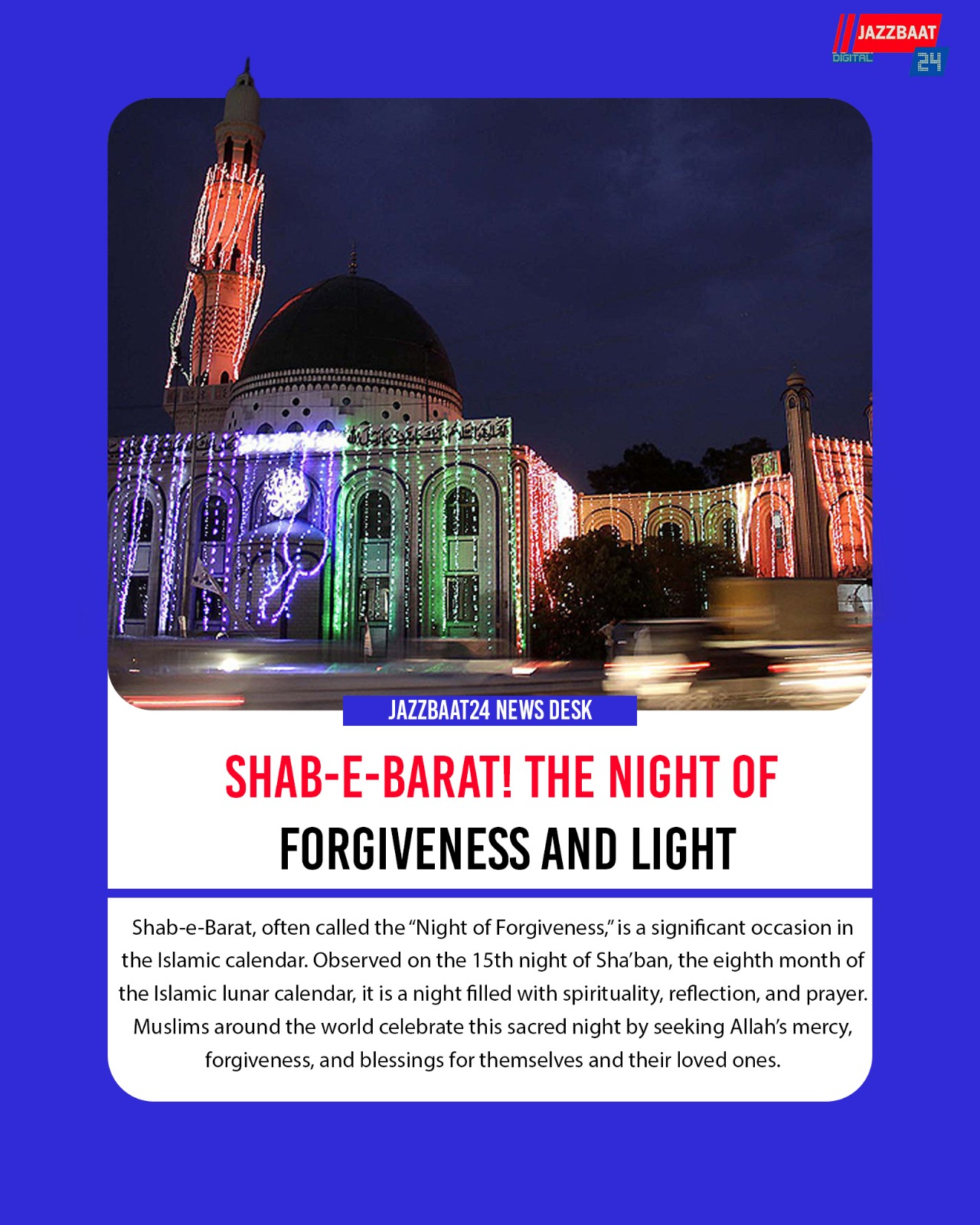
Shab-e-Barat, often called the “Night of Forgiveness,” is a significant occasion in the Islamic calendar. Observed on the 15th night of Sha’ban, the eighth month of the Islamic lunar calendar, it is a night filled with spirituality, reflection, and prayer. Muslims around the world celebrate this sacred night by seeking Allah’s mercy, forgiveness, and blessings for themselves and their loved ones.
On this special night, it is believed that Allah writes the destinies of people for the coming year. Therefore, many spend the night in worship, reciting the Holy Quran, offering prayers, and engaging in heartfelt supplications. The night encourages introspection, where individuals reflect on their actions, repent for their mistakes, and make resolutions to lead a better life.
In addition to prayers, Shab-e-Barat is also marked by acts of charity. People distribute food, clothes, and essentials to the needy, spreading kindness and compassion. Visiting the graves of loved ones is a common practice, offering prayers for the departed souls and remembering the transient nature of life. Lanterns and lights often decorate homes and mosques, symbolizing hope, enlightenment, and the spiritual awakening that this night brings.
Shab-e-Barat is more than rituals; it is a night that deepens the connection between a person and their Creator. It reminds believers of the importance of forgiveness, generosity, and gratitude. The night brings communities together, strengthens family bonds, and inspires a sense of peace and humility.
As the night ends, hearts feel lighter, souls feel renewed, and minds are filled with hope. Shab-e-Barat is a beautiful reminder that every individual has the opportunity to seek forgiveness, embrace goodness, and illuminate their life with faith and devotion.