
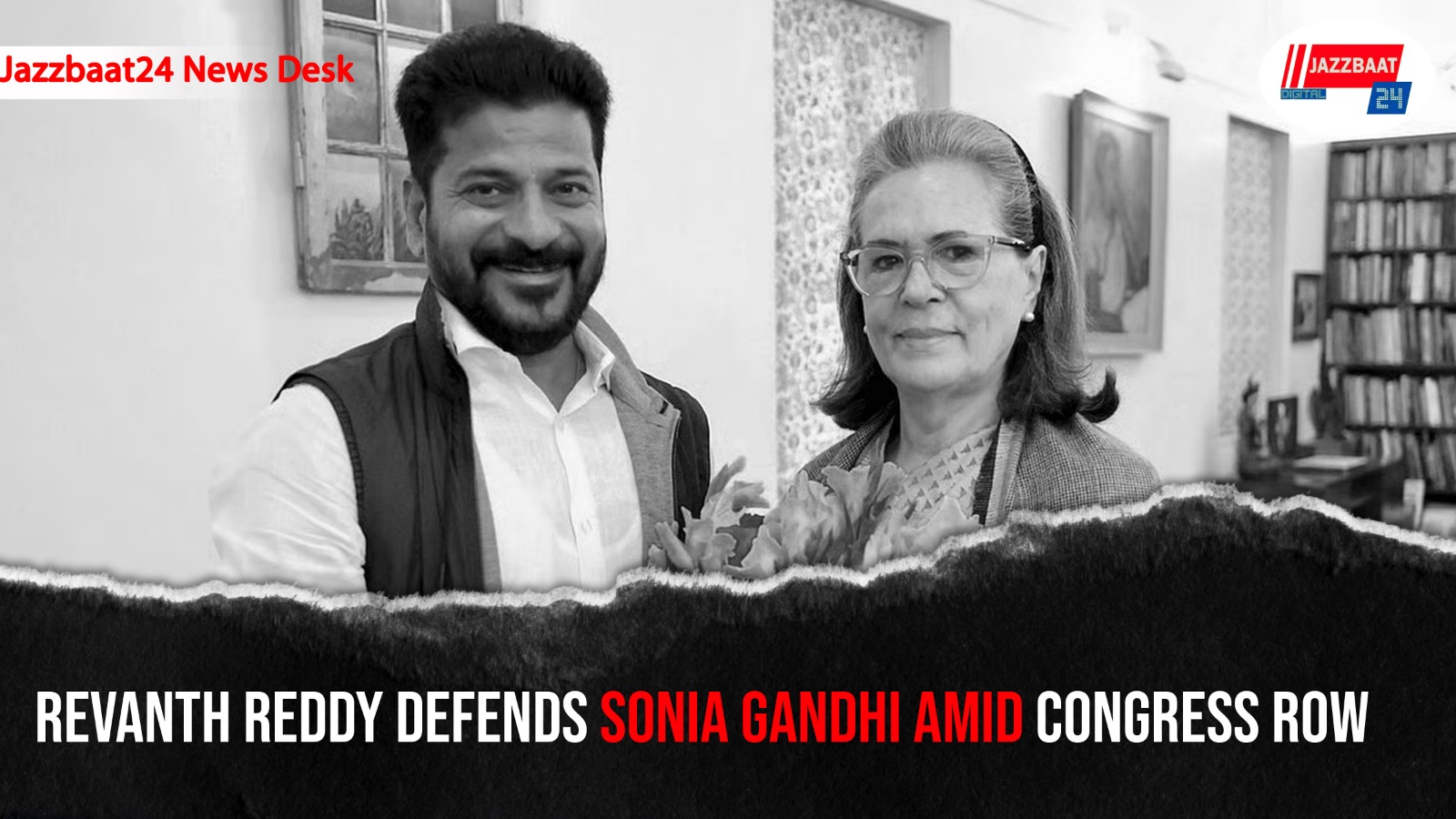
Telangana Chief Minister Revanth Reddy has entered the ongoing controversy within the Congress party triggered by senior leader Digvijaya Singh’s remarks praising the BJP and the RSS for their organisational strength. In a carefully worded post on social media platform X, Reddy offered a subtle but firm rebuttal, highlighting the Congress party’s tradition of recognising merit beyond dynastic politics.
Without naming Digvijaya Singh directly, Revanth Reddy praised former Congress president Sonia Gandhi for her role in enabling leaders from modest backgrounds to rise to the highest office. He pointed to the selection of PV Narasimha Rao in 1991 and Dr Manmohan Singh in 2004 as prime ministers, crediting Sonia Gandhi’s leadership for prioritising competence, integrity, and service over lineage.
Reflecting on Sonia Gandhi’s leadership, Reddy said it embodied “service, commitment, ethics and values,” and helped strengthen democratic institutions while uniting a diverse nation. He underlined that Rao began his political journey in a remote village in Telangana, while Manmohan Singh was chosen purely for his expertise as an economist.
The controversy began after Digvijaya Singh shared an old photograph of Prime Minister Narendra Modi from the early 1990s and praised the BJP and RSS cadre system, calling it an example of strong organisation. Though Singh later clarified that his comments were limited to organisational discipline and not ideology, the post sparked sharp reactions within the Congress.
Party president Mallikarjun Kharge reiterated that the Congress has never sought votes in the name of religion, while spokesperson Pawan Khera dismissed the praise, saying supporters of Nathuram Godse could not claim the legacy of Mahatma Gandhi. Rahul Gandhi later sought to downplay the issue, jokingly teasing Digvijaya Singh about his “mischief” during a party meeting.
The BJP, however, seized the opportunity to attack the Congress, accusing it of autocratic leadership and dynastic control. The episode has once again highlighted internal debates within the Congress over organisation, leadership, and the party’s future direction.