
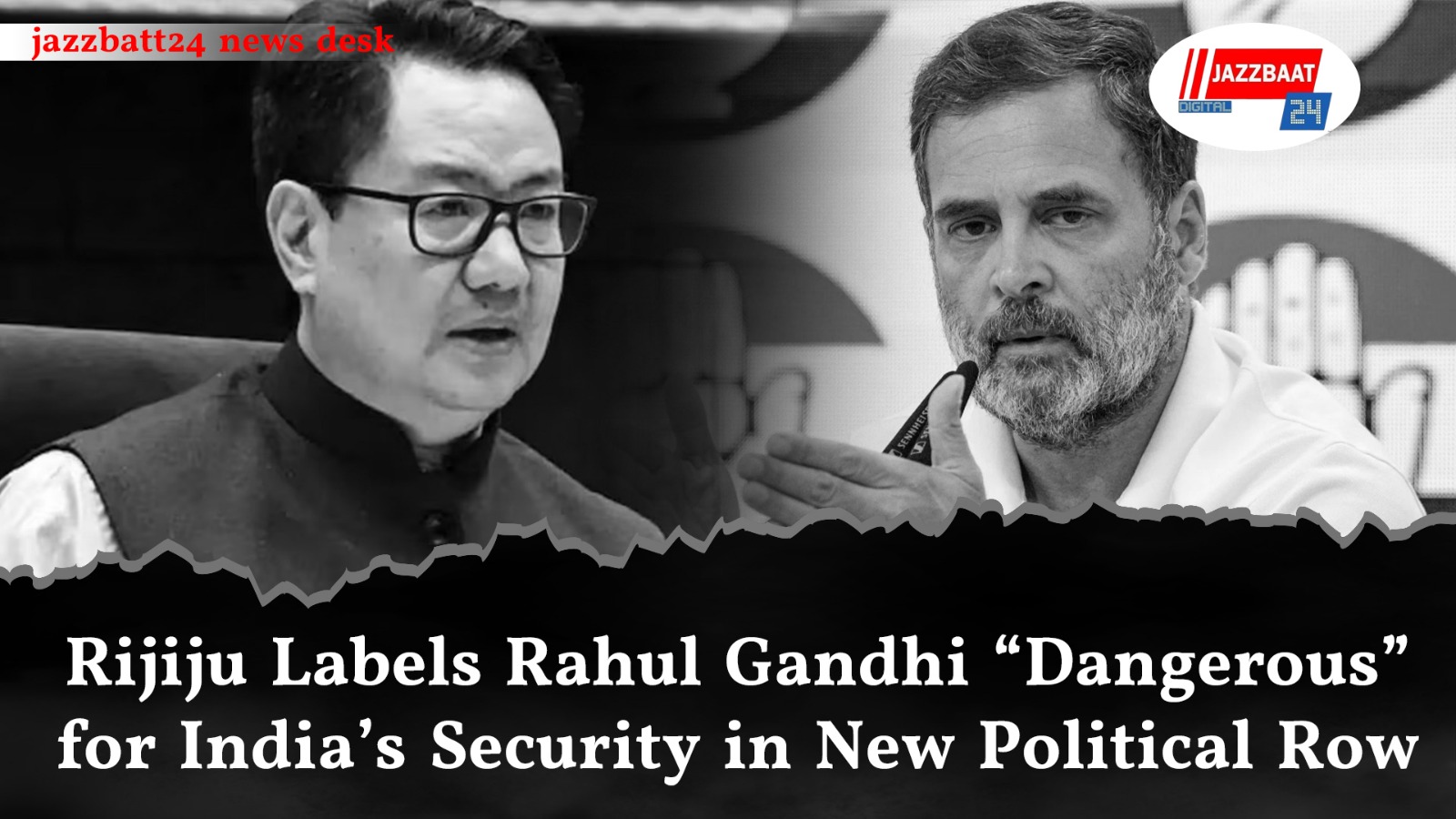
Union Parliamentary Affairs Minister Kiren Rijiju has sparked fresh controversy by claiming that Rahul Gandhi, Leader of Opposition in the Lok Sabha, has become “dangerous” for India’s security. In an interview with the ANI news agency on 18 February 2026, Rijiju accused Gandhi of maintaining contacts with what he described as “anti‑India forces”, including Naxalites, extremists, ideologues and people like George Soros” during both his domestic activities and foreign trips.
Rijiju’s remarks came amid heightened tensions in Parliament, where disruptions and protests by opposition MPs have repeatedly delayed business. The minister also criticised Gandhi’s conduct in the House, labelling it “childish and irresponsible” for someone leading the opposition, and defended the presiding Speaker against a no‑confidence motion.
The allegation is part of a broader political confrontation: BJP MP Nishikant Dubey reportedly moved a motion in the Lok Sabha on 12 February seeking Gandhi’s disqualification and a lifetime ban from contesting elections, on the grounds that in Dubey’s view Gandhi is “misleading the nation” with alleged foreign ties.
While Rijiju emphasised that Gandhi’s alleged engagements with controversial figures pose risks to national security, Rahul Gandhi has pushed back in Parliament, accusing the government of compromising India’s interests and warning of global geopolitical challenges.
The exchange reflects simmering political tensions as the opposition presses on issues such as the India‑US trade deal and parliamentary functioning, and the ruling party responds with sharp counter‑accusations. Political analysts say this latest episode underscores the increasingly combative nature of Indian parliamentary politics ahead of future elections.