
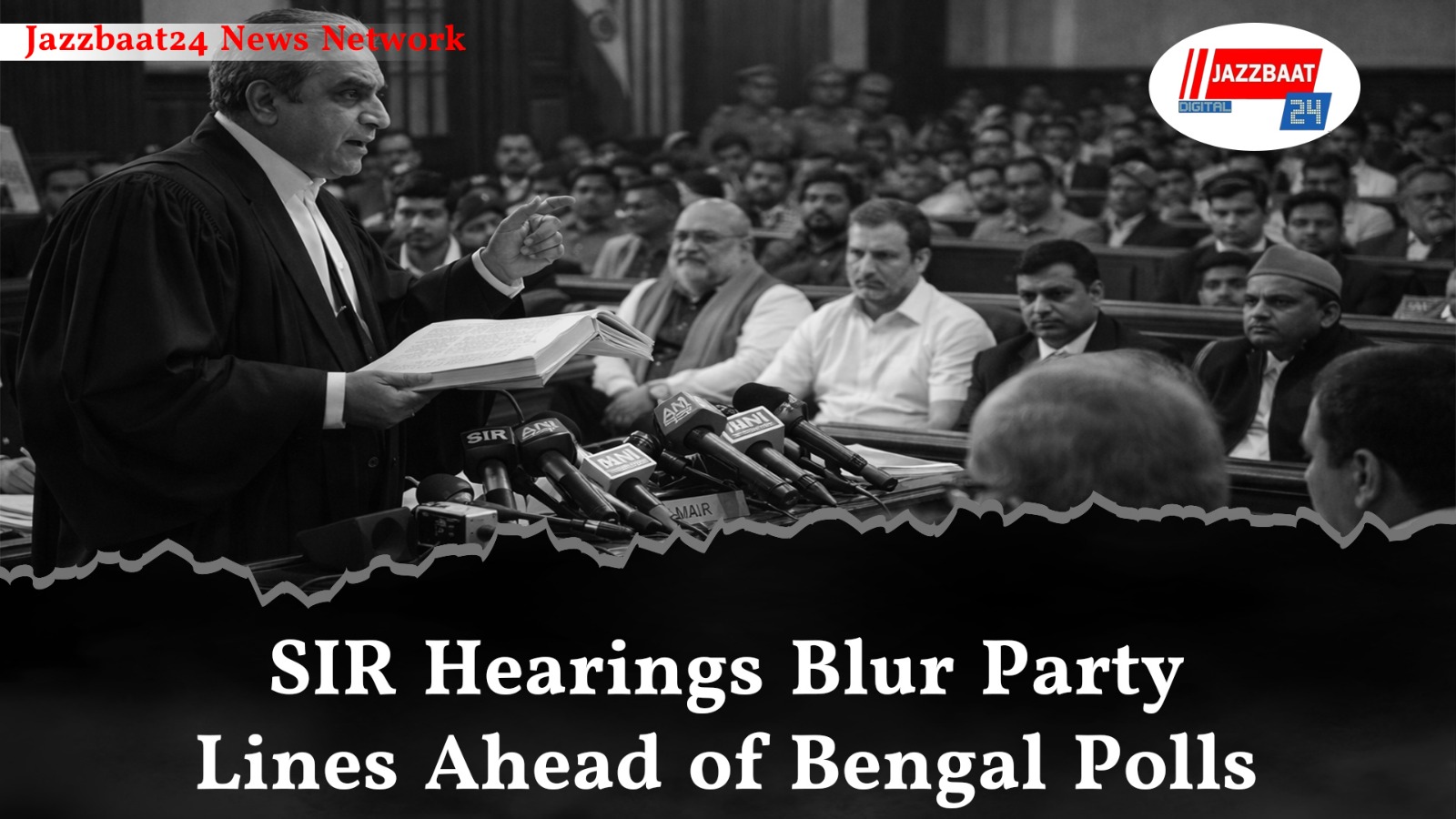
In the lead‑up to the upcoming West Bengal Assembly elections, the SIR (Special Investigation Report) hearings have emerged as a significant political flashpoint, reshaping traditional party positions and blurring conventional partisan boundaries across the state’s political landscape.
What were initially framed as technical legal proceedings have quickly taken on deep political overtones, drawing responses not just from the main contesting parties, but from a range of political actors who see strategic value in aligning or distancing themselves from the narratives emerging from the hearings.
The Bharatiya Janata Party (BJP) has sought to leverage the SIR hearings as evidence of administrative failures and alleged corruption within the incumbent state government. The party’s campaign messaging has repeatedly cited the hearings to argue for increased transparency, accountability and governance reform, positioning itself as a force against misgovernance and impropriety.
Meanwhile, the All India Trinamool Congress (TMC) the ruling party in West Bengal has attempted to neutralise the impact of the hearings by dismissing them as politically motivated. Party leaders have accused opposition forces of exploiting the process to divert attention from other pressing issues like unemployment, inflation and infrastructure development. By reframing the debate, the TMC aims to retain focus on its record of welfare initiatives and development projects in the state.
Interestingly, the SIR hearings have also forced other political players to recalibrate their strategies. Leaders from the Communist Party of India (Marxist) (CPI‑M) and smaller regional outfits have weighed in with their own critiques, sometimes echoing aspects of the BJP’s narrative while maintaining distinct ideological stances. This has, in places, diluted the clear ideological demarcation traditionally expected between left‑leaning and right‑leaning forces, suggesting a convergence of convenience driven by electoral stakes.
Analysts note that the hearings have also influenced civil society and voter discourse. Sections of the electorate, particularly urban middle‑class voters and first‑time voters, appear increasingly engaged with issues of institutional probity and governance transparency areas that the SIR hearings have brought to the forefront. Such shifts in public attention are prompting political parties to broaden their messaging beyond localised constituency concerns.
The unfolding debates around the hearings have unfolded against a backdrop of intense campaign activity, with rallies, roadshows and public meetings increasingly incorporating references to the SIR process. For some parties, aligning discourse with legal accountability has become a strategic priority; for others, discrediting that alignment has become equally important.
Regardless of political affiliation, leaders are now compelled to articulate positions on the hearings, reflecting the manner in which legal and administrative procedures can spill into the political arena. As parties continue to jockey for advantage, the SIR hearings have become more than just a legal mechanism they are now a catalyst for electoral rhetoric and strategy in West Bengal’s high‑stakes political contest.
Observers say the rapid politicisation of the hearings underscores how electoral dynamics can stretch beyond traditional party lines, compelling alliances of rhetoric and opposition that may not align neatly with standard ideological divisions. The SIR hearings have not just shaped debate they are reshaping it.