
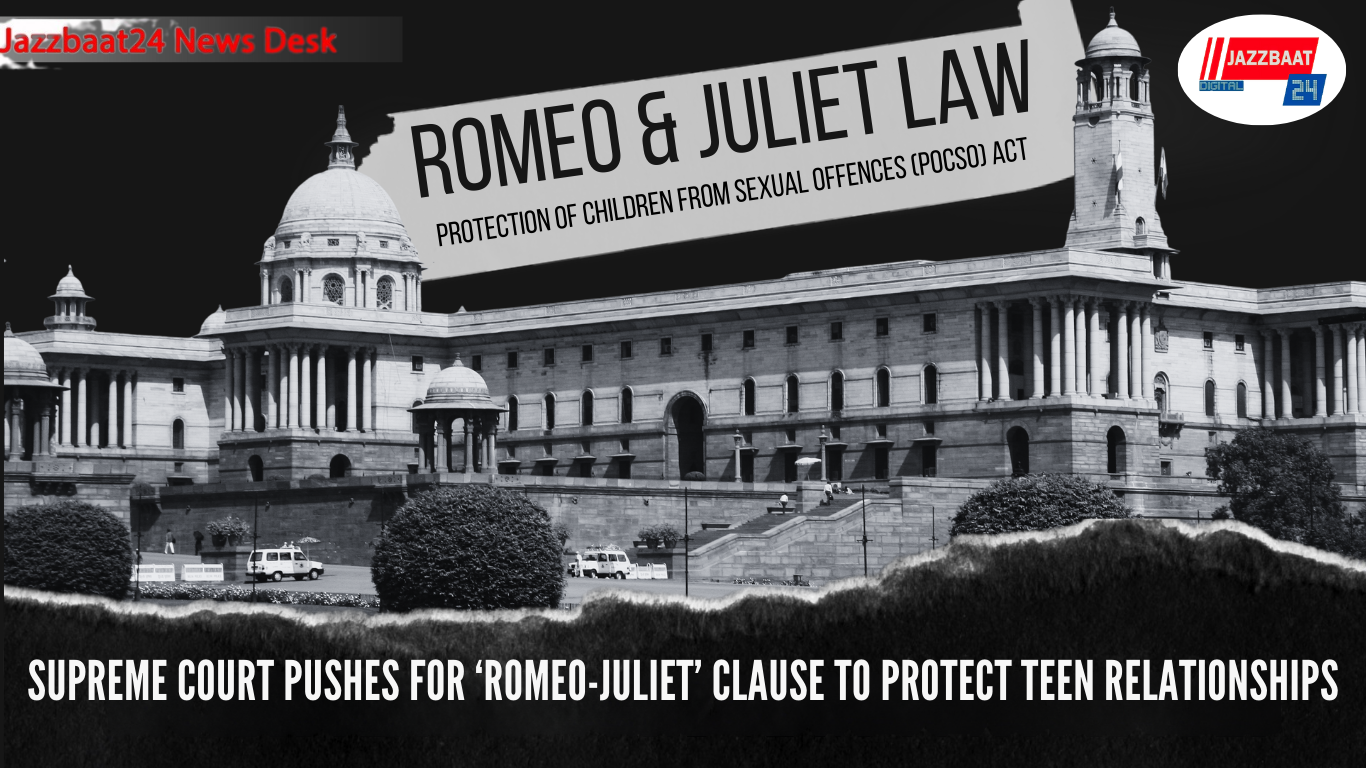
The Supreme Court has urged the Union government to consider introducing a “Romeo-Juliet clause” in the Protection of Children from Sexual Offences (POCSO) Act, aiming to prevent the criminalisation of genuine consensual relationships between adolescents.
A bench comprising Justices Sanjay Karol and N.K. Singh made the observation while setting aside certain directions issued by the Allahabad High Court in a POCSO-related bail matter. The court noted that while POCSO was enacted to safeguard children from sexual abuse, its strict provisions are often being applied in cases involving teenagers who are close in age and in consensual romantic relationships.
The proposed Romeo-Juliet clause is designed to protect adolescents who are either of similar age or have a small age gap, ensuring they are not treated as offenders under stringent child protection laws. The concept originated in the United States, where lawmakers recognised that statutory rape laws were unfairly criminalising teenagers engaged in consensual relationships. The term is inspired by Shakespeare’s young lovers, Romeo and Juliet.
According to the Supreme Court’s observations, such a clause could apply where one of the partners is at least 16 years old and the age difference between the two does not exceed a defined limit, such as three years. In such cases, criminal prosecution may not be warranted.
The court highlighted that many POCSO cases arise due to family opposition to adolescent relationships. In several instances, parents file complaints, leading to boys being accused of statutory rape even when the relationship was consensual. Under current law, any sexual activity involving a person under 18 is considered statutory rape, regardless of consent.
Data from child rights organisations indicate that a significant portion of POCSO cases in states like Assam, Maharashtra and West Bengal involve consensual teenage relationships, with most complaints filed by the girl’s family.
The Supreme Court emphasised the need for a balanced legal approach, one that continues to protect children from abuse while preventing misuse of the law against adolescents exploring consensual relationships.