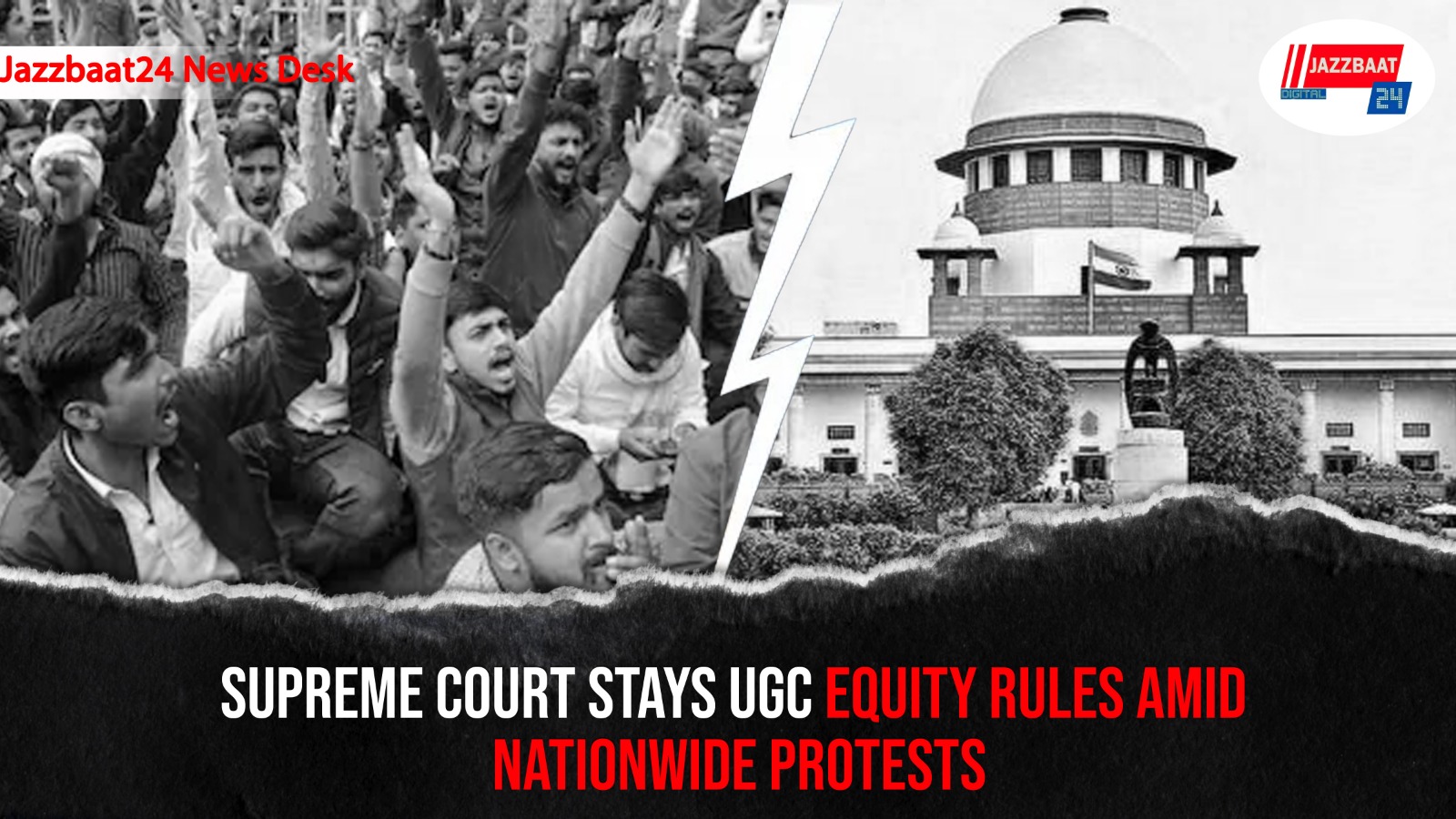
The Supreme Court has put the University Grants Commission’s (UGC) new 2026 regulations on hold, following widespread protests, particularly from general category students. The rules, aimed at promoting equity and inclusion, mandated all universities and colleges to establish Equal Opportunity Centres (EOCs) and campus-level panels to address discrimination complaints.
A bench led by Chief Justice of India Surya Kant expressed serious concerns over the regulations, calling them “completely vague” and in need of expert review. “After 75 years, all that we have achieved to become a casteless society, are we becoming a regressive society?” the Chief Justice asked, highlighting the potential societal risks if the rules are misapplied.
The court observed that the regulations could be misused and issued notices to the Centre and the UGC to provide clarifications. The Chief Justice also pointed out the dangers of segregation in educational institutions, noting the risks of alienation for students from the South or Northeast. He stressed that hostels and universities should remain spaces of unity, reflecting India’s diversity, and warned against practices that could inadvertently increase discrimination.
The regulations had sparked protests because they lacked a clear mechanism for general category students to raise complaints. Critics also argued that vague wording could unintentionally create inequality instead of fostering inclusion. The court’s intervention has temporarily halted the implementation, giving the government and UGC time to revisit and clarify the rules.
The Supreme Court’s remarks underline the importance of maintaining unity and equality in India’s educational institutions while ensuring policies are clear, fair, and inclusive. The case has drawn attention to balancing affirmative action with the rights of all students, reflecting broader societal debates about equity, caste, and education in India.
This ruling is being closely watched as a benchmark for how India’s top court approaches educational equity, student rights, and the challenges of regulating inclusivity in a diverse society.