
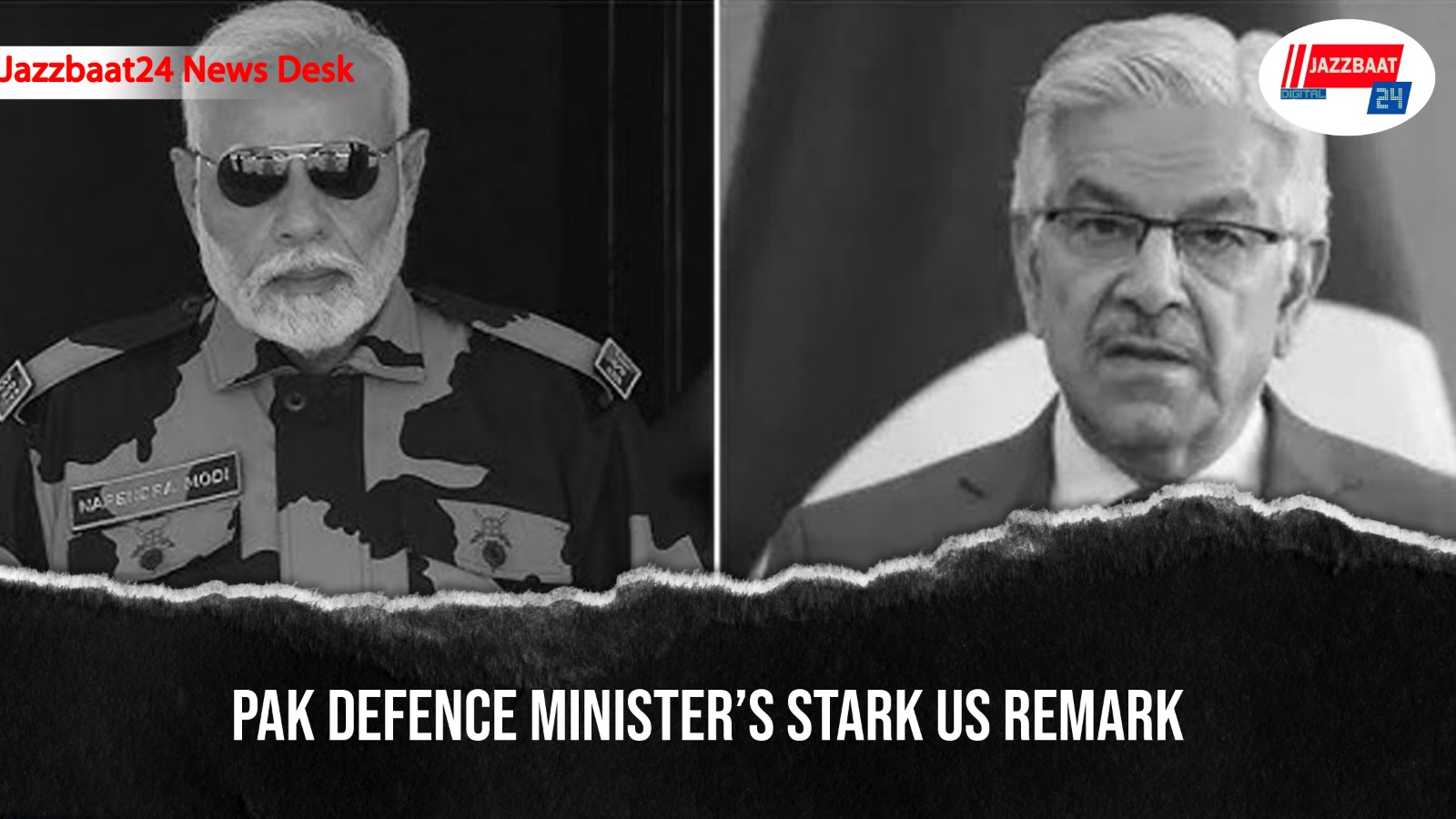
Pakistan’s Defence Minister Khawaja Asif has triggered a political storm with a blunt admission in Parliament, saying the United States “used” Pakistan for strategic purposes and later discarded it “like a piece of toilet paper.” His remarks, delivered during a session of the National Assembly, mark one of the strongest public acknowledgments by a senior Pakistani leader about the country’s controversial past alliances.
Speaking on Islamabad’s role in the Afghan wars, Asif described Pakistan’s participation as a “mistake,” particularly the decisions taken under former military rulers General Zia-ul-Haq and General Pervez Musharraf. He said the country aligned with Washington not for religious reasons, but to appease a global superpower. According to him, the consequences of those choices continue to haunt Pakistan in the form of terrorism, radicalisation and deep economic strain.
Asif reflected on the post-9/11 period, when Pakistan became a key US ally in the war on terror. While the United States eventually withdrew from Afghanistan, he argued that Pakistan was left to deal with prolonged violence and instability. “We deny our history and do not accept our mistakes,” he said, admitting that past policies had long-term and irreversible costs.
The minister also questioned the narrative that Pakistan’s involvement in Afghanistan was driven by religious obligation. He claimed that the concept of jihad was used misleadingly to justify strategic decisions, and that even the education system was reshaped to support those policies.
Calling the losses suffered by Pakistan “irreversible,” Asif said terrorism in the country is a direct blowback of decisions made decades ago. His unusually candid remarks have reignited debate over Pakistan’s foreign policy choices and its complex, often strained relationship with the United States.