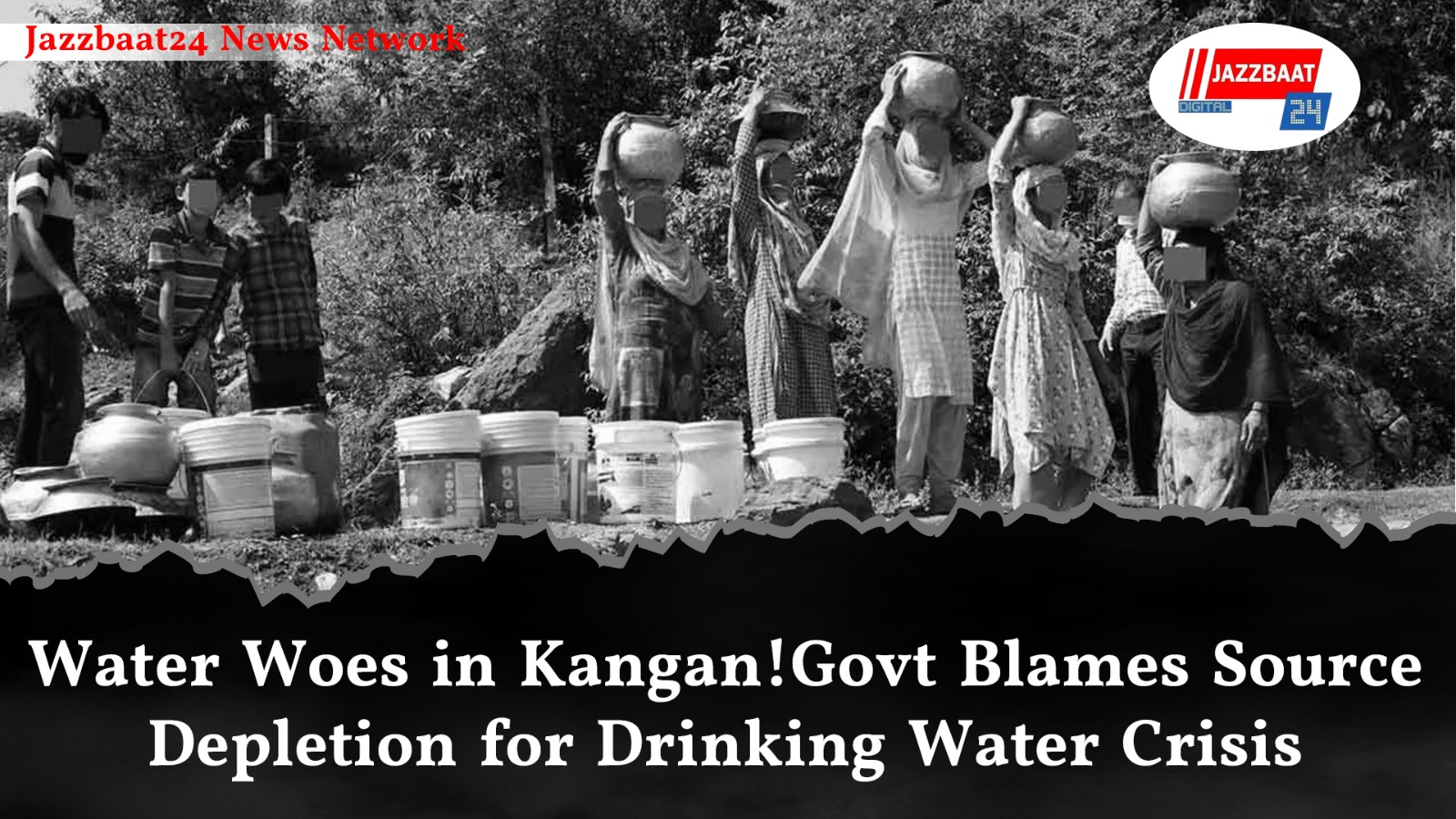
Several areas in the Kangan constituency of Jammu and Kashmir are facing a drinking water shortage, the government has told the Legislative Assembly, citing depletion of original water sources and prolonged dry conditions as the main reasons behind the crisis.
In its reply to an un‑starred question raised by local MLA Mian Mehar Ali, the government said key habitations including Kachnambal, Rezu Pati, Tunnel Pati, Hari Ganwan, Sumbal, Khudhar Wussan and Upper Waliwar are receiving inadequate water supply because their traditional sources have weakened or dried up.
Officials explained that the original source at Hariganiwan no longer meets the needs of Kachnambal, prompting efforts to augment supplies under the Water Supply Scheme (WSS) Kachnambal–Hariganiwan, Wussan Barwulla project. Works including a rapid sand filtration plant, pumping station and service reservoirs are nearing completion, and the scheme drawing water from the Wanghth Nallah is expected to improve service once finished.
For localities like Rezu Pati and Tunnel Pati, the government said residents depend on smaller nallahs and springs such as Gitchkhudan/Sondab Nallah and the Tangpathri spring, but prolonged dry spells have reduced discharge from these sources, worsening shortages. Recent rainfall, authorities added, could help ease conditions.
In Khudhar Wussan, water is supplied via the Chattergul (Bremshar) Nallah, but around 13 households at higher elevations still struggle to get adequate supply because of terrain challenges.
The situation underscores broader water stress in Jammu and Kashmir, where studies show over 23% of water bodies have dried up, further straining supply systems. The government says ongoing infrastructure projects are aimed at strengthening drinking water access in affected areas.