

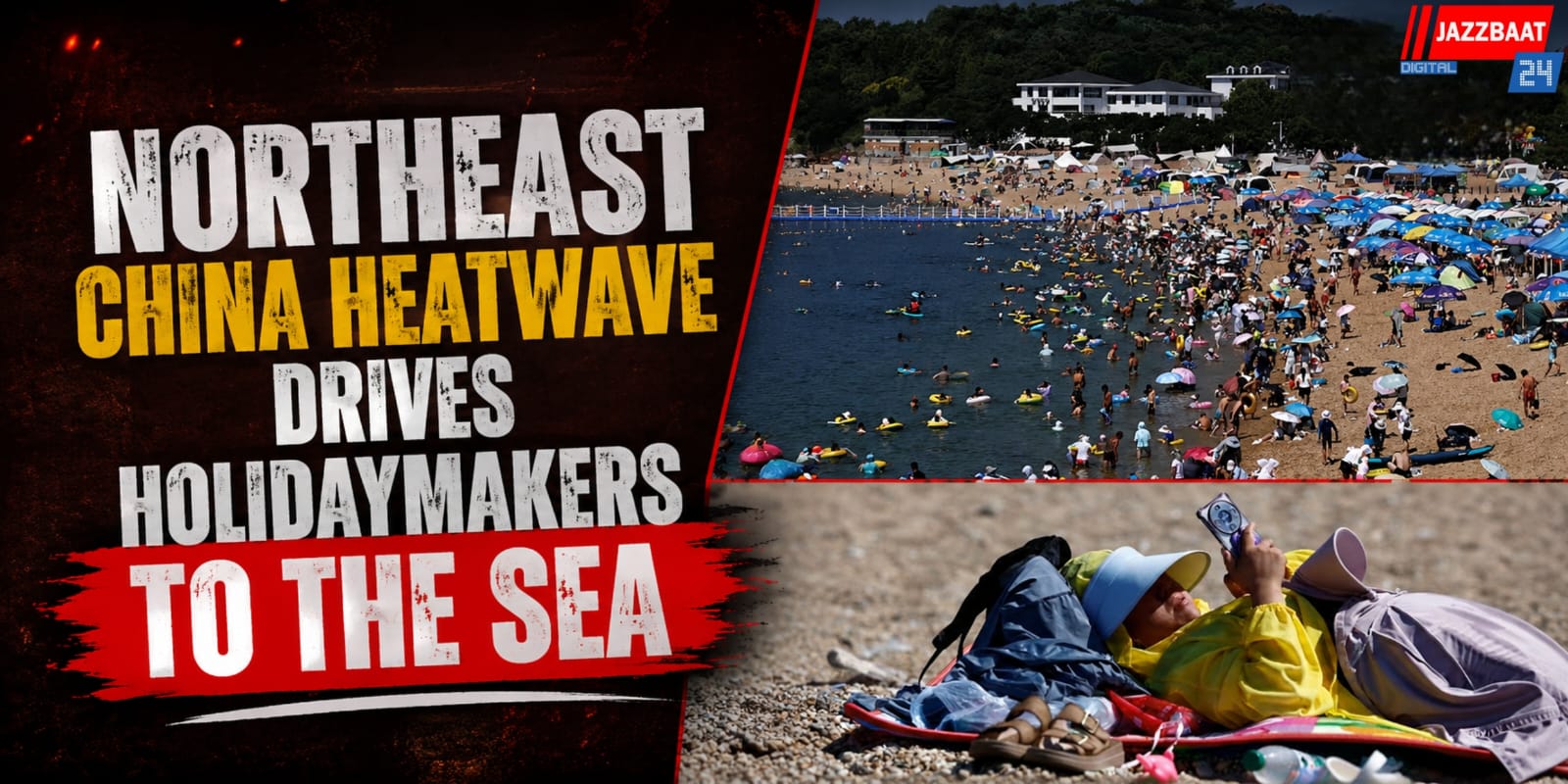
Dalian, August 8: Thousands of holidaymakers have headed to the beaches of northeast China hoping to escape the scorching summer heat, only to discover that the coastal city they chose for relief was also facing unusually high temperatures.
At Fujiazhuang Park in Dalian, a popular seaside destination in Liaoning province, crowds gathered along the pebble beach on Friday. Families, children and elderly visitors took to the water, using floats and the sea as a temporary refuge from the heat.
But the usual cooling effect of Dalian’s coastal climate was largely absent. The city recorded a maximum temperature of 37 degrees Celsius on Friday, nearly 10 degrees above its average August peak based on historical data from 1981 to 2010.
For many visitors, the extreme heat came as a surprise. A 44-year-old mother travelling from Shanxi said her family had expected Dalian to be cooler because of its location in the northeast. Instead, she found the city even hotter than her inland hometown. She arrived prepared with sun-protection clothing and medicine for heatstroke.
The unusual conditions have also changed how local residents experience summer. A 62-year-old retiree visiting the beach with his grandson said Dalian’s weather felt considerably hotter than in previous years, when the sea breeze generally provided welcome relief.
The latest heatwave has spread across northeastern China and has also affected the Korean Peninsula, where record temperatures have prompted South Korea to declare an emergency.
The heat is also putting pressure on China’s electricity network. State Grid Corporation of China said high temperatures have pushed power demand to record levels across northern, northeastern and eastern parts of the country as households increasingly depend on air conditioning.
For some residents, air conditioning has shifted from being a luxury to a necessity. A Dalian resident told Reuters that in previous summers, air conditioning was often needed for only a short period, and sometimes not at all. This year, however, prolonged heat has made it essential.
Scientists and climate experts have increasingly linked the growing frequency of severe heatwaves to climate change. China has experienced a series of extreme weather events in recent years, with heat placing growing pressure on public health, energy systems and daily life.
The scene in Dalian offered an unusual picture: crowds turning to the sea for relief, while the beach itself remained under an intense summer sun. As the heatwave continues, authorities and residents are facing the challenge of coping with temperatures far beyond what many northeastern cities traditionally experience during summer.