

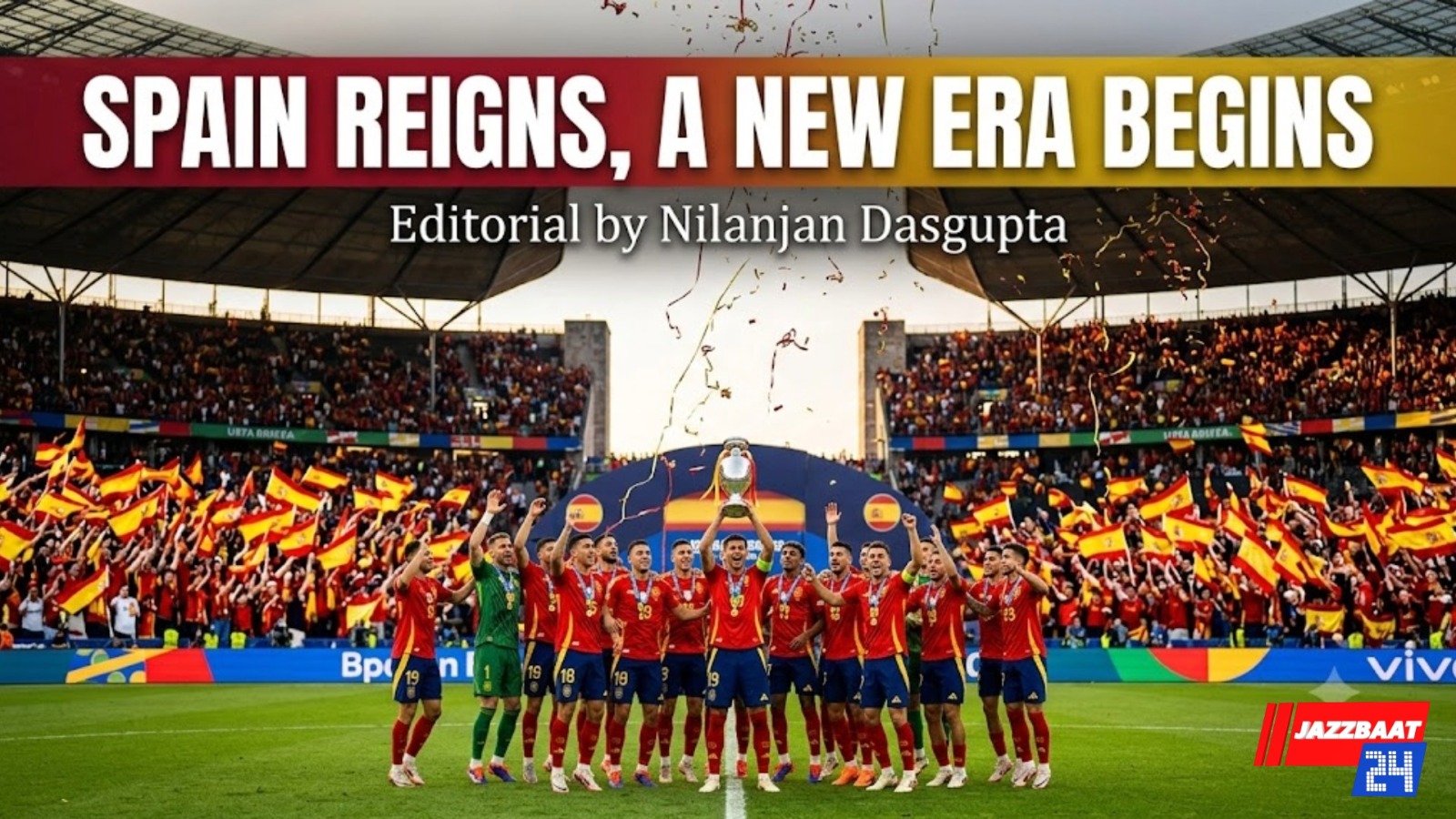
Spain’s coronation as the 2026 FIFA World Cup champions brought a fitting conclusion to a tournament that was bigger, longer and more spectacular than anything international football had witnessed before. Their 1–0 extra-time victory over defending champions Argentina was not merely the result of one dramatic night. It was the reward for a campaign built on patience, tactical discipline, collective belief and an unmistakable commitment to controlling matches on their own terms.
The final at the New York New Jersey Stadium was decided in the 106th minute when substitute Ferran Torres scored the goal that separated the two sides. Spain had dominated possession and created the greater number of opportunities, but Argentina’s disciplined defence and the resilience of goalkeeper Emiliano Martínez kept the contest goalless throughout regulation time. Torres eventually broke the resistance, securing Spain’s second men’s World Cup title and their first since 2010.
The match itself was not the attacking classic many had anticipated. With Lionel Messi leading Argentina and teenage sensation Lamine Yamal carrying Spain’s creative hopes, the final had been promoted as a symbolic meeting between two footballing generations. Yet neither star was allowed the space to dominate. Instead, the night belonged to organisation, defensive concentration and the decisive contributions of substitutes.
Spain’s superiority was nevertheless clear. Argentina failed to register a shot during the opening 90 minutes, while Spain repeatedly tested the opposition defence. The statistics reflected a match in which one team sought to create and the other concentrated almost entirely on survival. Argentina’s approach nearly succeeded, but Spain refused to become impatient. They continued moving the ball, stretching the defence and waiting for the moment when fatigue would finally create an opening.
That patience defined Spain’s entire journey. Their triumph was not dependent on one superstar or a single moment of inspiration. It came from a system in which every player understood his responsibility. Spain progressed through the knockout rounds with victories over Austria, Portugal, Belgium and France before defeating Argentina in the final. Their ability to dominate possession while remaining defensively secure demonstrated a maturity that separated them from the rest of the competition.
For coach Luis de la Fuente, the victory was another major achievement following Spain’s European Championship success in 2024. His team arrived at the World Cup with confidence, but also with the pressure of enormous expectations. Spain answered those expectations by remaining composed under pressure and trusting a footballing identity based on movement, technical quality and teamwork. Their success confirmed that international tournaments can still be won through a clear philosophy rather than dependence on individual brilliance.
Argentina, meanwhile, leave the tournament disappointed but not disgraced. The defending champions fought with determination and came within minutes of forcing the final toward a penalty shootout. Their journey once again demonstrated the competitive spirit that has defined the Lionel Scaloni era. However, the final also revealed the limitations of a side that struggled to create meaningful attacking opportunities against Spain’s structured midfield and defence.
For Lionel Messi, the defeat carried particular emotional weight. At 39, this may have been his final World Cup appearance. His influence on Argentina and on global football cannot be measured by one result. Having already lifted the trophy in 2022, Messi entered the 2026 tournament with nothing left to prove. Yet the image of him leaving the field without another title symbolised the unavoidable passing of time. The final appeared to mark a transition from one era of football to another, with young talents such as Yamal emerging as the faces of the future.
Beyond Spain’s triumph and Argentina’s heartbreak, the 2026 World Cup will be remembered for its unprecedented scale. Hosted across the United States, Canada and Mexico, it was the first men’s World Cup to feature 48 teams and 104 matches. The expanded structure created opportunities for new nations, unfamiliar stories and historic achievements, even as it also raised questions about scheduling, player fatigue and competitive balance.
The tournament repeatedly broke attendance and broadcast records. FIFA reported that 281,223 supporters attended matches on June 16 alone, establishing a new daily attendance record. Early matches involving the three host nations also attracted more than 54 million television viewers across the United States, Mexico and Canada. By the tournament’s closing stages, overall attendance had exceeded six million, underlining football’s growing reach across North America.
The spectacle extended beyond football. Elaborate opening and closing ceremonies, celebrity appearances and the first World Cup final halftime show reflected FIFA’s determination to transform the tournament into a global entertainment event. At times, the commercial scale threatened to overshadow the sport itself. Yet when the decisive moment arrived, it was still a footballer’s movement, a carefully constructed attack and a single finish that determined the world champion.
Spain’s victory therefore feels appropriate. In a tournament defined by expansion, records and extraordinary spectacle, the trophy was ultimately won by the team that remained most faithful to the fundamentals of the game. They trusted the ball, trusted one another and refused to abandon their identity.
The 2026 World Cup may be remembered as the biggest edition in history, but Spain ensured it will also be remembered for sporting excellence. Their triumph was not simply the closing chapter of a record-breaking tournament. It was the beginning of a new era, and a reminder that amid all the noise, football’s greatest prizes are still earned through courage, intelligence, discipline and unity.