

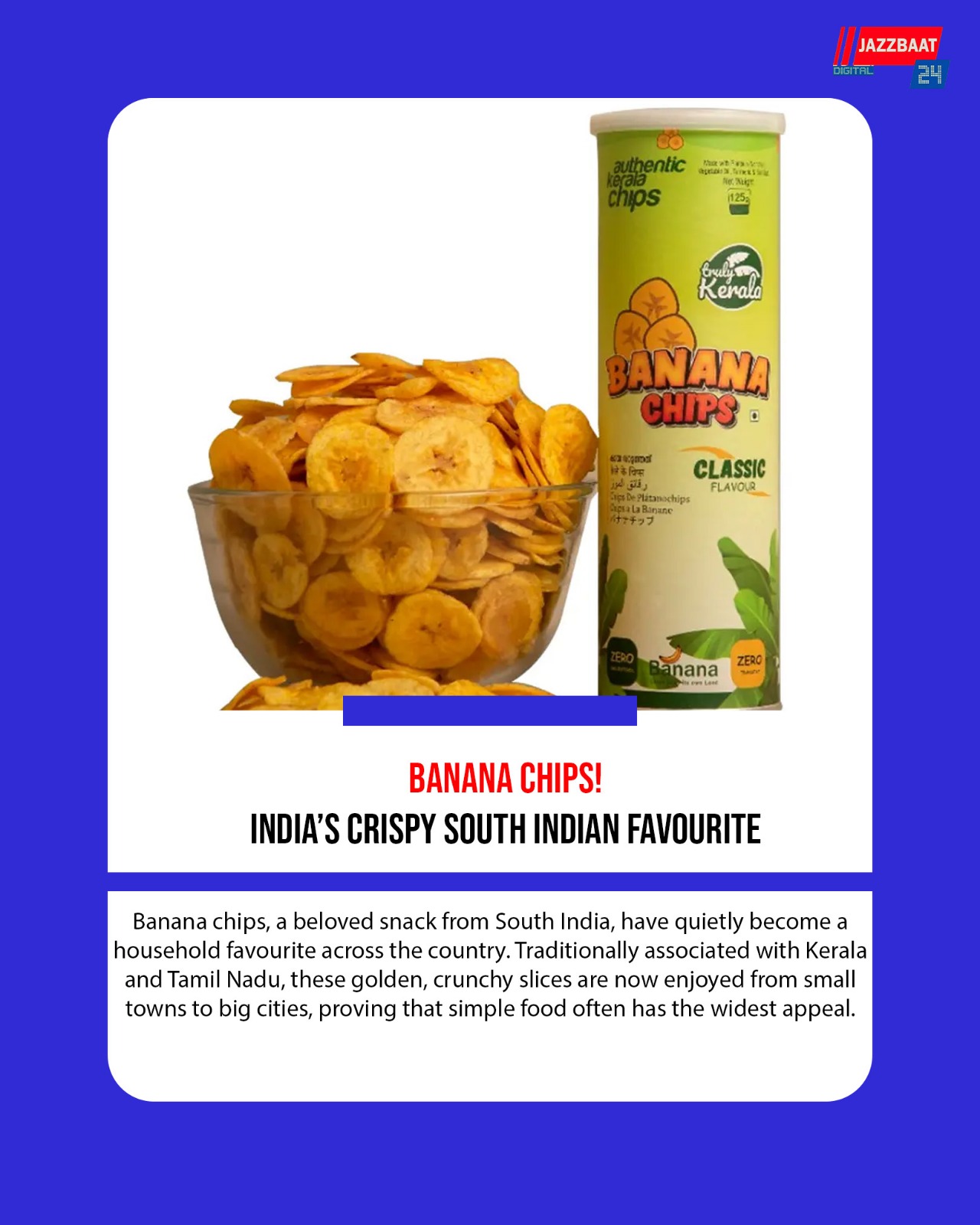
Banana chips, a beloved snack from South India, have quietly become a household favourite across the country. Traditionally associated with Kerala and Tamil Nadu, these golden, crunchy slices are now enjoyed from small towns to big cities, proving that simple food often has the widest appeal.
Unlike potato wafers, which dominate snack shelves in North India, banana chips hold a special place in southern kitchens. Made from raw bananas and fried slowly in coconut oil, they offer a distinct aroma, natural sweetness, and irresistible crunch. Coconut oil not only enhances flavour but also reflects the region’s traditional cooking style.
According to local snack makers in Hyderabad, preparing banana chips at home is surprisingly easy. Raw bananas are peeled, washed, and thinly sliced before being gently fried in hot coconut oil over low heat. Once they turn light golden, they are removed, lightly salted, and left to cool. For those who enjoy bold flavours, a sprinkle of red chilli powder or mild spices adds a spicy twist.
Beyond taste, banana chips are often considered a better alternative to regular chips. Bananas are rich in energy and nutrients, and when prepared carefully, the chips contain less fat than many packaged snacks. This makes them a popular choice among people looking for traditional yet relatively wholesome snack options.
Food historians believe banana chips spread across India as people travelled from Kerala and Tamil Nadu, carrying both recipes and cravings with them. Today, they are easily found not only in South Indian homes but also in markets like Hyderabad’s Old City, where local shops sell them fresh.
From festive occasions to everyday tea-time munching, banana chips continue to bridge regions and generations. Crisp, flavourful, and rooted in tradition, this humble snack proves that regional food can truly become national comfort food.