

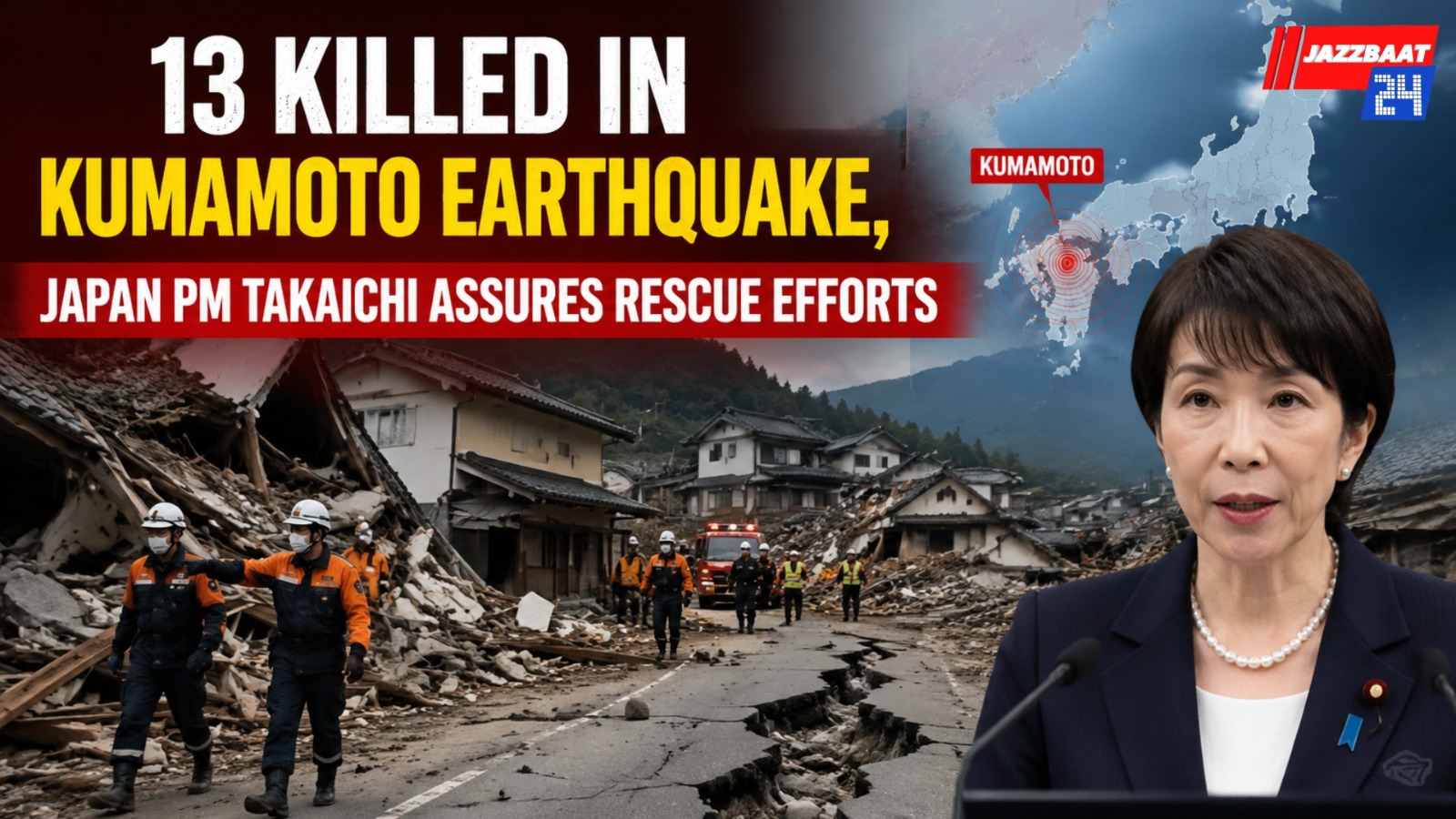
At least 13 people have been confirmed dead after a powerful earthquake struck Japan’s Kumamoto Prefecture, with rescue operations continuing across the affected areas. Japanese Prime Minister Sanae Takaichi said the government was making every possible effort to rescue survivors and provide emergency assistance to those affected.
The earthquake, which struck southwestern Japan’s Kyushu region, caused widespread damage to buildings, roads and public infrastructure. Several areas reported power outages, disrupted communication networks and damage to residential and commercial structures. Authorities warned that the situation remained critical as rescue teams continued searching for people trapped under collapsed buildings.
Prime Minister Takaichi described the rescue operation as a “race against time” and directed emergency agencies, including the Self-Defense Forces, to intensify relief work. The government has deployed personnel to assist with rescue missions, evacuation support and restoration of essential services in the affected regions.
The quake also triggered major disruptions in transportation services. Bullet train operations and some airport services were temporarily suspended as authorities inspected infrastructure for possible damage. Thousands of residents were moved to evacuation centres, where officials arranged basic necessities and cooling facilities amid concerns over extreme weather conditions.
One of the major incidents occurred at a shopping mall in Kumamoto, where an explosion and structural damage led to casualties and rescue operations. Emergency workers also searched damaged factories and buildings where several people were feared trapped.
Japan’s authorities have urged residents in the affected areas to remain alert for aftershocks and follow evacuation instructions. The country’s Meteorological Agency and disaster management officials are closely monitoring seismic activity following the strong tremor.
The disaster has brought back memories of the devastating 2016 Kumamoto earthquakes, which caused heavy destruction in the same region. Officials said the immediate priority remains saving lives, providing medical assistance and restoring essential services.
As rescue operations continue, the full extent of the damage is still being assessed. The Japanese government has assured citizens that all available resources are being used to support affected communities and locate those who may still be missing.