

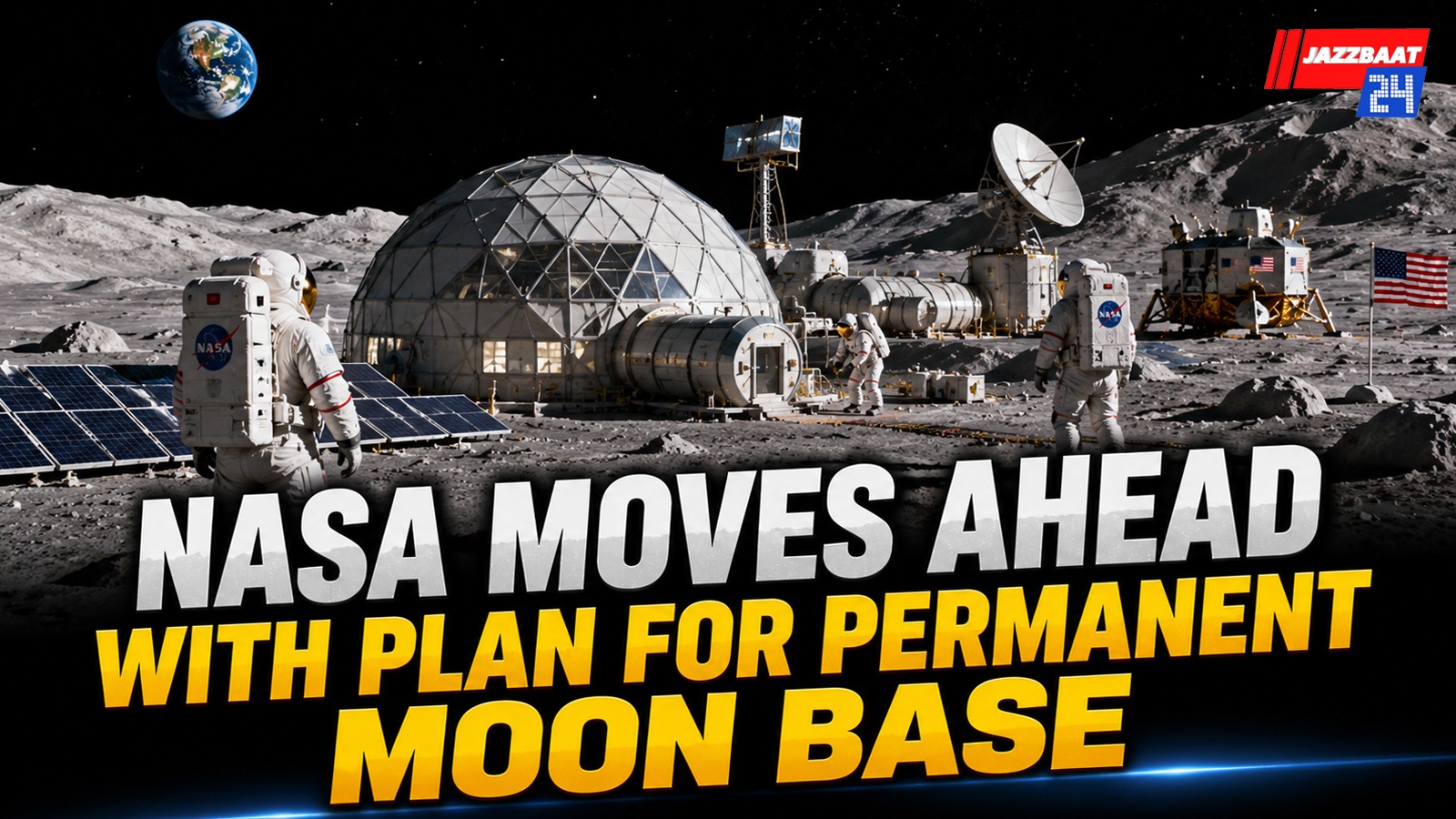
The NASA is pushing forward with its long-term plan to establish a permanent human presence on the Moon, marking one of the most ambitious space exploration efforts in decades. The initiative is part of NASA’s broader Artemis programme, which aims to return astronauts to the lunar surface and eventually build sustainable infrastructure for future missions to Mars.
According to NASA officials, the proposed lunar base would serve as a scientific research station, testing ground for advanced technology, and a hub for deep-space exploration. The agency plans to construct habitats capable of supporting astronauts for extended stays, unlike the short Apollo missions of the 1960s and 70s. Scientists believe the Moon base could help study lunar resources, including water ice discovered near the Moon’s south pole.
The project is expected to rely heavily on international cooperation and private companies. Several aerospace firms, including SpaceX and Blue Origin, are already working with NASA to develop spacecraft, landing systems and cargo transport technologies for lunar missions.
NASA’s Artemis programme has already completed major milestones. The unmanned Artemis I mission successfully orbited the Moon in 2022, while Artemis II is expected to carry astronauts around the Moon in the coming years. Artemis III, which aims to land astronauts on the lunar surface, is seen as the first major step toward creating a permanent settlement.
The planned base is likely to include living quarters, laboratories, solar power systems and communication facilities. Experts say astronauts may eventually use local lunar materials to build structures and produce fuel, reducing dependence on supplies from Earth. Researchers also believe the Moon base could provide critical knowledge for future human missions to Mars and beyond.
NASA administrators have described the Moon as a strategic stepping stone for deep-space exploration. The agency says a sustained human presence on the lunar surface will help scientists understand how humans can survive and work in harsh space environments over long periods.
However, the ambitious project also faces major challenges, including high costs, technical risks and concerns about astronaut safety in extreme lunar conditions. Despite these hurdles, space agencies around the world are closely watching the programme, which could redefine the future of human space exploration.