

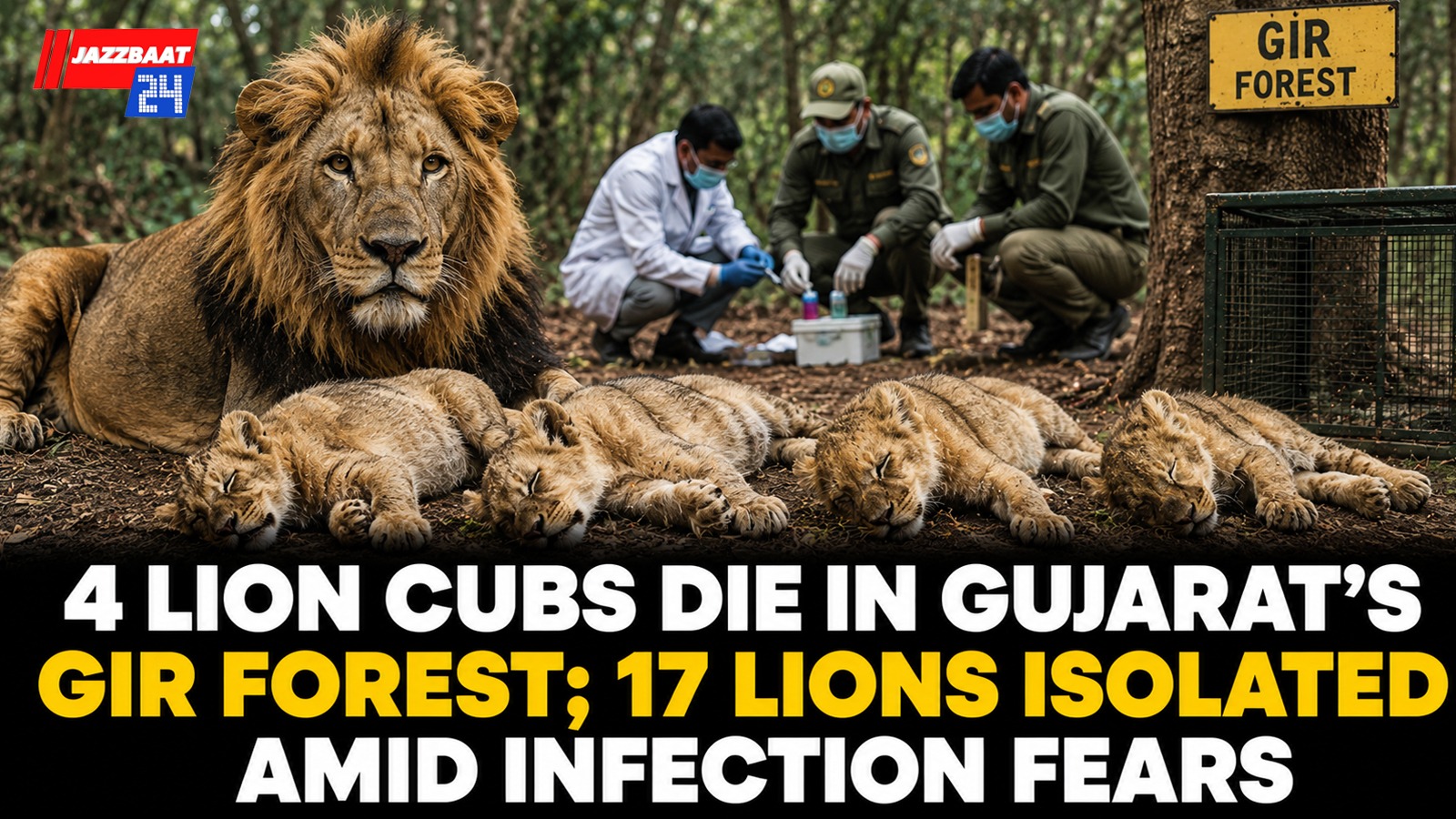
Four lion cubs have died in Gujarat’s Gir forest region after a suspected viral or parasitic infection, prompting forest authorities to isolate 17 lions as a precautionary measure, officials and local reports said.
According to forest department sources, the deaths were reported from different ranges of the Gir landscape, the only natural habitat of Asiatic lions in the world. Early investigations suggest the cubs may have been affected by a tick-borne parasite infection, suspected to be linked to Babesia, although final confirmation is still awaited.
Following the deaths, veterinary teams and forest officials quickly stepped up surveillance across the region. At least 17 lions showing mild symptoms or potential exposure have been placed under isolation and observation to prevent any possible spread of infection within pride groups. Health screening and sample collection are currently underway.
Officials said the situation is being closely monitored, and no large-scale outbreak has been confirmed so far. Preventive measures such as tick control, treatment of symptomatic animals, and intensified field surveillance have been implemented across affected forest zones, including Gir East and nearby divisions.
Forest department sources also stated that additional monitoring is being carried out in surrounding areas within a 10-kilometre radius of suspected infection sites. Veterinary experts from Junagadh and other wildlife units have been deployed to assess the health condition of lions in the wild.
While the deaths of cubs have raised concern, authorities have urged calm, saying that such incidents are occasionally seen in wild populations due to weaker immunity among young animals and seasonal parasite activity. However, they also acknowledged the need for strict monitoring given Gir’s status as the last stronghold of Asiatic lions.
The Gir forest is home to nearly 900 Asiatic lions, and conservation officials say even isolated infections are treated with high priority due to the species’ limited geographic range.
Further laboratory reports and field assessments are expected in the coming days to determine the exact cause of the cub deaths and whether the infection poses any broader threat to the population.