
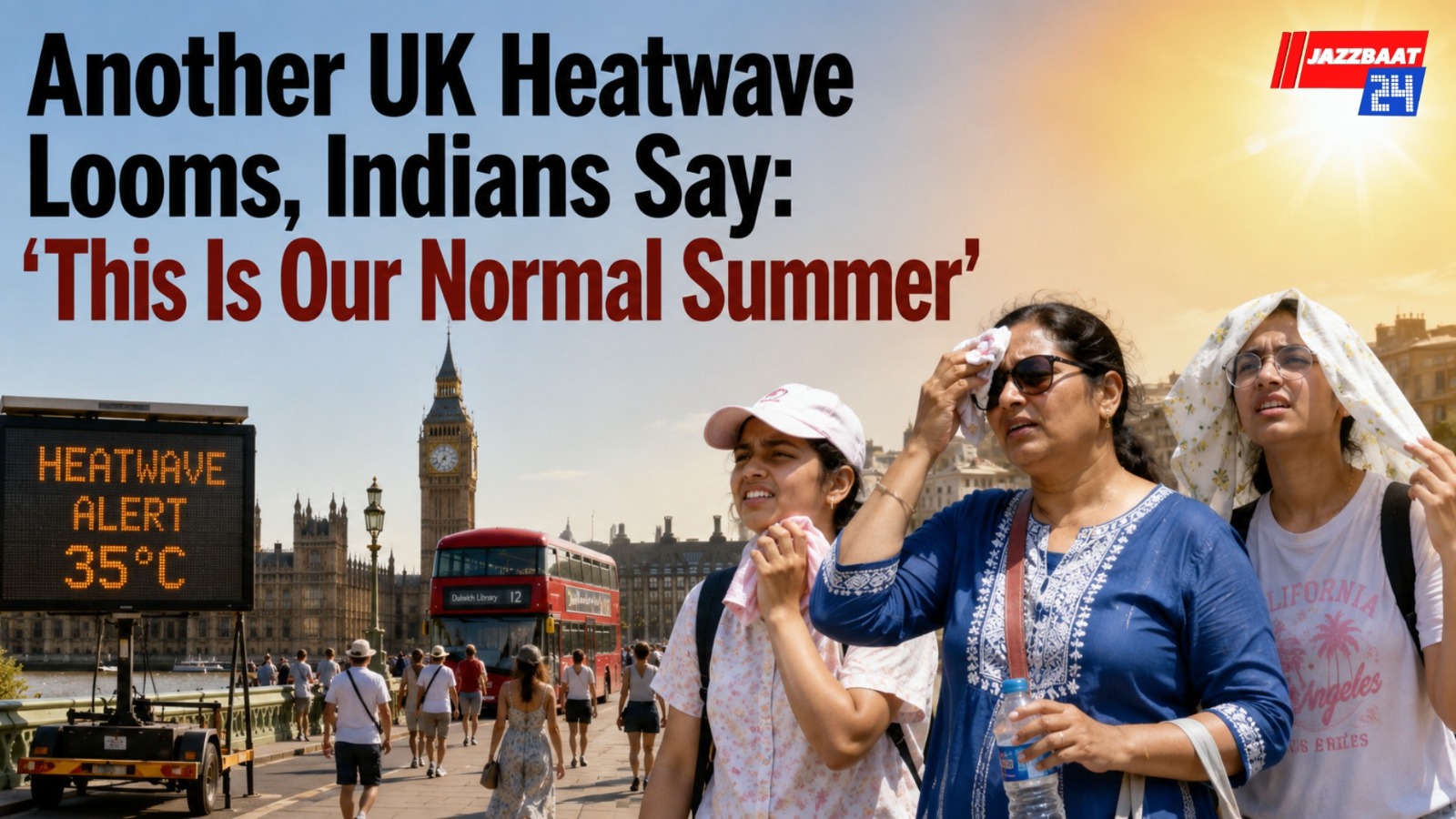
The United Kingdom could be heading towards another spell of extreme heat just days after recording one of its hottest Junes on record. Forecasters say a high-pressure system from the Azores may bring temperatures into the mid-30s Celsius across parts of England and Wales next week, raising fears of another significant heatwave.
The prospect of another heatwave has sparked a wave of reactions on social media, particularly from Indian users, many of whom have been comparing Britain's soaring temperatures with the much hotter summers regularly experienced in India. Viral posts and memes questioned why temperatures of 35°C to 40°C cause widespread disruption in the UK when several Indian cities routinely cross 45°C during peak summer.
However, weather experts say the comparison is not as simple as it seems. The UK is far less adapted to extreme heat than countries like India. Most British homes are designed to retain heat during cold winters and lack air conditioning or even ceiling fans. Infrastructure such as rail networks, schools and hospitals is also not built to cope with prolonged periods of high temperatures.
Meteorologists have also pointed to high humidity levels, which make temperatures feel significantly hotter. During the recent UK heatwave, temperatures of around 35°C reportedly felt closer to 41°C in some areas because of moisture in the air, increasing the risk of dehydration and heat-related illnesses.
The ongoing European heatwave has already caused severe disruptions across several countries, with reports of infrastructure damage, transportation delays and thousands of excess deaths linked to extreme temperatures. Experts warn that climate change is making such heatwaves more frequent and more intense.
While social media comparisons between British and Indian summers have generated plenty of humour, scientists say they also highlight a serious issue: countries that historically experienced milder climates are now being forced to adapt to a rapidly warming world. As Britain braces for another possible heatwave, the debate over climate resilience and preparedness is likely to intensify.