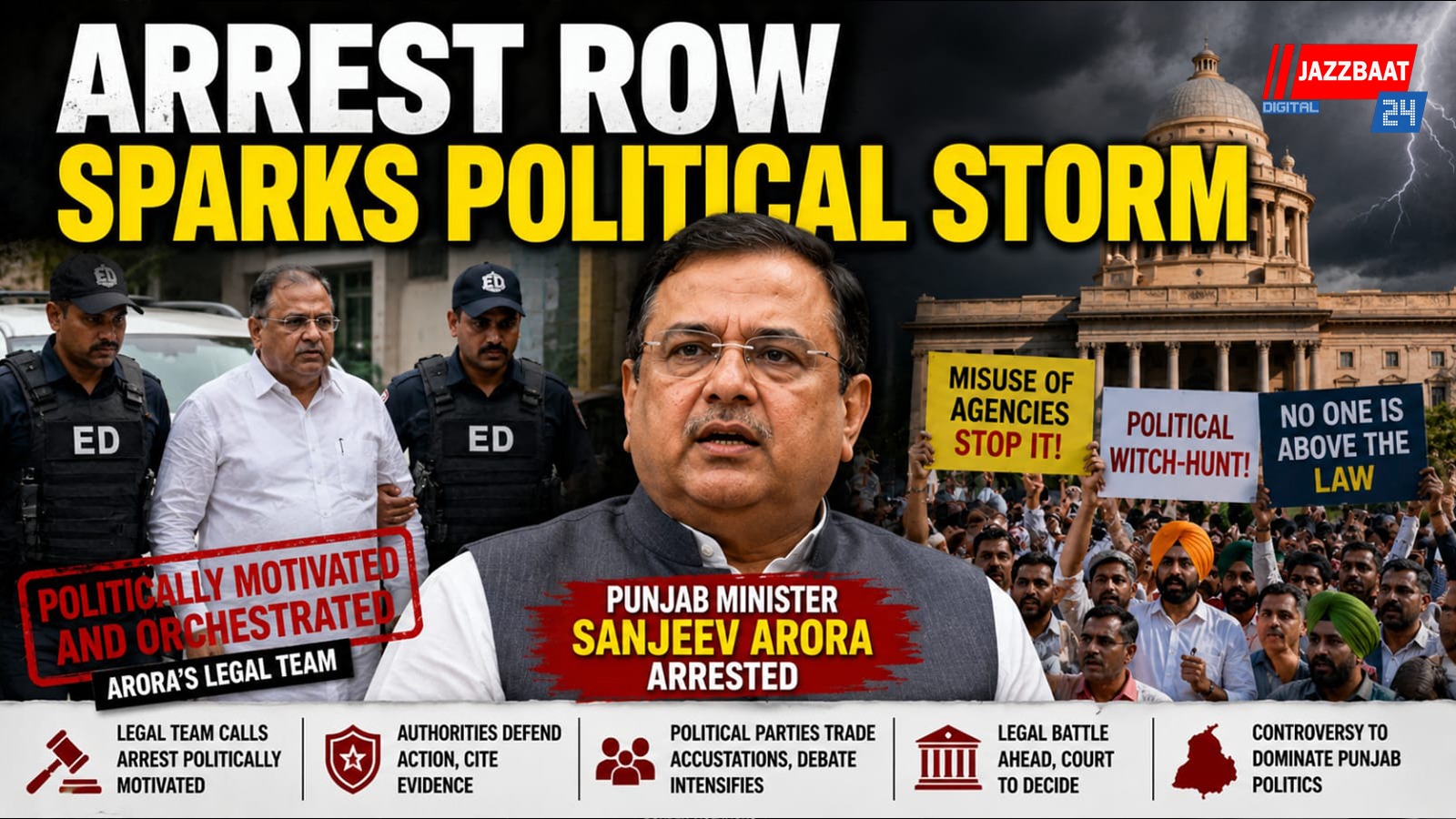
The arrest of Punjab Minister Sanjeev Arora has triggered sharp political reactions, with his legal team alleging that the move was “politically motivated and orchestrated.” The development has intensified tensions in the state’s political landscape, with opposition parties and ruling figures trading accusations over the circumstances surrounding the arrest.
Speaking shortly after the arrest, Arora’s lawyer claimed that the action was not based on fair legal grounds but was instead driven by political considerations. According to the defence, due process was not adequately followed, and the timing of the arrest raises serious questions about intent. The legal team has indicated that it will challenge the arrest in court and seek immediate relief for the minister.
Authorities, however, have defended their action, stating that the arrest was carried out in accordance with the law and based on evidence gathered during the investigation. Officials have not publicly disclosed all details of the case but maintain that the process has been transparent and within legal bounds.
The case has quickly taken on political overtones, with supporters of Sanjeev Arora alleging misuse of investigative agencies, while critics argue that no individual should be above the law. The arrest has also reignited debate over the role of law enforcement agencies in politically sensitive cases.
Leaders from various parties have weighed in, some calling for an impartial probe and others demanding accountability. The controversy is expected to dominate political discourse in Punjab in the coming days, especially as legal proceedings begin to unfold.
Meanwhile, legal experts note that such cases often hinge on the strength of evidence presented in court. The judiciary’s response will be crucial in determining the immediate future of the minister, including the possibility of bail or further custody.
As the situation develops, all eyes remain on the courts and investigative agencies, with the outcome likely to have broader implications for governance and political dynamics in the state.